
ICBC Asia's new competition gives Hong Kong students a chance to test their fintech ideas beyond the classroom.
Updated
October 2, 2026 9:16 AM
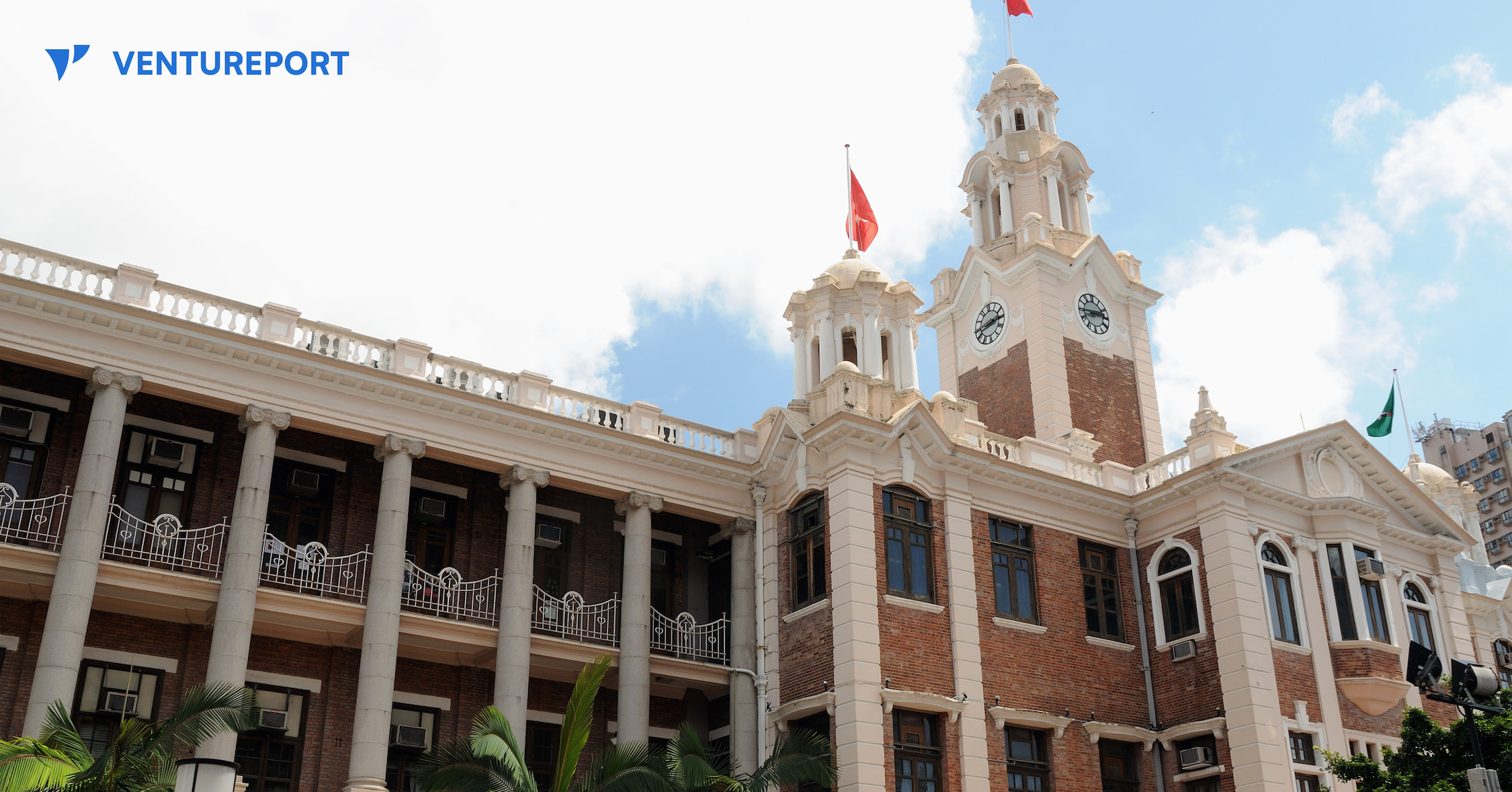
Main Building of the University of Hong Kong. PHOTO: ADOBE STOCK
Hong Kong university students are being invited to take part in the first Hong Kong University Students Fintech Innovation Competition, organised by Industrial and Commercial Bank of China (Asia). The competition gives students a chance to develop ideas around financial technology, with cash prizes, internship opportunities and a route to the national finals of the ICBC Cup on offer.
The competition is part of the 17th ICBC Cup and marks the first time ICBC has established a competition zone in Hong Kong. It is supported by the Financial Services and the Treasury Bureau and the Hong Kong Monetary Authority, with 12 Hong Kong universities also backing the initiative.
The participating universities are the University of Hong Kong, the Chinese University of Hong Kong, Hong Kong University of Science and Technology, Hong Kong Polytechnic University, City University of Hong Kong, Hong Kong Baptist University, Hong Kong Metropolitan University, Lingnan University, Hong Kong Shue Yan University, the Education University of Hong Kong, Hang Seng University of Hong Kong and St. Francis University.
For ICBC Asia, the competition is also intended to support the development of fintech in Hong Kong and expand the city's fintech talent pool. Dr. Liu Yagan, Chairman and Executive Director of Industrial and Commercial Bank of China (Asia), said the competition is designed to encourage students to develop practical applications for financial technology and explore new banking business models.
"This competition encourages university students across Hong Kong to propose practical solutions for fintech applications and banking business model innovation from the perspective of financial products and services, providing a platform for Hong Kong youth to connect with cutting-edge industries and unleash their innovative potential."
The initiative will also connect Hong Kong students with the wider ICBC Group. Liu said this would help deepen exchanges between young talent in Hong Kong and the Mainland.
The competition is open to full-time university students in Hong Kong and carries the theme "Digital Banking, Creating the Future." Students can develop ideas across 10 areas, ranging from fintech and digital finance to green finance, inclusive finance, pension finance and wealth management. The categories also include financial security services, specialised financial services, youth services and open innovation services.
The competition also offers cash prizes: the First Prize winner will receive HK$50,000; two Second Prize winners will receive HK$30,000 each; three Third Prize winners will receive HK$20,000 each; and four Honorable Mention recipients will receive HK$10,000 each.
Beyond the prize money, qualifying winners will have the opportunity to undertake internships at ICBC (Asia). The team that wins the Hong Kong First Prize will also have the opportunity to travel to Beijing in December for the ICBC Cup national finals, where it will compete against teams from across the country.
With registration now open, the competition gives Hong Kong university students an opportunity to take ideas in financial technology from the classroom into areas such as banking products, services and business models.
Keep Reading
How ECOPEACE uses autonomous robots and data to monitor and maintain urban water bodies.
Updated
January 23, 2026 10:41 AM

A school of fish swimming among debris and waste. PHOTO: UNSPLASH
South Korea–based water technology company ECOPEACE is working on a practical challenge many cities face today: keeping urban water bodies clean as pollution and algae growth become more frequent. Rather than relying on periodic cleanup drives, the company focuses on systems that can monitor and manage water conditions on an ongoing basis.
At the core of ECOPEACE’s work are autonomous water-cleanup robots known as ECOBOT. These machines operate directly on lakes, reservoirs and rivers, removing algae and surface waste while also collecting information about water quality. The idea is to combine cleaning with constant observation so changes in water conditions do not go unnoticed.
Alongside the robots, ECOPEACE uses a filtration and treatment system designed to process polluted water continuously. This system filters out contaminants using fine metal filters and treats the water using electrical processes. It also cleans itself automatically, which allows it to run for long periods without frequent manual maintenance.
The role of AI in this setup is largely about decision-making rather than direct control. Sensors placed across the water body collect data such as pollution levels and water quality indicators. The software then analyses this data to spot early signs of issues like algae growth. Based on these patterns, the system adjusts how the robots and filtration units operate, such as changing treatment intensity or water flow. In simple terms, the technology helps the system respond sooner instead of waiting for visible problems to appear.
ECOPEACE has already deployed these systems across several reservoirs, rivers and urban waterways in South Korea. Those projects have helped refine how the robots, sensors and software work together in real environments rather than controlled test sites.
Building on that experience, the company has begun expanding beyond Korea. It is currently running pilot and proof-of-concept projects in Singapore and the United Arab Emirates. These deployments are testing how the technology performs in dense urban settings where waterways are closely linked to public health, infrastructure and daily city life.
Both regions have invested heavily in smart city initiatives and water management, making them suitable test beds for automated monitoring and cleanup systems. The pilots focus on algae control, surface cleaning and real-time tracking of water quality rather than large-scale rollout.
As cities continue to grow and climate-related pressures on water systems increase, managing waterways is becoming less about occasional intervention and more about continuous oversight. ECOPEACE’s approach reflects that shift by using automation and data to address problems early and reduce the need for reactive cleanup later.