
ICBC Asia's new competition gives Hong Kong students a chance to test their fintech ideas beyond the classroom.
Updated
October 2, 2026 9:16 AM
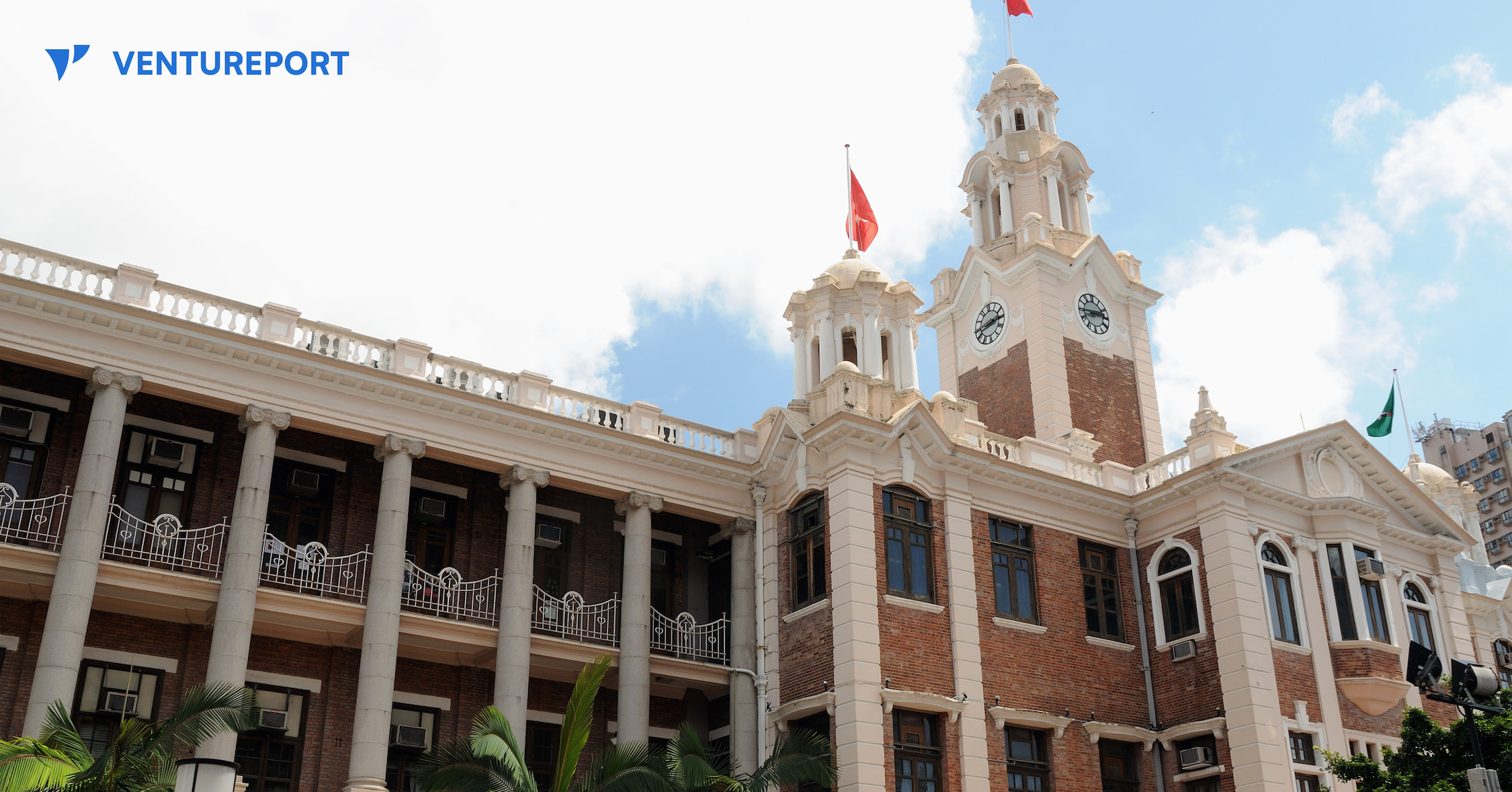
Main Building of the University of Hong Kong. PHOTO: ADOBE STOCK
Hong Kong university students are being invited to take part in the first Hong Kong University Students Fintech Innovation Competition, organised by Industrial and Commercial Bank of China (Asia). The competition gives students a chance to develop ideas around financial technology, with cash prizes, internship opportunities and a route to the national finals of the ICBC Cup on offer.
The competition is part of the 17th ICBC Cup and marks the first time ICBC has established a competition zone in Hong Kong. It is supported by the Financial Services and the Treasury Bureau and the Hong Kong Monetary Authority, with 12 Hong Kong universities also backing the initiative.
The participating universities are the University of Hong Kong, the Chinese University of Hong Kong, Hong Kong University of Science and Technology, Hong Kong Polytechnic University, City University of Hong Kong, Hong Kong Baptist University, Hong Kong Metropolitan University, Lingnan University, Hong Kong Shue Yan University, the Education University of Hong Kong, Hang Seng University of Hong Kong and St. Francis University.
For ICBC Asia, the competition is also intended to support the development of fintech in Hong Kong and expand the city's fintech talent pool. Dr. Liu Yagan, Chairman and Executive Director of Industrial and Commercial Bank of China (Asia), said the competition is designed to encourage students to develop practical applications for financial technology and explore new banking business models.
"This competition encourages university students across Hong Kong to propose practical solutions for fintech applications and banking business model innovation from the perspective of financial products and services, providing a platform for Hong Kong youth to connect with cutting-edge industries and unleash their innovative potential."
The initiative will also connect Hong Kong students with the wider ICBC Group. Liu said this would help deepen exchanges between young talent in Hong Kong and the Mainland.
The competition is open to full-time university students in Hong Kong and carries the theme "Digital Banking, Creating the Future." Students can develop ideas across 10 areas, ranging from fintech and digital finance to green finance, inclusive finance, pension finance and wealth management. The categories also include financial security services, specialised financial services, youth services and open innovation services.
The competition also offers cash prizes: the First Prize winner will receive HK$50,000; two Second Prize winners will receive HK$30,000 each; three Third Prize winners will receive HK$20,000 each; and four Honorable Mention recipients will receive HK$10,000 each.
Beyond the prize money, qualifying winners will have the opportunity to undertake internships at ICBC (Asia). The team that wins the Hong Kong First Prize will also have the opportunity to travel to Beijing in December for the ICBC Cup national finals, where it will compete against teams from across the country.
With registration now open, the competition gives Hong Kong university students an opportunity to take ideas in financial technology from the classroom into areas such as banking products, services and business models.
Keep Reading
Turning computing heat into a practical heating solution for greenhouses.
Updated
January 23, 2026 10:41 AM

Inside of a workstation computer with red lighting. PHOTO: UNSPLASH
Most computing systems have one unavoidable side effect: they get hot. That heat is usually treated as a problem and pushed away using cooling systems. Canaan Inc., a technology company that builds high-performance computing machines, is now showing how that same heat can be reused instead of wasted.
In a pilot project in Manitoba, Canada, Canaan is working with greenhouse operator Bitforest Investment to recover heat generated by its computing systems. Rather than focusing only on computing output, the project looks at a more basic question—what happens to all the heat these machines produce and can it serve a practical purpose?
The idea is simple. Canaan’s computers run continuously and naturally generate heat. Instead of releasing that heat into the environment, the system captures it and uses it to warm water. That warm water is then fed into the greenhouse’s existing heating system. As a result, the greenhouse needs less additional energy to maintain the temperatures required for plant growth.
This is enabled through liquid cooling. Instead of using air to cool the machines, a liquid circulates through the system and absorbs heat more efficiently. Because liquid retains heat better than air, the recovered water reaches temperatures that are suitable for industrial use. In effect, the computing system supports greenhouse heating while continuing to perform its primary computing function.
What makes this approach workable is that it integrates with existing infrastructure. The recovered heat does not replace the greenhouse’s boilers but supplements them. By preheating the water that enters the boiler system, the overall energy demand is reduced. Based on current assumptions, Canaan estimates that a significant portion of the electricity used by the servers can be recovered as usable heat, though actual results will be confirmed once the system is fully operational.
This matters because heating is one of the largest energy expenses for commercial greenhouses, particularly in colder regions like Canada. Many facilities still rely heavily on fossil-fuel-based heating and policies such as carbon pricing are encouraging lower-emission alternatives. Reusing computing heat offers a way to improve efficiency without requiring a complete overhaul of existing systems.
The project is planned to run for an initial two-year period, allowing Canaan to evaluate real-world performance factors such as reliability, system stability and maintenance needs. These findings will help determine whether the model can be replicated in other agricultural or industrial settings.
More broadly, the initiative reflects a shift in how computing infrastructure can be designed. Instead of operating as energy-intensive systems isolated from everyday use, computing equipment can contribute to real-world applications. Canaan’s greenhouse pilot highlights how excess heat—often seen as a by-product—can become part of a more efficient and thoughtful energy loop.
In doing so, the project suggests that improving sustainability in technology is not only about reducing energy consumption, but also about finding smarter ways to reuse the energy already being generated.