
ICBC Asia's new competition gives Hong Kong students a chance to test their fintech ideas beyond the classroom.
Updated
October 2, 2026 9:16 AM
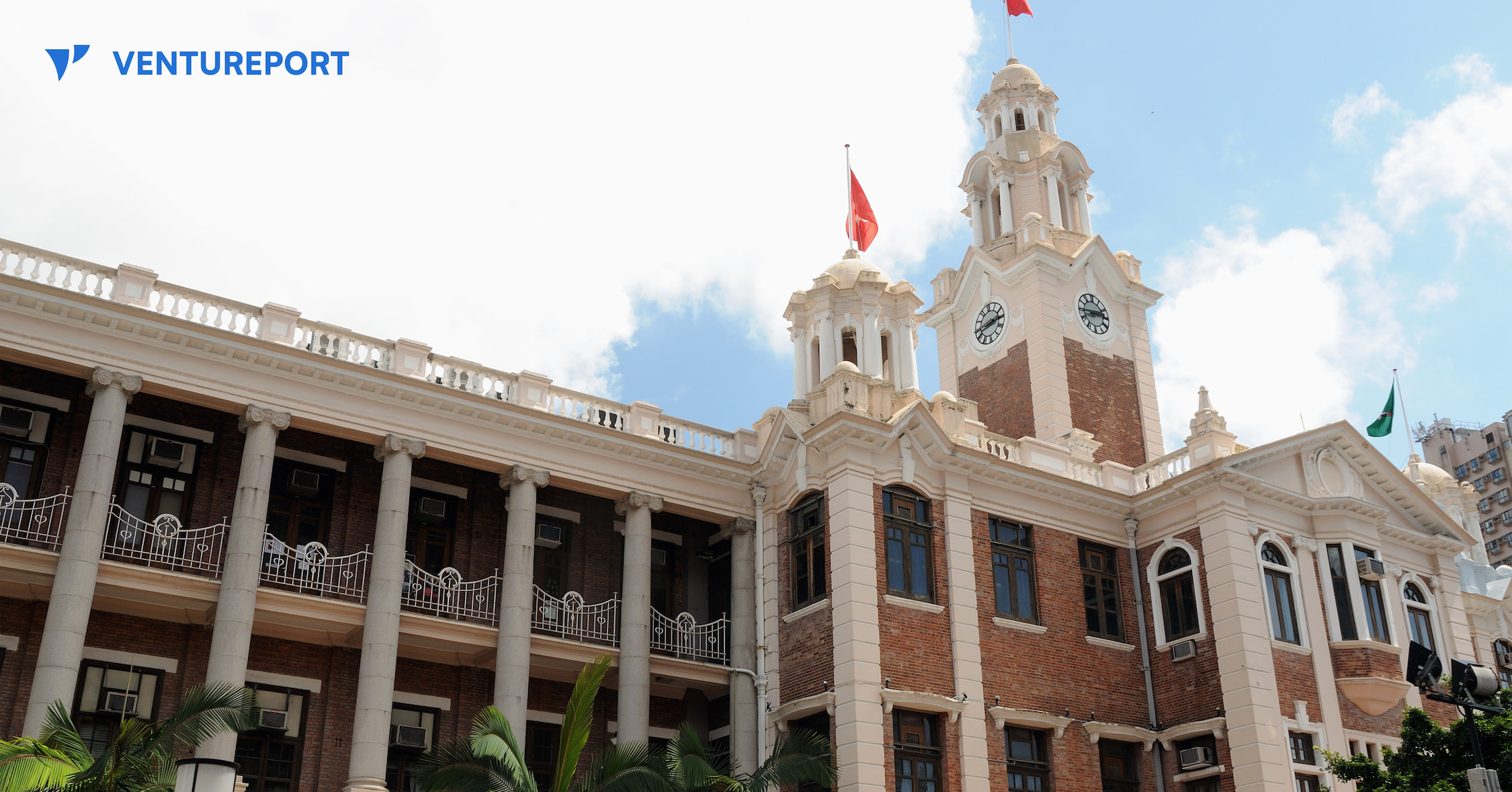
Main Building of the University of Hong Kong. PHOTO: ADOBE STOCK
Hong Kong university students are being invited to take part in the first Hong Kong University Students Fintech Innovation Competition, organised by Industrial and Commercial Bank of China (Asia). The competition gives students a chance to develop ideas around financial technology, with cash prizes, internship opportunities and a route to the national finals of the ICBC Cup on offer.
The competition is part of the 17th ICBC Cup and marks the first time ICBC has established a competition zone in Hong Kong. It is supported by the Financial Services and the Treasury Bureau and the Hong Kong Monetary Authority, with 12 Hong Kong universities also backing the initiative.
The participating universities are the University of Hong Kong, the Chinese University of Hong Kong, Hong Kong University of Science and Technology, Hong Kong Polytechnic University, City University of Hong Kong, Hong Kong Baptist University, Hong Kong Metropolitan University, Lingnan University, Hong Kong Shue Yan University, the Education University of Hong Kong, Hang Seng University of Hong Kong and St. Francis University.
For ICBC Asia, the competition is also intended to support the development of fintech in Hong Kong and expand the city's fintech talent pool. Dr. Liu Yagan, Chairman and Executive Director of Industrial and Commercial Bank of China (Asia), said the competition is designed to encourage students to develop practical applications for financial technology and explore new banking business models.
"This competition encourages university students across Hong Kong to propose practical solutions for fintech applications and banking business model innovation from the perspective of financial products and services, providing a platform for Hong Kong youth to connect with cutting-edge industries and unleash their innovative potential."
The initiative will also connect Hong Kong students with the wider ICBC Group. Liu said this would help deepen exchanges between young talent in Hong Kong and the Mainland.
The competition is open to full-time university students in Hong Kong and carries the theme "Digital Banking, Creating the Future." Students can develop ideas across 10 areas, ranging from fintech and digital finance to green finance, inclusive finance, pension finance and wealth management. The categories also include financial security services, specialised financial services, youth services and open innovation services.
The competition also offers cash prizes: the First Prize winner will receive HK$50,000; two Second Prize winners will receive HK$30,000 each; three Third Prize winners will receive HK$20,000 each; and four Honorable Mention recipients will receive HK$10,000 each.
Beyond the prize money, qualifying winners will have the opportunity to undertake internships at ICBC (Asia). The team that wins the Hong Kong First Prize will also have the opportunity to travel to Beijing in December for the ICBC Cup national finals, where it will compete against teams from across the country.
With registration now open, the competition gives Hong Kong university students an opportunity to take ideas in financial technology from the classroom into areas such as banking products, services and business models.
Keep Reading
A plug-and-play export pathway helps regional brands reach Asia without building overseas operations
Updated
March 17, 2026 1:01 AM

Coupang headquarters in Silicon Valley. PHOTO: ADOBE STOCK
Two western Pennsylvania companies — Kate’s Real Food and Healthy Origins — are expanding beyond the U.S. through a partnership with Coupang.
Coupang, a U.S.-technology and Fortune 150 company, operates one of the largest e-commerce platforms in South Korea. It allows American sellers to reach customers overseas without setting up their own distribution networks. Businesses ship products to a domestic Coupang logistics facility. From there, the company manages storage, fulfillment and delivery directly to customers abroad.
For Kate’s Real Food and Healthy Origins, this system opens the door to new markets without requiring on-the-ground operations. Kate’s Real Food makes organic energy and protein bars. Healthy Origins is a family-owned supplements business based near Pittsburgh. Both are now selling to customers in South Korea and in Healthy Origins’ case, Taiwan as well.
That structure addresses a practical gap for growing brands: how to access international demand without building international operations. Instead of navigating foreign warehousing and retail partnerships independently, sellers plug into an existing marketplace and logistics system.
“At Coupang, we’re proud to help thousands of American small and medium-sized businesses, agricultural producers and larger brands sell their goods to customers around the world”, said Coupang vice president Bill Anaya. “We’ve built an innovative, AI-driven export engine that enables great American entrepreneurs — like those who created Kate’s Real Food and Healthy Origins — to expand their horizons, find new revenue abroad and keep growing their local teams".
For Kate’s Real Food, the move marks its entry into South Korea for the first time. For Healthy Origins, the results have been measurable. The company reports that sales of its products on the platform have increased more than 50% year over year since partnering with Coupang. It has also expanded into Taiwan.
“Partnering with Coupang has been a significant step forward for our business”, said Bret Eby, CEO of Healthy Origins. “Coupang makes it easier to deliver a great shopping experience and we’ve appreciated the collaboration and support throughout the process. Its scale, efficiency and consumer reach in Korea are unmatched and launching on Coupang allowed us to elevate our presence and connect with customers in a much more impactful and direct way”.
The broader relevance lies in the model itself. Digital marketplaces are building integrated cross-border infrastructure. That shift changes what international expansion requires. Smaller regional brands no longer need to replicate warehousing, logistics and retail partnerships in every new market. Instead, they can plug into an existing system and reach customers abroad.
In this case, two Pennsylvania companies are doing exactly that. Their expansion illustrates how platform-led trade is reshaping the path from local operations to global reach.