
ICBC Asia's new competition gives Hong Kong students a chance to test their fintech ideas beyond the classroom.
Updated
October 2, 2026 9:16 AM
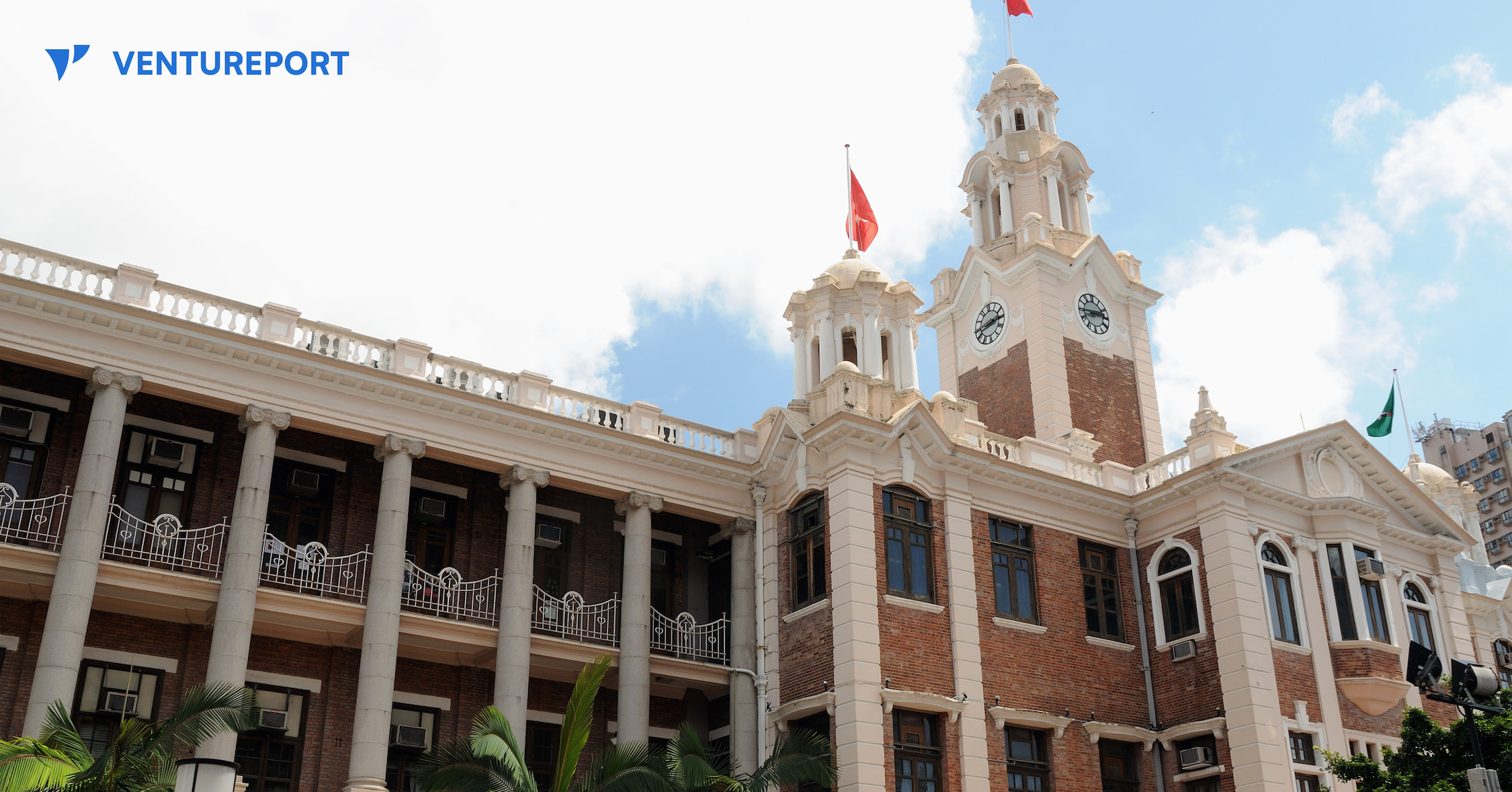
Main Building of the University of Hong Kong. PHOTO: ADOBE STOCK
Hong Kong university students are being invited to take part in the first Hong Kong University Students Fintech Innovation Competition, organised by Industrial and Commercial Bank of China (Asia). The competition gives students a chance to develop ideas around financial technology, with cash prizes, internship opportunities and a route to the national finals of the ICBC Cup on offer.
The competition is part of the 17th ICBC Cup and marks the first time ICBC has established a competition zone in Hong Kong. It is supported by the Financial Services and the Treasury Bureau and the Hong Kong Monetary Authority, with 12 Hong Kong universities also backing the initiative.
The participating universities are the University of Hong Kong, the Chinese University of Hong Kong, Hong Kong University of Science and Technology, Hong Kong Polytechnic University, City University of Hong Kong, Hong Kong Baptist University, Hong Kong Metropolitan University, Lingnan University, Hong Kong Shue Yan University, the Education University of Hong Kong, Hang Seng University of Hong Kong and St. Francis University.
For ICBC Asia, the competition is also intended to support the development of fintech in Hong Kong and expand the city's fintech talent pool. Dr. Liu Yagan, Chairman and Executive Director of Industrial and Commercial Bank of China (Asia), said the competition is designed to encourage students to develop practical applications for financial technology and explore new banking business models.
"This competition encourages university students across Hong Kong to propose practical solutions for fintech applications and banking business model innovation from the perspective of financial products and services, providing a platform for Hong Kong youth to connect with cutting-edge industries and unleash their innovative potential."
The initiative will also connect Hong Kong students with the wider ICBC Group. Liu said this would help deepen exchanges between young talent in Hong Kong and the Mainland.
The competition is open to full-time university students in Hong Kong and carries the theme "Digital Banking, Creating the Future." Students can develop ideas across 10 areas, ranging from fintech and digital finance to green finance, inclusive finance, pension finance and wealth management. The categories also include financial security services, specialised financial services, youth services and open innovation services.
The competition also offers cash prizes: the First Prize winner will receive HK$50,000; two Second Prize winners will receive HK$30,000 each; three Third Prize winners will receive HK$20,000 each; and four Honorable Mention recipients will receive HK$10,000 each.
Beyond the prize money, qualifying winners will have the opportunity to undertake internships at ICBC (Asia). The team that wins the Hong Kong First Prize will also have the opportunity to travel to Beijing in December for the ICBC Cup national finals, where it will compete against teams from across the country.
With registration now open, the competition gives Hong Kong university students an opportunity to take ideas in financial technology from the classroom into areas such as banking products, services and business models.
Keep Reading
A Massachusetts startup advances scalable light-control tech for AR, AI and imaging markets
Updated
March 17, 2026 1:01 AM

Myrias Optics' Nanoimprinted All-inorganic Metaoptic. PHOTO: MYRIAS OPTICS
Myrias Optics, a Massachusetts-based optical technology startup, has raised US$2.1 million in a Seed 1 financing round to accelerate the commercialization of its advanced light-control technology. The round was led by MassVentures, with participation from existing investors Hoss Investment Inc., Maroon Venture Partners and Tenon Venture Partners, as well as new investors Mill Town Capital, TiE Boston Angels and Doug Crane. This new round follows a US$3.3 million seed financing completed in December 2023, led by Asia Optical, and a US$1.5 million Direct-to-Phase II award from the National Science Foundation. In total, Myrias has secured US$6.9 million to date, positioning it to move from development to scaled production.
The company builds ultra-thin, nano-patterned surfaces that precisely control how light moves through a device. These structures replace or enhance traditional lenses and optical parts inside products such as augmented reality headsets, AI data center hardware, consumer electronics, industrial systems and medical imaging devices. The goal is straightforward: to deliver high optical performance while making the parts easier and more cost-effective to manufacture in large quantities.
Across industries such as augmented reality and AI infrastructure, manufacturers face a common challenge. They need highly precise light-guiding components that can withstand heat and long-term use. At the same time, those components must be produced consistently and at scale. Traditional semiconductor-style fabrication can be costly, while polymer-based optical manufacturing can face limits in durability and thermal stability.
Myrias addresses this gap by using inorganic materials and a nanoimprint manufacturing process to create stable, repeatable optical layers on wafers. This approach is designed to combine performance with manufacturability. In augmented reality systems, for example, the company’s technology enables higher viewing angles while remaining suitable for volume production. In AI data centers, the same material and process advantages support improved light transfer and stronger performance under demanding thermal conditions. These benefits also extend to advanced imaging systems in consumer, industrial and medical markets.
The new Seed 1 funding is intended to expand manufacturing capacity and scale pilot production lines. The company will also continue executing active customer programs. Myrias is already working with strategic partners and Tier 1 supply chain participants to integrate its waveguide and light-shaping solutions into commercial AR platforms, AI photonics systems and advanced imaging products. The capital, therefore, supports a clear next step: moving from validated prototypes to a steady commercial supply.