
ICBC Asia's new competition gives Hong Kong students a chance to test their fintech ideas beyond the classroom.
Updated
October 2, 2026 9:16 AM
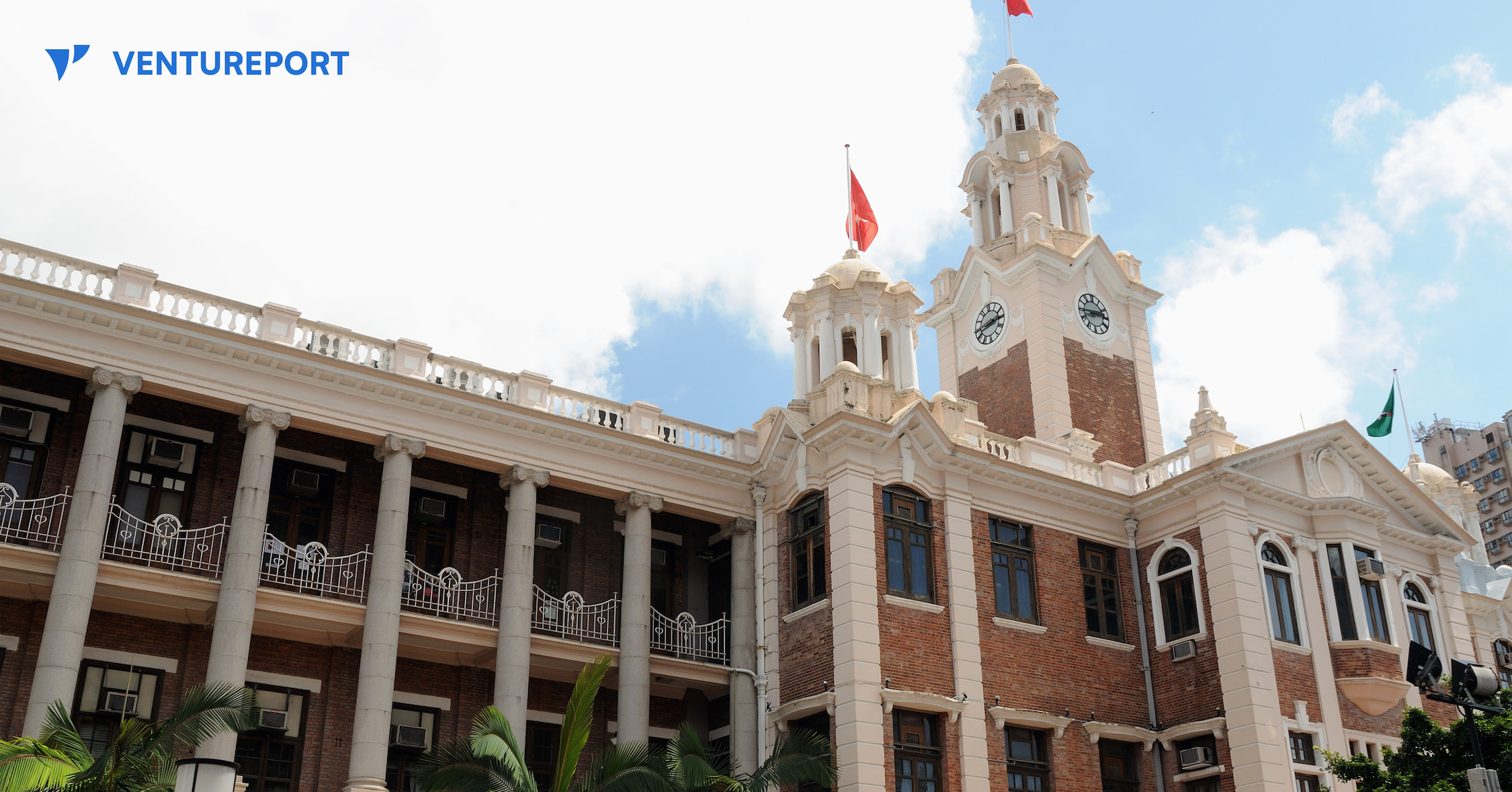
Main Building of the University of Hong Kong. PHOTO: ADOBE STOCK
Hong Kong university students are being invited to take part in the first Hong Kong University Students Fintech Innovation Competition, organised by Industrial and Commercial Bank of China (Asia). The competition gives students a chance to develop ideas around financial technology, with cash prizes, internship opportunities and a route to the national finals of the ICBC Cup on offer.
The competition is part of the 17th ICBC Cup and marks the first time ICBC has established a competition zone in Hong Kong. It is supported by the Financial Services and the Treasury Bureau and the Hong Kong Monetary Authority, with 12 Hong Kong universities also backing the initiative.
The participating universities are the University of Hong Kong, the Chinese University of Hong Kong, Hong Kong University of Science and Technology, Hong Kong Polytechnic University, City University of Hong Kong, Hong Kong Baptist University, Hong Kong Metropolitan University, Lingnan University, Hong Kong Shue Yan University, the Education University of Hong Kong, Hang Seng University of Hong Kong and St. Francis University.
For ICBC Asia, the competition is also intended to support the development of fintech in Hong Kong and expand the city's fintech talent pool. Dr. Liu Yagan, Chairman and Executive Director of Industrial and Commercial Bank of China (Asia), said the competition is designed to encourage students to develop practical applications for financial technology and explore new banking business models.
"This competition encourages university students across Hong Kong to propose practical solutions for fintech applications and banking business model innovation from the perspective of financial products and services, providing a platform for Hong Kong youth to connect with cutting-edge industries and unleash their innovative potential."
The initiative will also connect Hong Kong students with the wider ICBC Group. Liu said this would help deepen exchanges between young talent in Hong Kong and the Mainland.
The competition is open to full-time university students in Hong Kong and carries the theme "Digital Banking, Creating the Future." Students can develop ideas across 10 areas, ranging from fintech and digital finance to green finance, inclusive finance, pension finance and wealth management. The categories also include financial security services, specialised financial services, youth services and open innovation services.
The competition also offers cash prizes: the First Prize winner will receive HK$50,000; two Second Prize winners will receive HK$30,000 each; three Third Prize winners will receive HK$20,000 each; and four Honorable Mention recipients will receive HK$10,000 each.
Beyond the prize money, qualifying winners will have the opportunity to undertake internships at ICBC (Asia). The team that wins the Hong Kong First Prize will also have the opportunity to travel to Beijing in December for the ICBC Cup national finals, where it will compete against teams from across the country.
With registration now open, the competition gives Hong Kong university students an opportunity to take ideas in financial technology from the classroom into areas such as banking products, services and business models.
Keep Reading
Circles is using AI to turn telecom support from a cost centre into a faster, more personalised growth engine
Updated
August 10, 2026 5:56 PM

A woman holding a phone while using a laptop. PHOTO: ADOBE STOCK
Circles, a Singapore startup that builds software for digital telecom operators, has launched an AI concierge as part of its partnership with OpenAI. The release marks a new step in the company’s effort to modernise how telecom providers serve and retain customers. The move reflects a wider shift in the telecom sector. Many operators still rely on older support systems that can be slow, fragmented and costly to run. AI is now being tested as a way to improve service while creating new revenue opportunities.
Circles said the concierge is built on OpenAI’s API platform and sits within what it calls an AI-native telecom stack. In practical terms, the system is designed to handle customer support, account changes and personalised offers through automated interactions.
One part of the platform is called CareX. According to the company, it can deal with billing issues, service requests and network-related problems. Circles said CareX currently resolves 85% of customer queries globally without human intervention and reaches a 95% resolution rate on end-to-end tasks. That matters because customer support remains one of the larger operating costs for telecom providers. Faster automated handling could lower pressure on service teams while reducing wait times for users.
The second part of the platform is Xplore IQ, which focuses on revenue growth. The tool is designed to predict what a customer may need, recommend a suitable plan or offer and complete upgrades or downgrades automatically. Circles said the early rollout has led to a 22% rise in average revenue per user for Circles.Life Singapore. It also said personalised offers helped reduce customer churn by 9%.
"AI should empower users - not force-fit into outdated journeys. OpenAI's role has been critical in enabling Circles to scale this vision globally. With the AI concierge, we are moving beyond providing simple answers to delivering real-world outcomes, along with balancing cost and latency to maximize value for operators and customers alike", said Awais Malik, Global Chief Growth Officer at Circles.
"Circles is demonstrating how advanced AI can modernize essential industries like telecommunications at scale. By combining frontier models with multi-agent systems, they are enabling telecom operators globally to deliver faster, smarter and more personalized customer experiences. This milestone is a strong example of how AI can deliver tangible value for businesses and customers they serve", Oliver Jay, Managing Director, International for OpenAI, added.
Together, the tools are intended to connect customer service, operations and sales into one system. Rather than treating support and monetisation as separate functions, the company is combining them into a single digital layer.
Circles said the partnership will continue over the next two years as both companies work toward a more autonomous telecom model. Whether that vision is achieved remains to be seen, but the direction is clear: telecom operators are increasingly treating AI as core infrastructure rather than an optional add-on.