
ICBC Asia's new competition gives Hong Kong students a chance to test their fintech ideas beyond the classroom.
Updated
October 2, 2026 9:16 AM
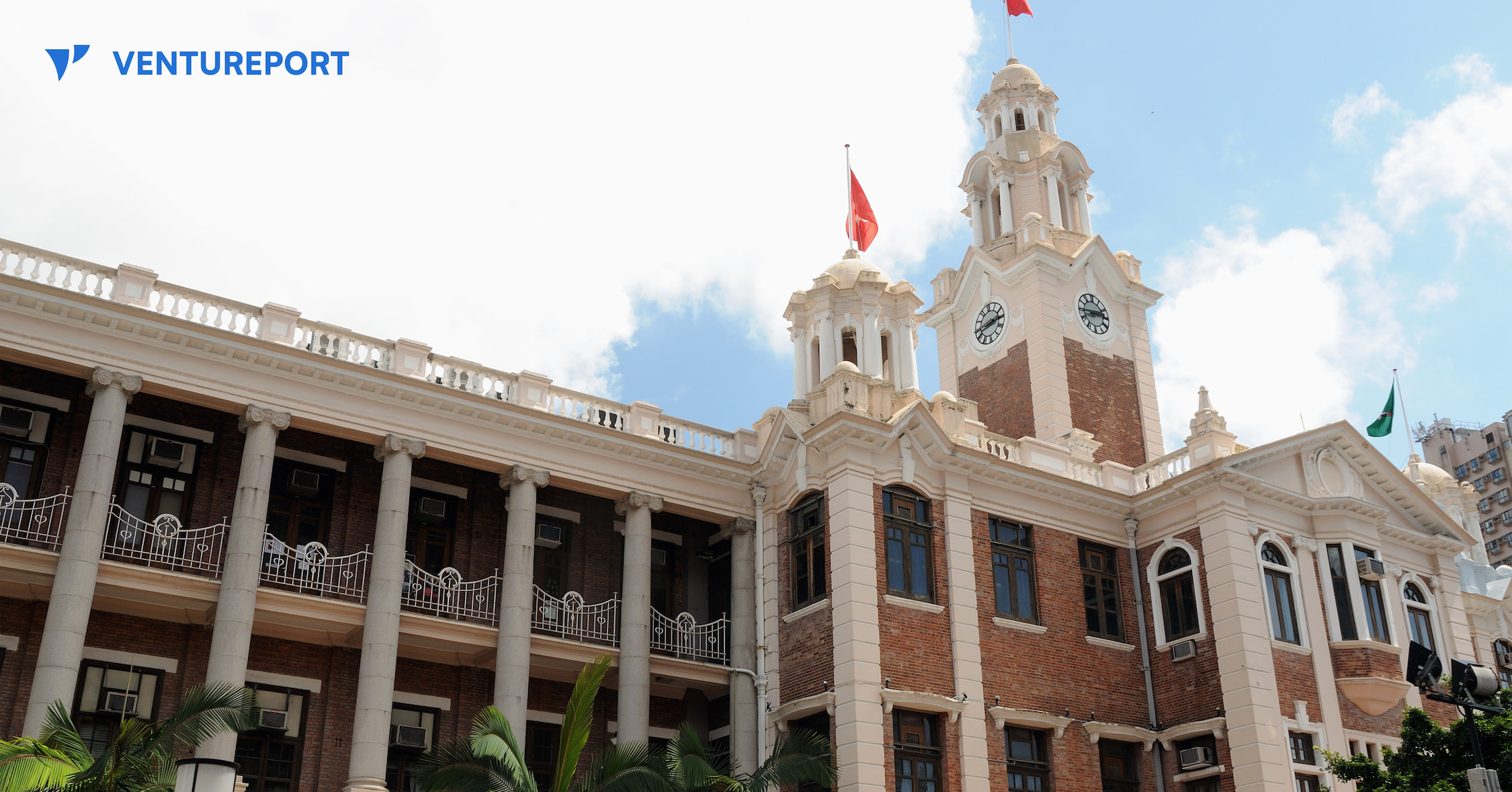
Main Building of the University of Hong Kong. PHOTO: ADOBE STOCK
Hong Kong university students are being invited to take part in the first Hong Kong University Students Fintech Innovation Competition, organised by Industrial and Commercial Bank of China (Asia). The competition gives students a chance to develop ideas around financial technology, with cash prizes, internship opportunities and a route to the national finals of the ICBC Cup on offer.
The competition is part of the 17th ICBC Cup and marks the first time ICBC has established a competition zone in Hong Kong. It is supported by the Financial Services and the Treasury Bureau and the Hong Kong Monetary Authority, with 12 Hong Kong universities also backing the initiative.
The participating universities are the University of Hong Kong, the Chinese University of Hong Kong, Hong Kong University of Science and Technology, Hong Kong Polytechnic University, City University of Hong Kong, Hong Kong Baptist University, Hong Kong Metropolitan University, Lingnan University, Hong Kong Shue Yan University, the Education University of Hong Kong, Hang Seng University of Hong Kong and St. Francis University.
For ICBC Asia, the competition is also intended to support the development of fintech in Hong Kong and expand the city's fintech talent pool. Dr. Liu Yagan, Chairman and Executive Director of Industrial and Commercial Bank of China (Asia), said the competition is designed to encourage students to develop practical applications for financial technology and explore new banking business models.
"This competition encourages university students across Hong Kong to propose practical solutions for fintech applications and banking business model innovation from the perspective of financial products and services, providing a platform for Hong Kong youth to connect with cutting-edge industries and unleash their innovative potential."
The initiative will also connect Hong Kong students with the wider ICBC Group. Liu said this would help deepen exchanges between young talent in Hong Kong and the Mainland.
The competition is open to full-time university students in Hong Kong and carries the theme "Digital Banking, Creating the Future." Students can develop ideas across 10 areas, ranging from fintech and digital finance to green finance, inclusive finance, pension finance and wealth management. The categories also include financial security services, specialised financial services, youth services and open innovation services.
The competition also offers cash prizes: the First Prize winner will receive HK$50,000; two Second Prize winners will receive HK$30,000 each; three Third Prize winners will receive HK$20,000 each; and four Honorable Mention recipients will receive HK$10,000 each.
Beyond the prize money, qualifying winners will have the opportunity to undertake internships at ICBC (Asia). The team that wins the Hong Kong First Prize will also have the opportunity to travel to Beijing in December for the ICBC Cup national finals, where it will compete against teams from across the country.
With registration now open, the competition gives Hong Kong university students an opportunity to take ideas in financial technology from the classroom into areas such as banking products, services and business models.
Keep Reading
With operations across 50 countries, MagicLab is pairing new robot systems with a platform strategy aimed at wider commercial adoption
Updated
August 10, 2026 5:56 PM
.jpg)
A standing yellow robotic arm. PHOTO: UNSPLASH
MagicLab Robotics is a Chinese startup that describes itself as an embodied AI company. At an event in Silicon Valley this week, it outlined its global ambitions and introduced new products designed for real-world use. The company said its international business now spans more than 50 countries and regions, with overseas markets accounting for 60% of total sales in 2025. That gives some indication of how quickly Chinese robotics firms are expanding beyond their home market.
At the centre of the announcement was MagicLab’s latest product line-up. It included Magic-Mix, described as a foundational world model for robots, the H01 dexterous robotic hand and its humanoid robot, MagicBot X1. In practical terms, the company is trying to build robots that can better understand their surroundings and perform physical tasks with greater precision. That is the core idea behind embodied AI, where intelligence is combined with movement and interaction in the real world rather than limited to software alone.
MagicLab says it develops both hardware and software internally. Its product range includes humanoid robots and four-legged machines, with systems designed for factories, commercial services and home use. The company also outlined where it sees demand emerging. It listed sectors such as healthcare, manufacturing, logistics, security, public safety, education and household assistance.
That wide spread of target markets reflects a broader challenge in robotics. Building capable machines is only one part of the equation. The harder task is finding enough practical uses where customers are willing to pay for them.
MagicLab also used the summit to set out a long-term commercial goal. It projected a path toward US$14 billion in annual revenue by 2036 through wider adoption of embodied AI systems. It also announced what it calls the “Co-Create 1000 Initiative”, a plan to work with external developers and partner companies.
As part of that effort, the startup said it plans to invest US$1 billion over the next five years to build a developer ecosystem that would allow third parties to create new applications for its robots. The strategy mirrors what happened in smartphones and cloud software, where ecosystems often mattered as much as the original hardware. If robotics follows a similar path, companies that attract developers could gain an advantage over those selling machines alone.
For now, MagicLab’s announcement is less about immediate breakthroughs and more about positioning. The company is presenting itself not simply as a robot maker, but as a platform business seeking a role in the next phase of intelligent machines.