
From generative AI to green energy, 15 finalist teams will take the stage after a record 390 teams entered this year's competition.
Updated
October 2, 2026 9:13 AM
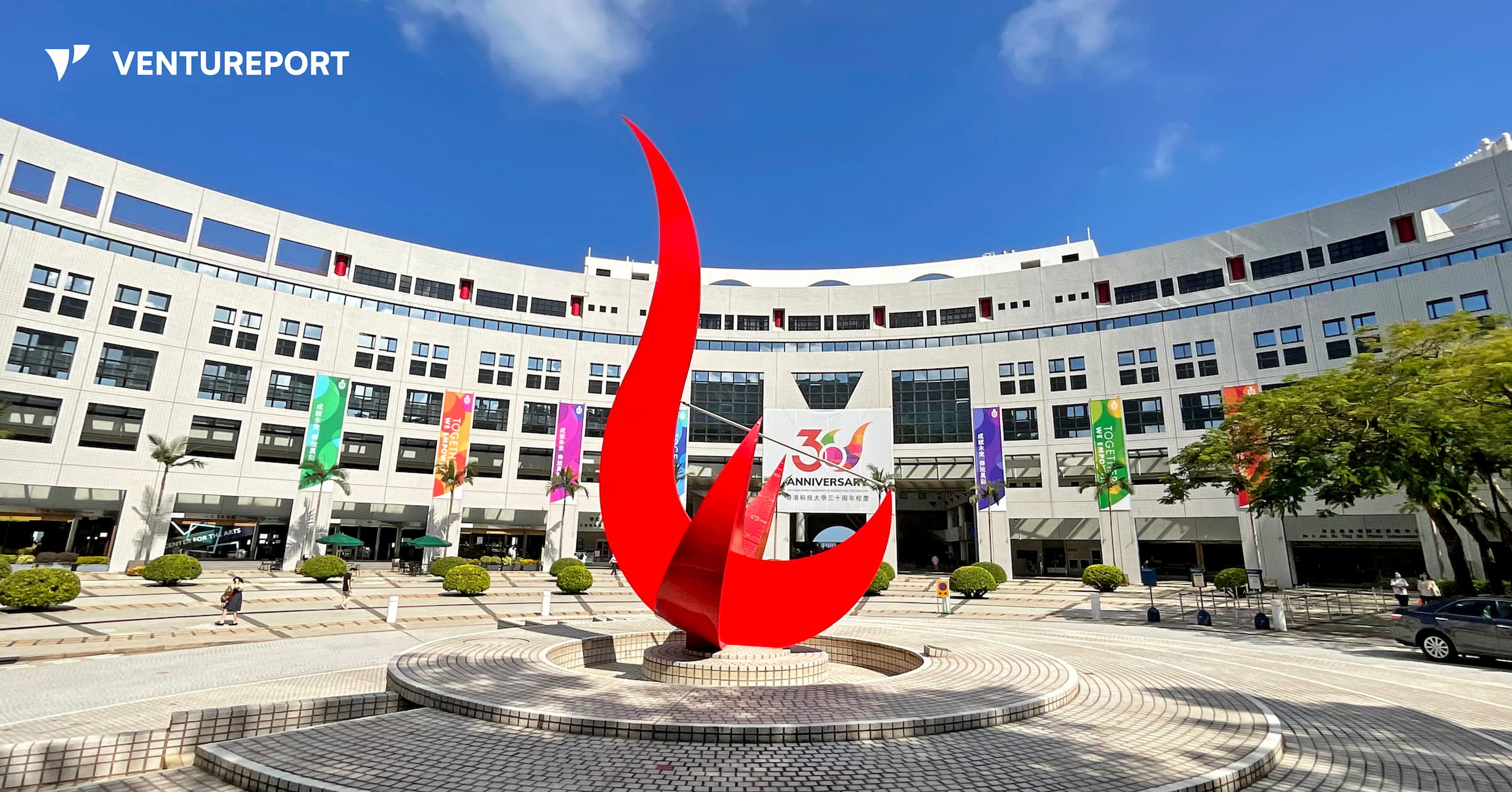
Entrance Piazza, Hong Kong University of Science and Technology. PHOTO: HKUST
The HKUST-Sino Million Dollar Entrepreneurship Competition 2026 will hold its finals on October 12, following a record 390 teams from 24 countries and regions taking part in this year's competition.
Jointly organised by the Hong Kong University of Science and Technology (HKUST) and Sino Group, the competition aims to give young entrepreneurs a platform to develop and present their ideas. Sino Group Deputy Chief Executive Officer Wong Wing-lung said the Group has partnered with HKUST for many years to support young talent and the development of innovation and technology in Hong Kong.
He said the competition gives young entrepreneurs a platform to showcase their creativity, exchange ideas and put their concepts into practice.
The international participation is reflected in the universities and regions represented this year. Participants include students from the University of Oxford in the UK, the University of Pennsylvania in the US and the National University of Singapore. Teams have also joined from Australia and South Africa.
After multiple rounds of assessment, 15 teams have advanced to the finals. Their projects cover health technology, generative AI, smart buildings, and green energy management. At the finals, the teams will present their solutions to a judging panel comprising venture capital investors, industry leaders and academic experts. They will compete for more than HK$1 million in prizes and awards.
The 2026 competition has also expanded the areas it recognises. Three new awards have been introduced this year: the Transformative AI Award, the NextGen Biotech Award and the Societal Influential Award. The competition will also continue to offer the Sustainability Impact Award. Together, the awards focus on areas ranging from emerging technologies to social and sustainability challenges.
The organisers are also adding new activities to help teams develop their ideas further. This year's programme includes pitching skills training, AI workshops, investor matching sessions and mentorship opportunities. The AI workshops will cover areas including generative AI and AI agents, while representatives from venture capital firms such as Gobi Partners and InnoAngel Fund have been invited to share insights on fundraising, product positioning and market expansion.
These activities are intended to help young entrepreneurs strengthen their business plans and presentation skills. They also give teams opportunities to explore technology commercialisation and potential market applications.
The competition will also launch the InnoBay 1M PLUS Program during the Grand Final. The programme will focus initially on Smart City Development and aims to connect HKUST start-ups and competition alumni with industry partners. It will also support potential proof-of-concept opportunities and help promising innovations move towards commercial adoption.
The Grand Final will also include an audience voting segment. Members of the public will be able to vote for the team they believe has the greatest potential and impact, with those who correctly vote for an eventual winning team entering a lucky draw.
For Wong, the competition is part of a broader effort to develop Hong Kong's innovation and technology talent. He noted that Hong Kong's first Five-Year Plan and latest Policy Address both highlight innovation, technology and talent development.
Prof. Tim Cheng Kwang-Ting, HKUST's Vice-President for Research and Development, said the competition has also served as a platform for aspiring entrepreneurs to connect with investors, understand market needs, test their ideas and gain practical entrepreneurial experience. He added that the competition has strengthened its training, mentorship and networking activities this year.
The Group believes that closer cooperation between industry, academia and research institutions can help turn innovative ideas into practical applications. Through the competition and its wider support programmes, young entrepreneurs are given opportunities to develop their ideas, connect with potential partners and explore how they can be taken from early concepts towards real-world applications.
Keep Reading
What Overstory’s vegetation intelligence reveals about wildfire and outage risk.
Updated
January 15, 2026 8:03 PM

Aerial photograph of a green field. PHOTO: UNSPLASH
Managing vegetation around power lines has long been one of the biggest operational challenges for utilities. A single tree growing too close to electrical infrastructure can trigger outages or, in the worst cases, spark fires. With vast service territories, shifting weather patterns and limited visibility into changing landscape conditions, utilities often rely on inspections and broad wildfire-risk maps that provide only partial insight into where the most serious threats actually are.
Overstory, a company specializing in AI-powered vegetation intelligence, addresses this visibility gap with a platform that uses high-resolution satellite imagery and machine-learning models to interpret vegetation conditions in detail.Instead of assessing risk by region, terrain type or outdated maps, the system evaluates conditions tree by tree. This helps utilities identify precisely where hazards exist and which areas demand immediate intervention—critical in regions where small variations in vegetation density, fuel type or moisture levels can influence how quickly a spark might spread.
At the core of this technology is Overstory’s proprietary Fuel Detection Model, designed to identify vegetation most likely to ignite or accelerate wildfire spread. Unlike broad, publicly available fire-risk maps, the model analyzes the specific fuel conditions surrounding electrical infrastructure. By pinpointing exact locations where certain fuel types or densities create elevated risk, utilities can plan targeted wildfire-mitigation work rather than relying on sweeping, resource-heavy maintenance cycles.
This data-driven approach is reshaping how utilities structure vegetation-management programs. Having visibility into where risks are concentrated—and which trees or areas pose the highest threat—allows teams to prioritize work based on measurable evidence. For many utilities, this shift supports more efficient crew deployment, reduces unnecessary trims and builds clearer justification for preventive action. It also offers a path to strengthening grid reliability without expanding operational budgets.
Overstory’s recent US$43 million Series B funding round, led by Blume Equity with support from Energy Impact Partners and existing investors, reflects growing interest in AI tools that translate environmental data into actionable wildfire-prevention intelligence. The investment will support further development of Overstory’s risk models and help expand access to its vegetation-intelligence platform.
Yet the company’s focus remains consistent: giving utilities sharper, real-time visibility into the landscapes they manage. By converting satellite observations into clear and actionable insights, Overstory’s AI system provides a more informed foundation for decisions that impact grid safety and community resilience. In an environment where a single missed hazard can have far-reaching consequences, early and precise detection has become an essential tool for preventing wildfires before they start.