
From generative AI to green energy, 15 finalist teams will take the stage after a record 390 teams entered this year's competition.
Updated
October 2, 2026 9:13 AM
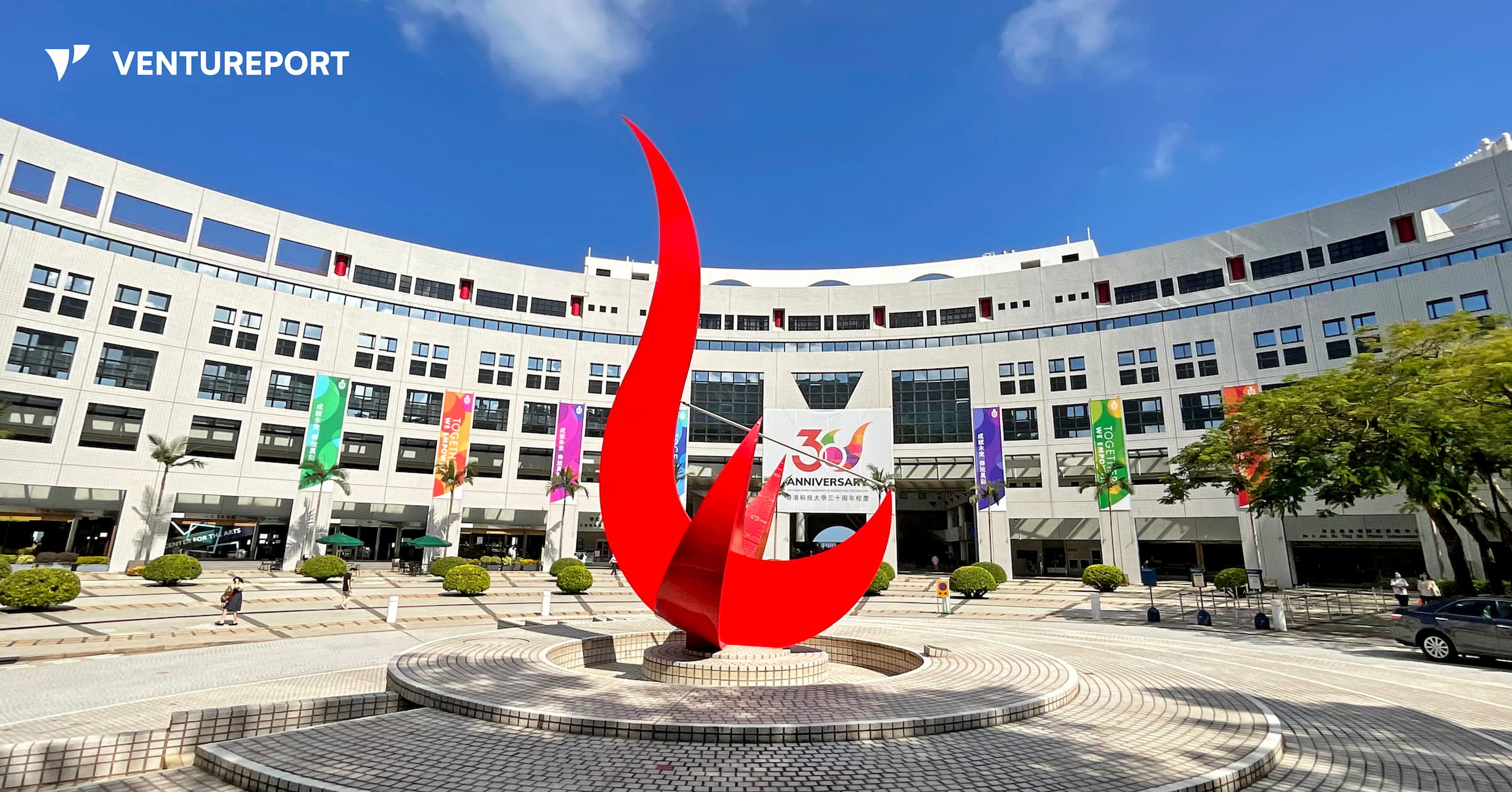
Entrance Piazza, Hong Kong University of Science and Technology. PHOTO: HKUST
The HKUST-Sino Million Dollar Entrepreneurship Competition 2026 will hold its finals on October 12, following a record 390 teams from 24 countries and regions taking part in this year's competition.
Jointly organised by the Hong Kong University of Science and Technology (HKUST) and Sino Group, the competition aims to give young entrepreneurs a platform to develop and present their ideas. Sino Group Deputy Chief Executive Officer Wong Wing-lung said the Group has partnered with HKUST for many years to support young talent and the development of innovation and technology in Hong Kong.
He said the competition gives young entrepreneurs a platform to showcase their creativity, exchange ideas and put their concepts into practice.
The international participation is reflected in the universities and regions represented this year. Participants include students from the University of Oxford in the UK, the University of Pennsylvania in the US and the National University of Singapore. Teams have also joined from Australia and South Africa.
After multiple rounds of assessment, 15 teams have advanced to the finals. Their projects cover health technology, generative AI, smart buildings, and green energy management. At the finals, the teams will present their solutions to a judging panel comprising venture capital investors, industry leaders and academic experts. They will compete for more than HK$1 million in prizes and awards.
The 2026 competition has also expanded the areas it recognises. Three new awards have been introduced this year: the Transformative AI Award, the NextGen Biotech Award and the Societal Influential Award. The competition will also continue to offer the Sustainability Impact Award. Together, the awards focus on areas ranging from emerging technologies to social and sustainability challenges.
The organisers are also adding new activities to help teams develop their ideas further. This year's programme includes pitching skills training, AI workshops, investor matching sessions and mentorship opportunities. The AI workshops will cover areas including generative AI and AI agents, while representatives from venture capital firms such as Gobi Partners and InnoAngel Fund have been invited to share insights on fundraising, product positioning and market expansion.
These activities are intended to help young entrepreneurs strengthen their business plans and presentation skills. They also give teams opportunities to explore technology commercialisation and potential market applications.
The competition will also launch the InnoBay 1M PLUS Program during the Grand Final. The programme will focus initially on Smart City Development and aims to connect HKUST start-ups and competition alumni with industry partners. It will also support potential proof-of-concept opportunities and help promising innovations move towards commercial adoption.
The Grand Final will also include an audience voting segment. Members of the public will be able to vote for the team they believe has the greatest potential and impact, with those who correctly vote for an eventual winning team entering a lucky draw.
For Wong, the competition is part of a broader effort to develop Hong Kong's innovation and technology talent. He noted that Hong Kong's first Five-Year Plan and latest Policy Address both highlight innovation, technology and talent development.
Prof. Tim Cheng Kwang-Ting, HKUST's Vice-President for Research and Development, said the competition has also served as a platform for aspiring entrepreneurs to connect with investors, understand market needs, test their ideas and gain practical entrepreneurial experience. He added that the competition has strengthened its training, mentorship and networking activities this year.
The Group believes that closer cooperation between industry, academia and research institutions can help turn innovative ideas into practical applications. Through the competition and its wider support programmes, young entrepreneurs are given opportunities to develop their ideas, connect with potential partners and explore how they can be taken from early concepts towards real-world applications.
Keep Reading
A step forward that could influence how smart contracts are designed and verified.
Updated
January 8, 2026 6:32 PM
ChainGPT's robot mascot. IMAGE: CHAINGPT
A new collaboration between ChainGPT, an AI company specialising in blockchain development tools and Secret Network, a privacy-focused blockchain platform, is redefining how developers can safely build smart contracts with artificial intelligence. Together, they’ve achieved a major industry first: an AI model trained exclusively to write and audit Solidity code is now running inside a Trusted Execution Environment (TEE). For the blockchain ecosystem, this marks a turning point in how AI, privacy and on-chain development can work together.
For years, smart-contract developers have faced a trade-off. AI assistants could speed up coding and security reviews, but only if developers uploaded their most sensitive source code to external servers. That meant exposing intellectual property, confidential logic and even potential vulnerabilities. In an industry where trust is everything, this risk held many teams back from using AI at all.
ChainGPT’s Solidity-LLM aims to solve that problem. It is a specialised large language model trained on over 650,000 curated Solidity contracts, giving it a deep understanding of how real smart contracts are structured, optimised and secured. And now, by running inside SecretVM, the Confidential Virtual Machine that powers Secret Network’s encrypted compute layer, the model can assist developers without ever revealing their code to outside parties.
“Confidential computing is no longer an abstract concept,” said Luke Bowman, COO of the Secret Network Foundation. “We've shown that you can run a complex AI model, purpose-built for Solidity, inside a fully encrypted environment and that every inference can be verified on-chain. This is a real milestone for both privacy and decentralised infrastructure”.
SecretVM makes this workflow possible by using hardware-backed encryption to protect all data while computations take place. Developers don’t interact with the underlying hardware or cryptography. Instead, they simply work inside a private, sealed environment where their code stays invisible to everyone except them—even node operators. For the first time, developers can generate, test and analyse smart contracts with AI while keeping every detail confidential.
This shift opens new possibilities for the broader blockchain community. Developers gain a private coding partner that can streamline contract logic or catch vulnerabilities without risking leaks. Auditors can rely on AI-assisted analysis while keeping sensitive audit material protected. Enterprises working in finance, healthcare or governance finally have a path to adopt AI-driven blockchain automation without raising compliance concerns. Even decentralised organisations can run smart-contract agents that make decisions privately, without exposing internal logic on a public chain.
The system also supports secure model training and fine-tuning on encrypted datasets. This enables collaborative AI development without forcing anyone to share raw data—a meaningful step toward decentralised and privacy-preserving AI at scale.
By combining specialised AI with confidential computing, ChainGPT and Secret Network are shifting the trust model of on-chain development. Instead of relying on centralised cloud AI services, developers now have a verifiable, encrypted environment where they keep full control of their code, their data and their workflow. It’s a practical solution to one of blockchain’s biggest challenges: using powerful AI tools without sacrificing privacy.
As the technology evolves, the roadmap includes confidential model fine-tuning, multi-agent AI systems and cross-chain use cases. But the core advancement is already clear: developers now have a way to use AI for smart contract development that is fast, private and verifiable—without compromising the security standards that decentralised systems rely on.