
From generative AI to green energy, 15 finalist teams will take the stage after a record 390 teams entered this year's competition.
Updated
October 2, 2026 9:13 AM
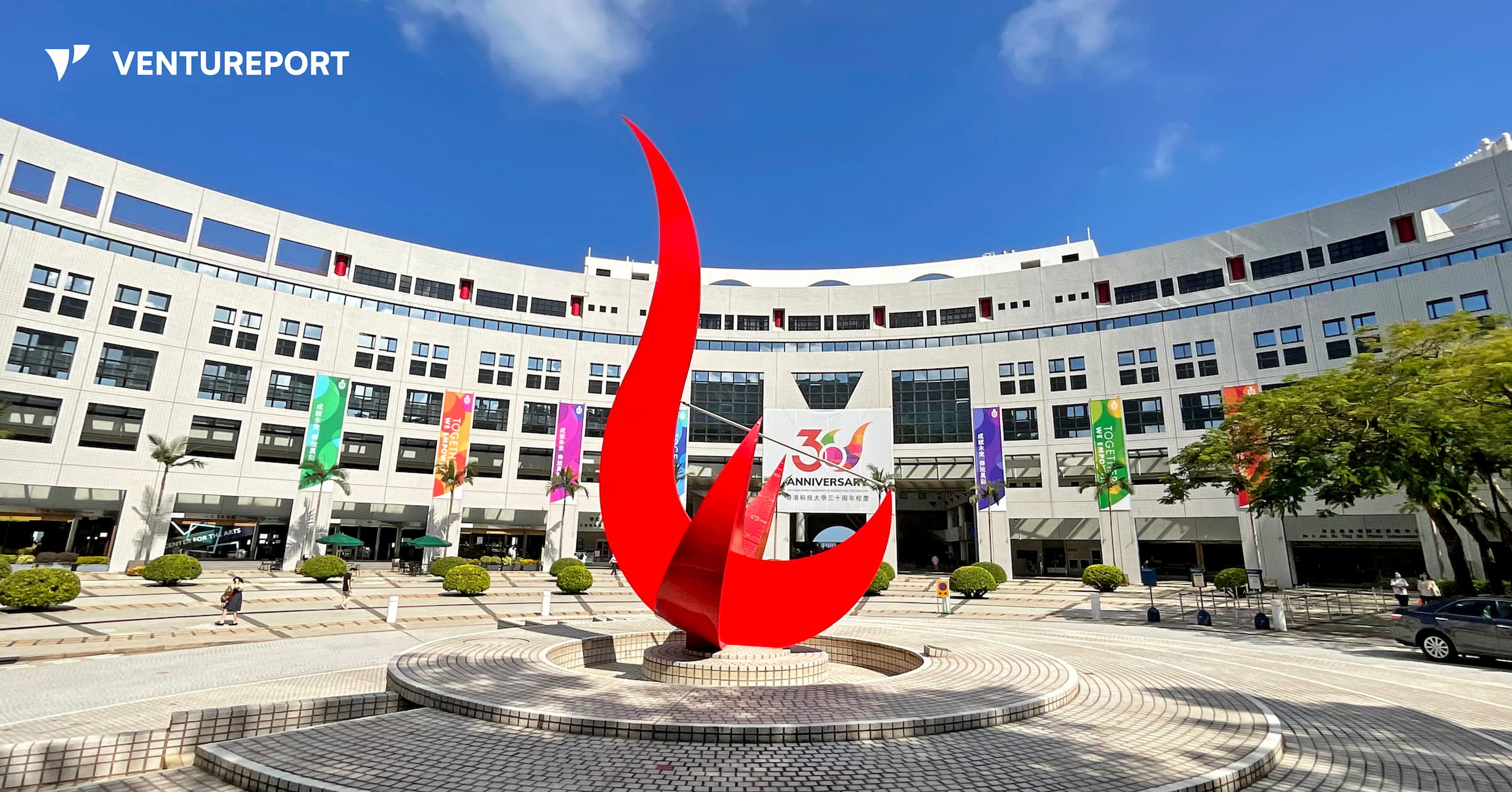
Entrance Piazza, Hong Kong University of Science and Technology. PHOTO: HKUST
The HKUST-Sino Million Dollar Entrepreneurship Competition 2026 will hold its finals on October 12, following a record 390 teams from 24 countries and regions taking part in this year's competition.
Jointly organised by the Hong Kong University of Science and Technology (HKUST) and Sino Group, the competition aims to give young entrepreneurs a platform to develop and present their ideas. Sino Group Deputy Chief Executive Officer Wong Wing-lung said the Group has partnered with HKUST for many years to support young talent and the development of innovation and technology in Hong Kong.
He said the competition gives young entrepreneurs a platform to showcase their creativity, exchange ideas and put their concepts into practice.
The international participation is reflected in the universities and regions represented this year. Participants include students from the University of Oxford in the UK, the University of Pennsylvania in the US and the National University of Singapore. Teams have also joined from Australia and South Africa.
After multiple rounds of assessment, 15 teams have advanced to the finals. Their projects cover health technology, generative AI, smart buildings, and green energy management. At the finals, the teams will present their solutions to a judging panel comprising venture capital investors, industry leaders and academic experts. They will compete for more than HK$1 million in prizes and awards.
The 2026 competition has also expanded the areas it recognises. Three new awards have been introduced this year: the Transformative AI Award, the NextGen Biotech Award and the Societal Influential Award. The competition will also continue to offer the Sustainability Impact Award. Together, the awards focus on areas ranging from emerging technologies to social and sustainability challenges.
The organisers are also adding new activities to help teams develop their ideas further. This year's programme includes pitching skills training, AI workshops, investor matching sessions and mentorship opportunities. The AI workshops will cover areas including generative AI and AI agents, while representatives from venture capital firms such as Gobi Partners and InnoAngel Fund have been invited to share insights on fundraising, product positioning and market expansion.
These activities are intended to help young entrepreneurs strengthen their business plans and presentation skills. They also give teams opportunities to explore technology commercialisation and potential market applications.
The competition will also launch the InnoBay 1M PLUS Program during the Grand Final. The programme will focus initially on Smart City Development and aims to connect HKUST start-ups and competition alumni with industry partners. It will also support potential proof-of-concept opportunities and help promising innovations move towards commercial adoption.
The Grand Final will also include an audience voting segment. Members of the public will be able to vote for the team they believe has the greatest potential and impact, with those who correctly vote for an eventual winning team entering a lucky draw.
For Wong, the competition is part of a broader effort to develop Hong Kong's innovation and technology talent. He noted that Hong Kong's first Five-Year Plan and latest Policy Address both highlight innovation, technology and talent development.
Prof. Tim Cheng Kwang-Ting, HKUST's Vice-President for Research and Development, said the competition has also served as a platform for aspiring entrepreneurs to connect with investors, understand market needs, test their ideas and gain practical entrepreneurial experience. He added that the competition has strengthened its training, mentorship and networking activities this year.
The Group believes that closer cooperation between industry, academia and research institutions can help turn innovative ideas into practical applications. Through the competition and its wider support programmes, young entrepreneurs are given opportunities to develop their ideas, connect with potential partners and explore how they can be taken from early concepts towards real-world applications.
Keep Reading
Examining the shift from fast answers to verified intelligence in enterprise AI.
Updated
January 8, 2026 6:33 PM
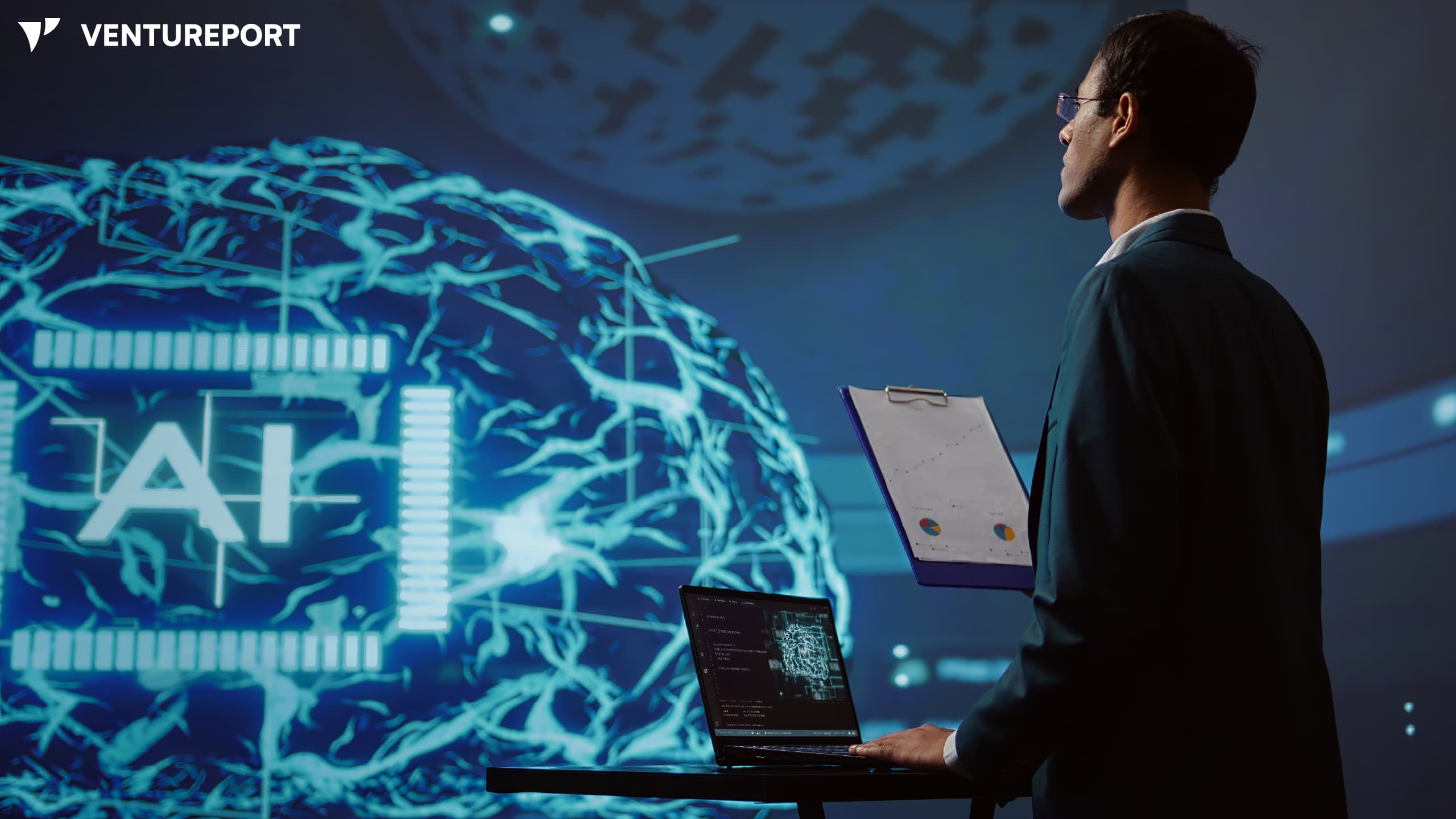
Startup employee reviewing business metrics on an AI-powered dashboard. PHOTO: FREEPIK
Neuron7.ai, a company that builds AI systems to help service teams resolve technical issues faster, has launched Neuro. It is a new kind of AI agent built for environments where accuracy matters more than speed. From manufacturing floors to hospital equipment rooms, Neuro is designed for situations where a wrong answer can halt operations.
What sets Neuro apart is its focus on reliability. Instead of relying solely on large language models that often produce confident but inaccurate responses, Neuro combines deterministic AI — which draws on verified, trusted data — with autonomous reasoning for more complex cases. This hybrid design helps the system provide context-aware resolutions without inventing answers or “hallucinating”, a common issue that has made many enterprises cautious about adopting agentic AI.
“Enterprise adoption of agentic AI has stalled despite massive vendor investment. Gartner predicts 40% of projects will be canceled by 2027 due to reliability concerns”, said Niken Patel, CEO and Co-Founder of Neuron7. “The root cause is hallucinations. In service operations, outcomes are binary. An issue is either resolved or it is not. Probabilistic AI that is right only 70% of the time fails 30% of your customers and that failure rate is unacceptable for mission-critical service”.
That concern shaped how Neuro was built. “We use deterministic guided fixes for known issues. No guessing, no hallucinations — and reserve autonomous AI reasoning for complex scenarios. What sets Neuro apart is knowing which mode to use. While competitors race to make agents more autonomous, we're focused on making service resolution more accurate and trusted”, Patel explained.
At the heart of Neuro is the Smart Resolution Hub, Neuron7’s central intelligence layer that consolidates service data, knowledge bases and troubleshooting workflows into one conversational experience. This means a technician can describe a problem — say, a diagnostic error in an MRI scanner — and Neuro can instantly generate a verified, step-by-step solution. If the problem hasn’t been encountered before, it can autonomously scan through thousands of internal and external data points to identify the most likely fix, all while maintaining traceability and compliance.
Neuro’s architecture also makes it practical for real-world use. It integrates seamlessly with enterprise systems such as Salesforce, Microsoft, ServiceNow and SAP, allowing companies to embed it within their existing support operations. Early users of Neuron7’s platform have reported measurable improvements — faster resolutions, higher customer satisfaction and reduced downtime — thanks to guided intelligence that scales expert-level problem solving across teams.
The timing of Neuro’s debut feels deliberate. As organizations look to move past the hype of generative AI, trust and accountability have become the new benchmarks. AI systems that can explain their reasoning and stay within verifiable boundaries are emerging as the next phase of enterprise adoption.
“The market has figured out how to build autonomous agents”, Patel said. “The unsolved problem is building accurate agents for contexts where errors have consequences. Neuro fills that gap”.
Neuron7 is building a system that knows its limits — one that reasons carefully, acts responsibly and earns trust where it matters most. In a space dominated by speculation, that discipline may well redefine what “intelligent” really means in enterprise AI.