
From generative AI to green energy, 15 finalist teams will take the stage after a record 390 teams entered this year's competition.
Updated
October 2, 2026 9:13 AM
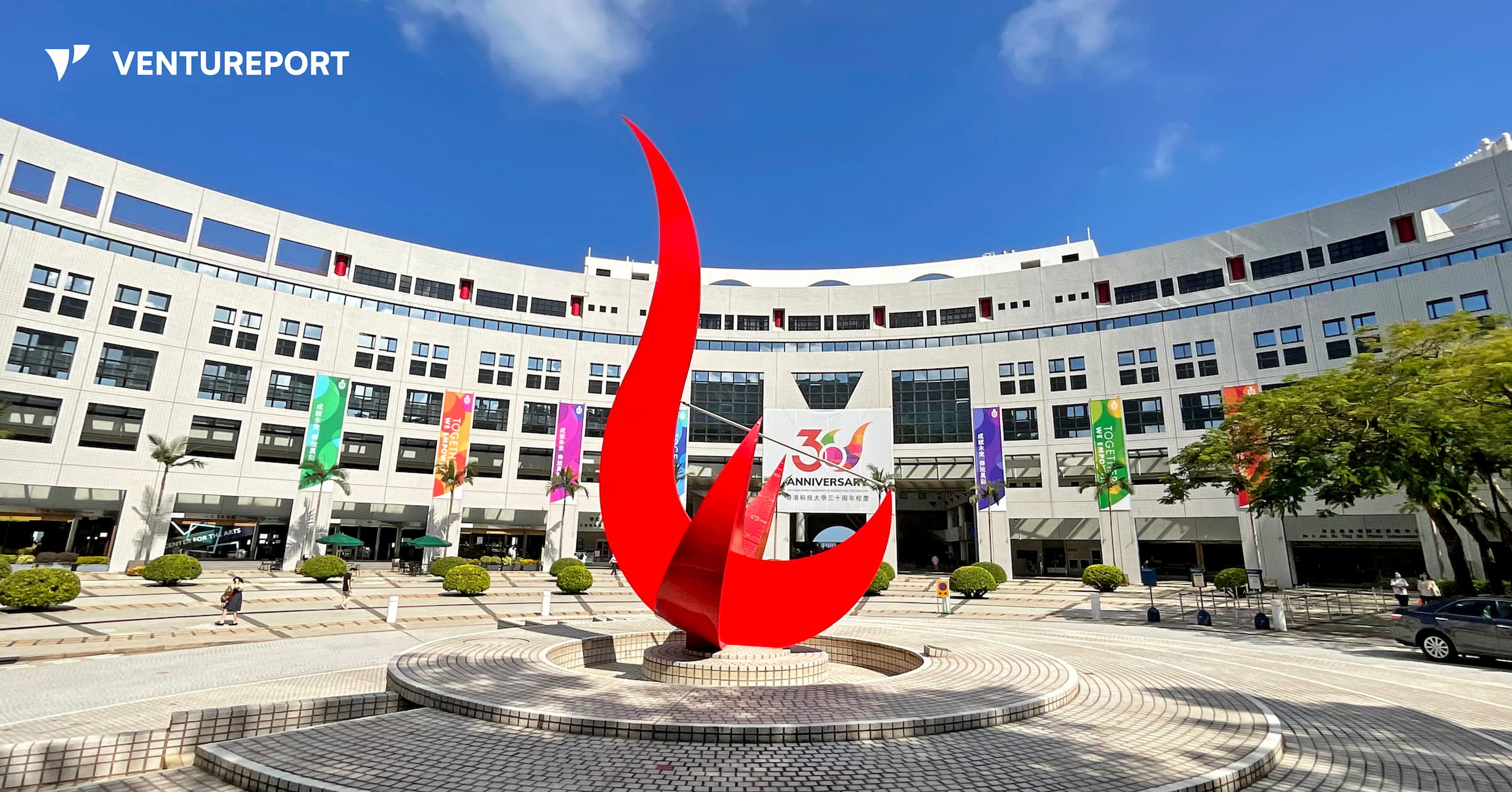
Entrance Piazza, Hong Kong University of Science and Technology. PHOTO: HKUST
The HKUST-Sino Million Dollar Entrepreneurship Competition 2026 will hold its finals on October 12, following a record 390 teams from 24 countries and regions taking part in this year's competition.
Jointly organised by the Hong Kong University of Science and Technology (HKUST) and Sino Group, the competition aims to give young entrepreneurs a platform to develop and present their ideas. Sino Group Deputy Chief Executive Officer Wong Wing-lung said the Group has partnered with HKUST for many years to support young talent and the development of innovation and technology in Hong Kong.
He said the competition gives young entrepreneurs a platform to showcase their creativity, exchange ideas and put their concepts into practice.
The international participation is reflected in the universities and regions represented this year. Participants include students from the University of Oxford in the UK, the University of Pennsylvania in the US and the National University of Singapore. Teams have also joined from Australia and South Africa.
After multiple rounds of assessment, 15 teams have advanced to the finals. Their projects cover health technology, generative AI, smart buildings, and green energy management. At the finals, the teams will present their solutions to a judging panel comprising venture capital investors, industry leaders and academic experts. They will compete for more than HK$1 million in prizes and awards.
The 2026 competition has also expanded the areas it recognises. Three new awards have been introduced this year: the Transformative AI Award, the NextGen Biotech Award and the Societal Influential Award. The competition will also continue to offer the Sustainability Impact Award. Together, the awards focus on areas ranging from emerging technologies to social and sustainability challenges.
The organisers are also adding new activities to help teams develop their ideas further. This year's programme includes pitching skills training, AI workshops, investor matching sessions and mentorship opportunities. The AI workshops will cover areas including generative AI and AI agents, while representatives from venture capital firms such as Gobi Partners and InnoAngel Fund have been invited to share insights on fundraising, product positioning and market expansion.
These activities are intended to help young entrepreneurs strengthen their business plans and presentation skills. They also give teams opportunities to explore technology commercialisation and potential market applications.
The competition will also launch the InnoBay 1M PLUS Program during the Grand Final. The programme will focus initially on Smart City Development and aims to connect HKUST start-ups and competition alumni with industry partners. It will also support potential proof-of-concept opportunities and help promising innovations move towards commercial adoption.
The Grand Final will also include an audience voting segment. Members of the public will be able to vote for the team they believe has the greatest potential and impact, with those who correctly vote for an eventual winning team entering a lucky draw.
For Wong, the competition is part of a broader effort to develop Hong Kong's innovation and technology talent. He noted that Hong Kong's first Five-Year Plan and latest Policy Address both highlight innovation, technology and talent development.
Prof. Tim Cheng Kwang-Ting, HKUST's Vice-President for Research and Development, said the competition has also served as a platform for aspiring entrepreneurs to connect with investors, understand market needs, test their ideas and gain practical entrepreneurial experience. He added that the competition has strengthened its training, mentorship and networking activities this year.
The Group believes that closer cooperation between industry, academia and research institutions can help turn innovative ideas into practical applications. Through the competition and its wider support programmes, young entrepreneurs are given opportunities to develop their ideas, connect with potential partners and explore how they can be taken from early concepts towards real-world applications.
Keep Reading
HKU professor apologizes after PhD student’s AI-assisted paper cites fabricated sources.
Updated
January 8, 2026 6:33 PM
.jpg)
The University of Hong Kong in Pok Fu Lam, Hong Kong Island. PHOTO: ADOBE STOCK
It’s no surprise that artificial intelligence, while remarkably capable, can also go astray—spinning convincing but entirely fabricated narratives. From politics to academia, AI’s “hallucinations” have repeatedly shown how powerful technology can go off-script when left unchecked.
Take Grok-2, for instance. In July 2024, the chatbot misled users about ballot deadlines in several U.S. states, just days after President Joe Biden dropped his re-election bid against former President Donald Trump. A year earlier, a U.S. lawyer found himself in court for relying on ChatGPT to draft a legal brief—only to discover that the AI tool had invented entire cases, citations and judicial opinions. And now, the academic world has its own cautionary tale.
Recently, a journal paper from the Department of Social Work and Social Administration at the University of Hong Kong was found to contain fabricated citations—sources apparently created by AI. The paper, titled “Forty Years of Fertility Transition in Hong Kong,” analyzed the decline in Hong Kong’s fertility rate over the past four decades. Authored by doctoral student Yiming Bai, along with Yip Siu-fai, Vice Dean of the Faculty of Social Sciences and other university officials, the study identified falling marriage rates as a key driver behind the city’s shrinking birth rate. The authors recommended structural reforms to make Hong Kong’s social and work environment more family-friendly.
But the credibility of the paper came into question when inconsistencies surfaced among its references. Out of 61 cited works, some included DOI (Digital Object Identifier) links that led to dead ends, displaying “DOI Not Found.” Others claimed to originate from academic journals, yet searches yielded no such publications.
Speaking to HK01, Yip acknowledged that his student had used AI tools to organize the citations but failed to verify the accuracy of the generated references. “As the corresponding author, I bear responsibility”, Yip said, apologizing for the damage caused to the University of Hong Kong and the journal’s reputation. He clarified that the paper itself had undergone two rounds of verification and that its content was not fabricated—only the citations had been mishandled.
Yip has since contacted the journal’s editor, who accepted his explanation and agreed to re-upload a corrected version in the coming days. A formal notice addressing the issue will also be released. Yip said he would personally review each citation “piece by piece” to ensure no errors remain.
As for the student involved, Yip described her as a diligent and high-performing researcher who made an honest mistake in her first attempt at using AI for academic assistance. Rather than penalize her, Yip chose a more constructive approach, urging her to take a course on how to use AI tools responsibly in academic research.
Ultimately, in an age where generative AI can produce everything from essays to legal arguments, there are two lessons to take away from this episode. First, AI is a powerful assistant, but only that. The final judgment must always rest with us. No matter how seamless the output seems, cross-checking and verifying information remain essential. Second, as AI becomes integral to academic and professional life, institutions must equip students and employees with the skills to use it responsibly. Training and mentorship are no longer optional; they’re the foundation for using AI to enhance, not undermine, human work.
Because in this age of intelligent machines, staying relevant isn’t about replacing human judgment with AI, it’s about learning how to work alongside it.