
Six technology companies showcased solutions for financial research, wealth management, consumer insight and security to investors and institutions.
Updated
November 14, 2026 11:54 PM

Arnold Lau and King Leung (back row, fourth and fifth from left), Associate Directors-General of Investment Promotion at InvestHK, join the Ventureport team and representatives from the six technology companies. PHOTO: VENTUREPORT
Ventureport hosted the soft launch of InvestHK’s Fast-Track Connect at its AI+ Tech+ Finance+ gathering on 30 October, bringing more than 100 guests to Pier 1929 in Wan Chai.
Sponsored by InvestHK, the event brought investors, institutional representatives and technology companies together to explore investment and business partnerships. Six companies took the stage to showcase software solutions for financial professionals, consumer research, local AI computing and digital asset security.

The Acting Head of Startups, at InvestHK, Chin-yung (CY), and the Senior Vice President (Fintech), Pauline Fan, introduced Fast-Track Connect. They explained how the agency’s international network connects it with technology companies seeking investment, customers and business opportunities in Hong Kong.

Their remarks also highlight the need for a more structured approach to build these connections. Investors need easier ways to identify companies that match their interests, while institutions seeking new technology need access to businesses whose products could support their operations or benefit their customers.
To address this need, Fast-Track Connect provides an online platform where technology companies can publish profiles outlining their products and funding needs. Investors and corporate participants can identify relevant businesses and contact them to explore potential investments or collaborations. Service providers and community partners are also part of the platform. Alongside investors and corporate participants, these groups are designated as Champions on the platform.
Curated by InvestHK and supported by the Financial Services and the Treasury Bureau, Fast-Track Connect builds on the Global Fast Track Programme. It aims to help local enterprises expand into Chinese Mainland, Southeast Asia and other markets.

AlphaPai, an AI-powered investment research platform developed by financial technology company RabyteTech, presented tools for financial research, including gathering data, monitoring financial instruments and comparing information from corporate earnings calls.

At the event, the team explained how users can give research instructions in everyday language, while the software retrieves and processes information to prepare reports and presentation materials. Examples included tracking market developments and comparing company statements over time. The team also emphasised the importance of traceable sources, allowing analysts to verify the information behind their research.
A2B2.AI, a fintech startup, presented AI- powered tools designed to support investors and wealth advisers. Its specialist AI agents—software designed to carry out particular tasks—help prepare client meeting briefings, monitor financial products approaching maturity and identify market developments relevant to individual clients, according to the team.

For investors, the tool can help make sense of lengthy documents provided by advisers and bring information from different accounts together to assess risk exposure. For wealth professionals, the tools support preparation and follow-up around client meetings.
The team described its approach as combining AI with human expertise to support financial decision- making. It also clarified that the platform does not execute investment transactions on behalf of clients, leaving those decisions and actions in their hands.
Preferences AI, an AI startup specialising in synthetic consumer research, presented simulated consumer profiles that businesses can use to explore how different audiences might respond to products, pricing and marketing messages. These profiles generate modelled responses rather than feedback from people directly interviewed or surveyed.

The company described that its profiles are grounded in population data and account for differences between local audiences Businesses can use them to explore pricing or packaging options, as well as ask follow-up questions to understand the reasons behind a particular response. The team also discussed testing its models and working with academics to help validate the approach. It said the technology could help businesses explore consumer preferences more quickly.
ByteFuture, an AI infrastructure startup, focused on running AI on users’ own hardware. It introduced Olares, its operating system, and Olares One, a device designed to run AI models and applications locally.

Its applications included personal assistance, financial research and content creation. The team argued that users handling private documents or proprietary trading strategies may prefer to retain that material on equipment they control.
A demonstration of AI-generated video illustrated creative work the team said could run locally. It also described applications and agents available through its software marketplace.
PureGlobal, a fintech company, addressed digital asset custody: the systems used to safeguard access to digital assets. Its team described technology for protecting access credentials and supporting offline transactions without a conventional internet connection.

The presentation focused on infrastructure for institutions holding and transferring digital assets, including security under different operating conditions.
SlowMist, a blockchain security firm, examined the risks of giving AI agents permission to read information and perform tasks. Its examples included malicious instructions concealed in material an agent might encounter and attacks exploiting access granted to software.

The team discussed security auditing, monitoring and investigations alongside risks arising from third-party tools and an agent’s stored information. One scenario involved exposing a wallet’s recovery phrase, which can give someone control over its assets.
Keep Reading
Humanoids are moving from research labs into real industries — and capital is finally catching up.
Updated
January 8, 2026 6:31 PM
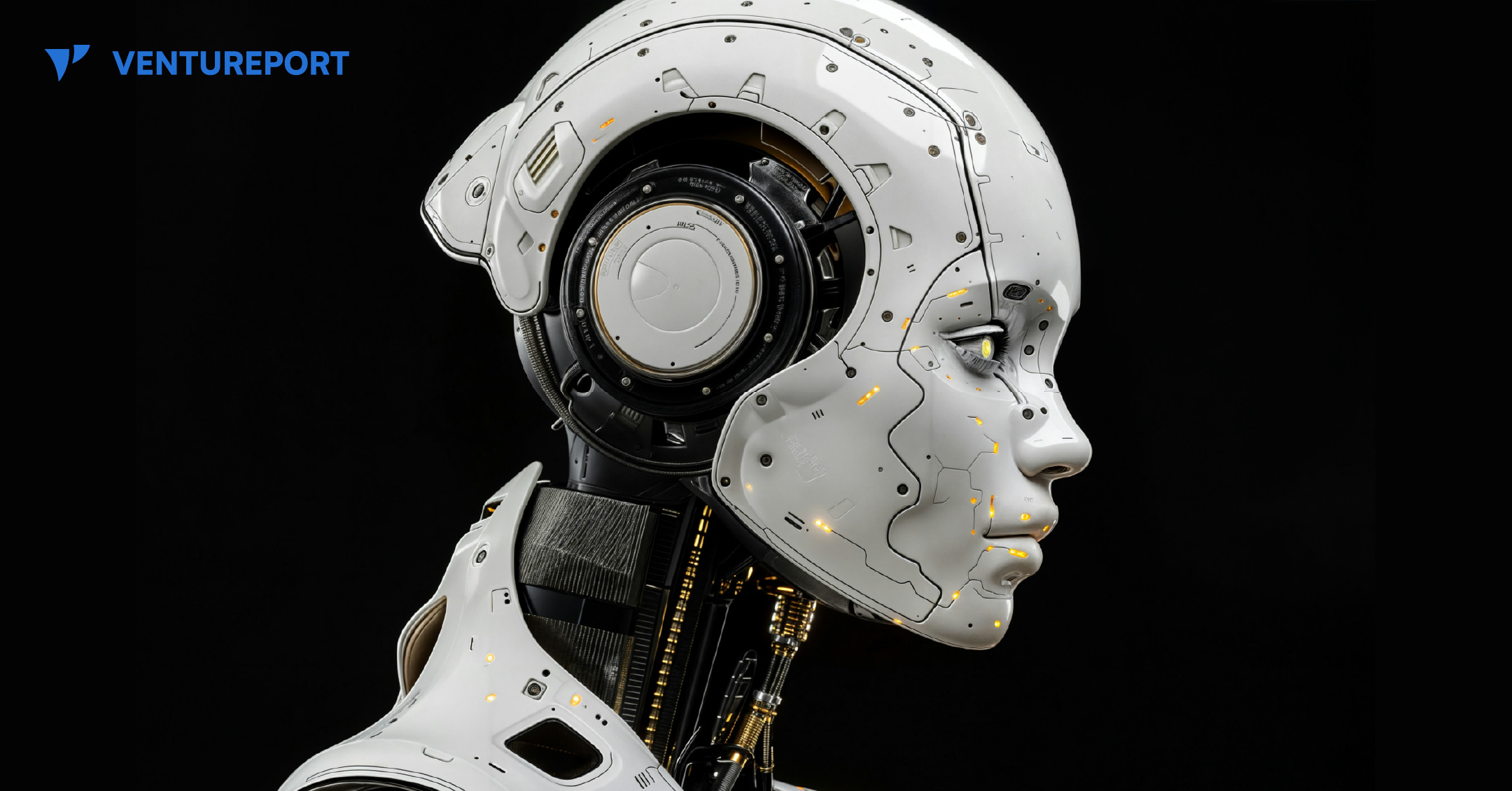
A face of a humanoid robot, side view on black background. PHOTO: UNSPLASH
Humanoid robots are shifting from sci-fi speculation to engineering reality, and the pace of progress is prompting investors to reassess how the next decade of physical automation will unfold. ALM Ventures has launched a new US$100 million early-stage fund aimed squarely at this moment—one where advances in robot control, embodied AI and spatial intelligence are beginning to converge into something commercially meaningful.
ALM Ventures Fund I, is designed for the earliest stages of company formation, targeting seed and pre-seed teams building the foundations of humanoid deployment. It’s a concentrated fund that seeks to take early ownership in a sector that many now consider the next major technological frontier.
For Founder and General Partner Modar Alaoui, the timing is not accidental. “After years of research, humanoids are finally entering a phase where performance, reliability and cost are converging toward commercial viability”, he said. “What the category needs now is focused capital and deep technical diligence to turn prototypes into scalable, enduring companies”.
That framing captures a shift happening across robotics: the field is moving out of the lab and into early commercial readiness. Improvements in perception systems, model-based reasoning and motion control are accelerating the transition. Advances in simulation are also lowering the complexity and cost of integrating humanoid platforms into real environments. As these systems become more capable, the gap between research prototypes and market-ready products is narrowing.
ALM Ventures is positioning itself at this inflection point. Fund I’s thesis centers on the core technologies required to scale humanoids safely and economically. This includes next-generation robot platforms, spatial reasoning engines, embodied intelligence models, world-modeling systems and the infrastructure needed for early deployment. Rather than chasing every robotics trend, the fund is concentrating on the essential layers that will determine whether humanoids can work reliably outside controlled settings.
The firm isn’t starting from zero. During the fund’s formation, ALM Ventures made ten early investments that directly align with its investment focus. The portfolio includes companies building at different layers of the humanoid stack, such as Sanctuary AI, Weave Robotics, Emancro, High Torque Robotics, MicroFactory, Mbodi, Adamo, Haptica Robotics, UMA and O-ID. The list reflects a broad but intentional spread, from hardware to intelligence to manufacturing approaches, all oriented toward enabling scalable physical AI.
Beyond capital, ALM Ventures has been shaping the ecosystem through its global Humanoids Summit series in Silicon Valley, London and Tokyo. The series gives the firm early visibility into emerging technologies, pre-incorporation teams and the senior leaders steering the global robotics landscape. That vantage point has helped the firm identify where commercialization is truly taking root and where bottlenecks still exist.
The rise of humanoids is often compared to the early days of self-driving cars: a long arc of research suddenly meeting an acceleration point. What separates this moment is that advances in embodied AI and spatial intelligence are giving robots a more intuitive understanding of the physical world, making them easier to deploy, teach and scale. ALM Ventures’ Fund I is an attempt to capture that transition while shaping the companies that could define the next technological era.
With US$100 million dedicated to the earliest builders in the space, ALM Ventures is signaling its belief that humanoids are not just another robotics cycle—they may be the next major platform shift in AI.