
Six technology companies showcased solutions for financial research, wealth management, consumer insight and security to investors and institutions.
Updated
November 14, 2026 11:54 PM

Arnold Lau and King Leung (back row, fourth and fifth from left), Associate Directors-General of Investment Promotion at InvestHK, join the Ventureport team and representatives from the six technology companies. PHOTO: VENTUREPORT
Ventureport hosted the soft launch of InvestHK’s Fast-Track Connect at its AI+ Tech+ Finance+ gathering on 30 October, bringing more than 100 guests to Pier 1929 in Wan Chai.
Sponsored by InvestHK, the event brought investors, institutional representatives and technology companies together to explore investment and business partnerships. Six companies took the stage to showcase software solutions for financial professionals, consumer research, local AI computing and digital asset security.

The Acting Head of Startups, at InvestHK, Chin-yung (CY), and the Senior Vice President (Fintech), Pauline Fan, introduced Fast-Track Connect. They explained how the agency’s international network connects it with technology companies seeking investment, customers and business opportunities in Hong Kong.

Their remarks also highlight the need for a more structured approach to build these connections. Investors need easier ways to identify companies that match their interests, while institutions seeking new technology need access to businesses whose products could support their operations or benefit their customers.
To address this need, Fast-Track Connect provides an online platform where technology companies can publish profiles outlining their products and funding needs. Investors and corporate participants can identify relevant businesses and contact them to explore potential investments or collaborations. Service providers and community partners are also part of the platform. Alongside investors and corporate participants, these groups are designated as Champions on the platform.
Curated by InvestHK and supported by the Financial Services and the Treasury Bureau, Fast-Track Connect builds on the Global Fast Track Programme. It aims to help local enterprises expand into Chinese Mainland, Southeast Asia and other markets.

AlphaPai, an AI-powered investment research platform developed by financial technology company RabyteTech, presented tools for financial research, including gathering data, monitoring financial instruments and comparing information from corporate earnings calls.

At the event, the team explained how users can give research instructions in everyday language, while the software retrieves and processes information to prepare reports and presentation materials. Examples included tracking market developments and comparing company statements over time. The team also emphasised the importance of traceable sources, allowing analysts to verify the information behind their research.
A2B2.AI, a fintech startup, presented AI- powered tools designed to support investors and wealth advisers. Its specialist AI agents—software designed to carry out particular tasks—help prepare client meeting briefings, monitor financial products approaching maturity and identify market developments relevant to individual clients, according to the team.

For investors, the tool can help make sense of lengthy documents provided by advisers and bring information from different accounts together to assess risk exposure. For wealth professionals, the tools support preparation and follow-up around client meetings.
The team described its approach as combining AI with human expertise to support financial decision- making. It also clarified that the platform does not execute investment transactions on behalf of clients, leaving those decisions and actions in their hands.
Preferences AI, an AI startup specialising in synthetic consumer research, presented simulated consumer profiles that businesses can use to explore how different audiences might respond to products, pricing and marketing messages. These profiles generate modelled responses rather than feedback from people directly interviewed or surveyed.

The company described that its profiles are grounded in population data and account for differences between local audiences Businesses can use them to explore pricing or packaging options, as well as ask follow-up questions to understand the reasons behind a particular response. The team also discussed testing its models and working with academics to help validate the approach. It said the technology could help businesses explore consumer preferences more quickly.
ByteFuture, an AI infrastructure startup, focused on running AI on users’ own hardware. It introduced Olares, its operating system, and Olares One, a device designed to run AI models and applications locally.

Its applications included personal assistance, financial research and content creation. The team argued that users handling private documents or proprietary trading strategies may prefer to retain that material on equipment they control.
A demonstration of AI-generated video illustrated creative work the team said could run locally. It also described applications and agents available through its software marketplace.
PureGlobal, a fintech company, addressed digital asset custody: the systems used to safeguard access to digital assets. Its team described technology for protecting access credentials and supporting offline transactions without a conventional internet connection.

The presentation focused on infrastructure for institutions holding and transferring digital assets, including security under different operating conditions.
SlowMist, a blockchain security firm, examined the risks of giving AI agents permission to read information and perform tasks. Its examples included malicious instructions concealed in material an agent might encounter and attacks exploiting access granted to software.

The team discussed security auditing, monitoring and investigations alongside risks arising from third-party tools and an agent’s stored information. One scenario involved exposing a wallet’s recovery phrase, which can give someone control over its assets.
Keep Reading
How startups can use nostalgia marketing to build trust, spark loyalty and stand out with storytelling, vintage design and emotional connections.
Updated
January 8, 2026 6:35 PM
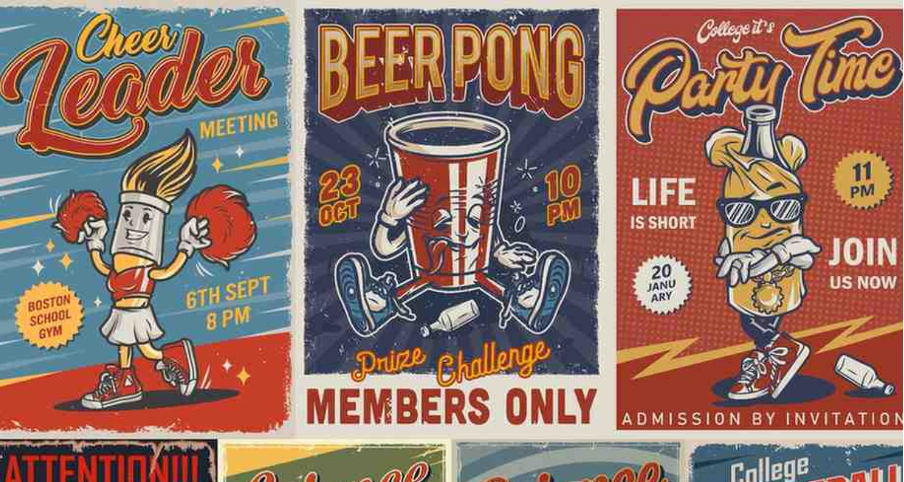
Vintage beer pong posters showcasing colorful, diverse designs from different eras in one collection. PHOTO: FREEPIK
Turning the subtle power of nostalgia into meaningful marketing.
Think of nostalgia as a time machine for brands—it doesn’t just take people back; it brings their emotions forward. And emotions sell. For those who are unfamiliar, nostalgia marketing is a strategy where brands use elements from the past—like familiar sights, sounds, or stories—to evoke warm memories and emotional connections with their audience.
This emotional pull isn’t just anecdotal—research shows its real impact: according to The Team and Forbes via The Drum, 80% of millennials and Gen Z are drawn to brands tapping into nostalgia, while 92% of consumers say nostalgic ads feel more relatable. And for startups competing in noisy markets, this is a goldmine.
In this article, we’ll explore why nostalgia marketing can be a game-changing strategy for your company.
Out of all the popular marketing methods—like influencer partnerships or attention-grabbing ad campaigns—nostalgia is unique because its impact starts intrinsically, in the brain. By triggering the release of dopamine, a reward-system neurotransmitter, Nostalgia evokes feelings of warmth, happiness and comfort. Consequently, people don’t just remember a moment—they relive it. Take, for instance, your favorite cereal brand bringing back childhood cartoon characters or using retro fonts and colors. You might choose it over a healthier breakfast option simply because it reminds you of the mornings you enjoyed as a kid. Similarly, speaking of stirring fond memories, Coca-Cola has mastered this effect, using classic holiday ads, vintage packaging, and iconic imagery. Those associations make people see Coke as more than a drink—it’s a familiar feeling they’re willing to pay extra for.
New marketing campaigns can spark curiosity but often trigger skepticism—especially when audiences lack prior connection to the brand. Nostalgia marketing breaks down this barrier by tapping into familiarity, using retro jingles, vintage fonts, pastel colors, or familiar packaging that immediately resonate. This recognition builds an emotional connection and trust with the brand. More importantly, it fosters social connectedness by making consumers feel part of a larger community—giving that reassuring “others remember this too” feeling. As a result, this sense of belonging reduces loneliness, strengthens warmth and trust, and encourages word-of-mouth sharing, naturally amplifying the campaign’s reach and impact.
While luxury brands can afford massive campaigns, startups and small businesses can tap into nostalgia as a cost-effective storytelling tool. In a world where marketing often chases the “next big thing”—from AI to futuristic tech—nostalgia offers the opposite: a chance to revisit the past. More importantly, nostalgia allows brands to stand out in a crowded, fast-scrolling feed by delivering something comfortingly familiar with a fresh twist. Think of Polaroid: in an age where smartphones boast crystal-clear cameras, it wins hearts with pastel hues, a vintage lens, and the tactile charm of instant prints—selling not just images, but a moment that feels straight out of the past.
The same principle worked brilliantly for Tiffany & Co., whose 185-year-old brand refresh featured Jay-Z and Beyoncé in a Breakfast at Tiffany’s-inspired campaign, blending timeless charm with contemporary star power and racking up millions of views. In essence, when done right, nostalgia doesn’t just market a product—it invites people to relive a story they already love.
Nostalgia resonates across generations speaking to diverse audiences. For Millennials, it’s a chance to relive the cultural touchpoints of their youth, while Gen Z approaches it with curiosity, eager to explore eras they never experienced firsthand. This crossover creates a unique marketing sweet spot: one group is driven by memory, the other by discovery. Pokémon proves this power by keeping lifelong fans engaged through retro trading cards while introducing younger audiences to its history. Similarly, Nike used nostalgia to bridge two different generations by reissuing retro classics, keeping both longtime fans and new sneakerheads excited. By appealing to both memory and curiosity, brands can create lasting connections that keep different generations engaged at once.
Nostalgia can be your startup’s non-cliché marketing mantra. Imagine a small bookstore that offers handwritten recommendation cards designed like vintage library checkout slips. This simple touch invites customers to slow down and rediscover the joy of reading. Or picture a local coffee shop serving drinks in mugs inspired by classic diner ware, evoking comforting memories of simpler times. Overall, the lesson is clear: combining nostalgic design with stories that connect people to shared moments creates emotional warmth and trust. Thoughtful nostalgia turns everyday products into meaningful experiences—building loyal communities eager to return.