
Led by co-founders Andrew Raslan and Keyvan Jodeiri, Pipeline Organics is developing microbial fuel cells to help food and beverage manufacturers treat wastewater and recover energy as electricity.
Updated
November 16, 2026 12:32 PM

Concept visualisation of Pipeline Organics’ planned TankArc wastewater treatment and energy recovery system at a brewery. IMAGE: PIPELINE ORGANICS
A glass of beer or a bottle of soft drink leaves plenty behind before it reaches the shelf. Producing it requires water and electricity, then creates wastewater that manufacturers must pay to treat. For breweries and other food and beverage manufacturers working with tight margins, those bills can leave less money for new equipment, products and people.
Pipeline Organics, led by Andrew Raslan (commercial) and Dr Keyvan Jodeiri (technology), sees a resource in that waste. The Nottingham-based cleantech startup, Pipeline Organics, is developing microbial fuel cells that treat food and beverage wastewater while generating electricity. The aim is to help factories lower their operating costs by recovering value from a stream they already produce every day.
Founded in August 2021, Pipeline Organics grew out of the University of Nottingham’s Young Entrepreneurs Scheme, YES20. The founding team won its Engineering, Energy and Environment stream before establishing the company. Andrew, now CEO, brought a background in molecular microbiology and antimicrobial research, later moving into project management and commercialization.
Co-founder and chief scientific officer Keyvan Jodeiri brought a different piece of the puzzle. His research explored biofuel cells that could use sugars in blood to generate electricity for medical implants. The team began asking whether related principles could work outside the body, using organic material in industrial wastewater as fuel. Turning that idea into a business meant finding an application where the environmental benefits came with a clear financial incentive.
Food and beverage manufacturing offered that opportunity. Breweries and other food and beverage manufacturers produce wastewater rich in biodegradable organic material such as leftover carbs and fats or dead proteins, making it suitable food for microorganisms. Treating it at the factory also gives the company a more predictable waste stream than the mixture arriving at a general sewage treatment plant.
“What is filthy for you as a manufacturer is food for the bacteria,” Andrew explains.
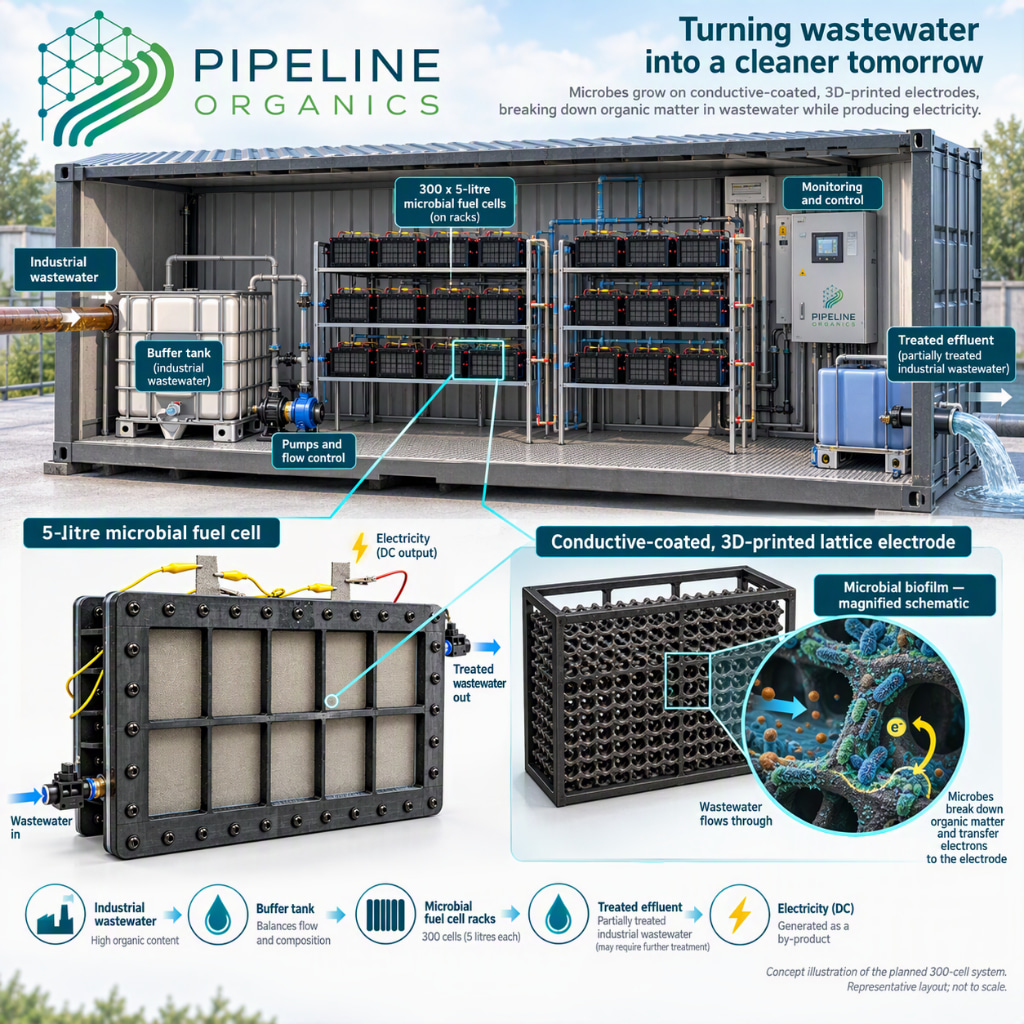
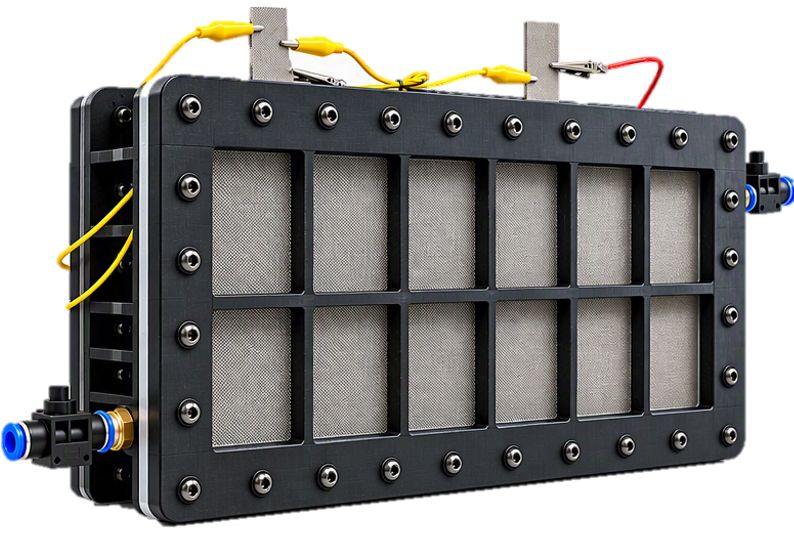
The company’s system, TankArc, contains reactors with specially designed, 3D-printed lattices. Microorganisms growing on the anode break down organic material in wastewater, releasing electrons that electrodes capture as electrical current. This reduces the organic pollution load while recovering some of its energy. Reactors can be grouped into racks or, eventually, containers equipped with plumbing, batteries and controls to serve different factory sizes.
Andrew describes the system as being designed to become self-powering, provided its electricity output scales as expected, with surplus energy available for use on site. At the moment, replacing a brewery’s entire electricity supply is beyond the immediate promise, Andrew admits. The more practical proposition is reducing the amount of power a manufacturer needs to buy through site efficiency upgrades, while cutting its wastewater treatment burden.
The treated wastewater would then go into the sewer for further treatment. Since it contains fewer pollutants, manufacturers could pay less in treatment charges or, in some cases, avoid them altogether. Pipeline Organics is also exploring ways to take the process further by working with partners to make water reuse possible. This could allow manufacturers to reuse the treated water for tasks that do not require high-purity water, such as post-production washing, which accounts for a large share of fresh-water use in the industry.
Much of TankArc’s engineering sits in the lattice itself. It needs sufficient surface area for the biological process while allowing wastewater to flow through without clogging. Different waste streams require different designs. Pipeline Organics combines engineering calculations with proprietary AI-assisted algorithms to adapt the geometry for applications such as beer, wine or fruit juice production.
Andrew sees this design process as a competitive advantage. Once the geometry has been developed, components can be manufactured from the resulting 3D models. The difficult part is knowing how to design a cell that performs in a particular environment.
The company is competing with established wastewater treatment and energy recovery methods. Anaerobic digestion, for example, produces biogas that can subsequently generate heat and electricity. Pipeline Organics is pursuing direct electricity recovery through compact, modular equipment. Its suitability will depend on the site, the wastewater and the savings it can deliver.
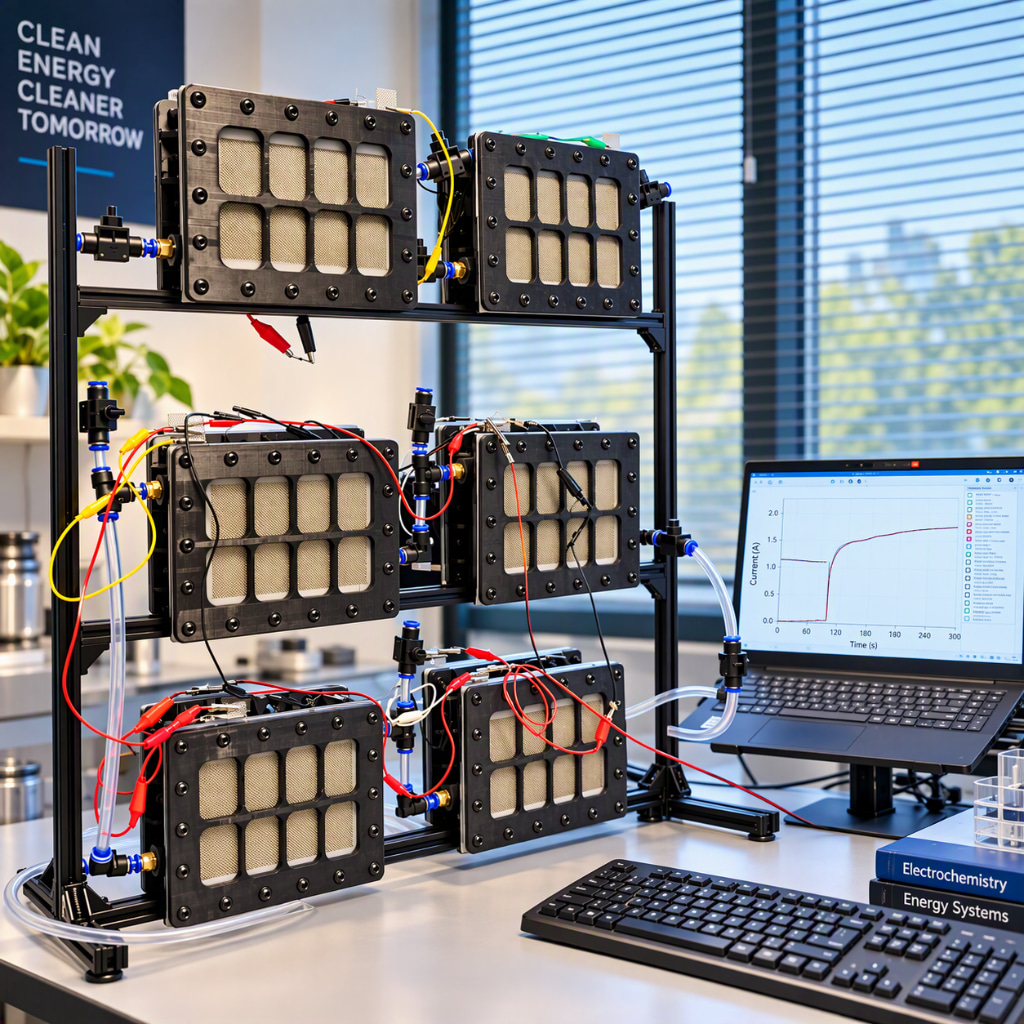
Early brewery trials have helped the team test those assumptions. At Little Ox Brewery, Pipeline Organics used a compact four-reactor system with real wastewater to assess compatibility and electrical output. The trial also provided practical lessons about monitoring, handling and operating equipment around a working production site. The company is working with Castle Rock Brewery in Nottingham as another development partner and have achieved onsite results that are close to commercial readiness.
These demonstrations represent an early step towards industrial deployment. During our interview, Andrew said Pipeline Organics had begun selling paid feasibility pilots that measure performance using customers’ wastewater under actual operating conditions. Larger reactor racks would be at the next stage, followed by containerised systems for facilities producing much greater volumes of effluent. They expect to deploy full-scale containers in 2027.
Scaling brings another set of challenges. The team is developing repeatable methods for producing conductive electrodes, maintaining wastewater flow and assembling larger systems. Reducing manufacturing costs while maintaining treatment performance is a central part of this work.
There will also be useful discoveries along the way: Chief Scientific Officer Keyvan says longer-term ambitions include developing the technology for wastewater sensing and exploring how recovered electricity could support electrochemical production of higher-value chemicals. These could open additional applications for the platform, while the immediate priority remains manufacturing and scaling the wastewater treatment system.
The proposed leasing model reflects the focus on customer economics. Manufacturers would rent equipment rather than purchase it upfront, retaining part of the savings after paying Pipeline Organics. Making that arrangement attractive requires dependable treatment, manageable maintenance and savings that hold up over time.
Andrew’s and Keyvan’s longer-term vision includes a wider portfolio of environmental technologies. For now, the next test is closer to the brewery floor: can the company turn promising small reactors into equipment food and beverage manufacturers can rely on?
“One man’s waste is another man’s raw material if you’re smart about it,” Andrew says. Pipeline Organics is building its business around that possibility, starting with the water left behind by a drink.
Keep Reading
Circles is using AI to turn telecom support from a cost centre into a faster, more personalised growth engine
Updated
August 10, 2026 5:56 PM

A woman holding a phone while using a laptop. PHOTO: ADOBE STOCK
Circles, a Singapore startup that builds software for digital telecom operators, has launched an AI concierge as part of its partnership with OpenAI. The release marks a new step in the company’s effort to modernise how telecom providers serve and retain customers. The move reflects a wider shift in the telecom sector. Many operators still rely on older support systems that can be slow, fragmented and costly to run. AI is now being tested as a way to improve service while creating new revenue opportunities.
Circles said the concierge is built on OpenAI’s API platform and sits within what it calls an AI-native telecom stack. In practical terms, the system is designed to handle customer support, account changes and personalised offers through automated interactions.
One part of the platform is called CareX. According to the company, it can deal with billing issues, service requests and network-related problems. Circles said CareX currently resolves 85% of customer queries globally without human intervention and reaches a 95% resolution rate on end-to-end tasks. That matters because customer support remains one of the larger operating costs for telecom providers. Faster automated handling could lower pressure on service teams while reducing wait times for users.
The second part of the platform is Xplore IQ, which focuses on revenue growth. The tool is designed to predict what a customer may need, recommend a suitable plan or offer and complete upgrades or downgrades automatically. Circles said the early rollout has led to a 22% rise in average revenue per user for Circles.Life Singapore. It also said personalised offers helped reduce customer churn by 9%.
"AI should empower users - not force-fit into outdated journeys. OpenAI's role has been critical in enabling Circles to scale this vision globally. With the AI concierge, we are moving beyond providing simple answers to delivering real-world outcomes, along with balancing cost and latency to maximize value for operators and customers alike", said Awais Malik, Global Chief Growth Officer at Circles.
"Circles is demonstrating how advanced AI can modernize essential industries like telecommunications at scale. By combining frontier models with multi-agent systems, they are enabling telecom operators globally to deliver faster, smarter and more personalized customer experiences. This milestone is a strong example of how AI can deliver tangible value for businesses and customers they serve", Oliver Jay, Managing Director, International for OpenAI, added.
Together, the tools are intended to connect customer service, operations and sales into one system. Rather than treating support and monetisation as separate functions, the company is combining them into a single digital layer.
Circles said the partnership will continue over the next two years as both companies work toward a more autonomous telecom model. Whether that vision is achieved remains to be seen, but the direction is clear: telecom operators are increasingly treating AI as core infrastructure rather than an optional add-on.