
Updated
November 27, 2026 1:05 AM

A desk with books and coffee next to a computer. PHOTO: UNSPLASH
Ailytics raises US$7.4 million in Series A
Singapore-based vision AI startup Ailytics has raised US$7.4 million in a Series A round led by Tin Men Capital. Its flagship product, Ailyssa, works with existing CCTV cameras to analyse footage in real time. Using computer vision and vision-language models, it flags industrial safety hazards such as workers without protective gear or standing too close to moving machinery. This helps industrial teams identify and address potential risks before they lead to accidents.
Stryv raises US$11.5 million in Series B
Singapore-based personal care and home wellness company Stryv has raised US$11.5 million in a Series B round led by ACV Capital, with participation from Openspace Capital and OCTAVE Capital. Its product range includes hair dryers, stylers, shavers, men's grooming and oral care products. Through its Sterra brand, the company also offers home wellness products such as air and water purifiers.
Omnichat raises US$10 million in Series A
Hong Kong-based customer engagement startup Omnichat has raised US$10 million in a Series A round led by Openspace Capital, with participation from Darwin Ventures and Acorn Pacific Ventures. Its platform brings customer conversations from WhatsApp, LINE, Messenger, Instagram and WeChat into one place, helping brands manage sales, marketing and customer service. It also uses AI to recommend products, respond to enquiries and turn conversations into sales. Omnichat says it serves more than 5,000 brands and has helped generate over US$100 million in revenue for clients.
ProScout seeks US$200,000 to complete seed financing
Israel-based agritech startup ProScout is raising a seed round through a SAFE, with US$1.2 million secured and a further US$200,000 sought. Its backers include Orbit Ventures and angel investors, alongside a non-dilutive grant. The startup's device clips onto existing agricultural sprayers and records where pesticides are applied in real time. Its AI-powered platform compares actual spraying with planned treatment and generates maps showing which areas were covered and where spraying was missed. This helps commercial growers improve spraying accuracy and reduce chemical waste.
Keep Reading
Humanoids are moving from research labs into real industries — and capital is finally catching up.
Updated
January 8, 2026 6:31 PM
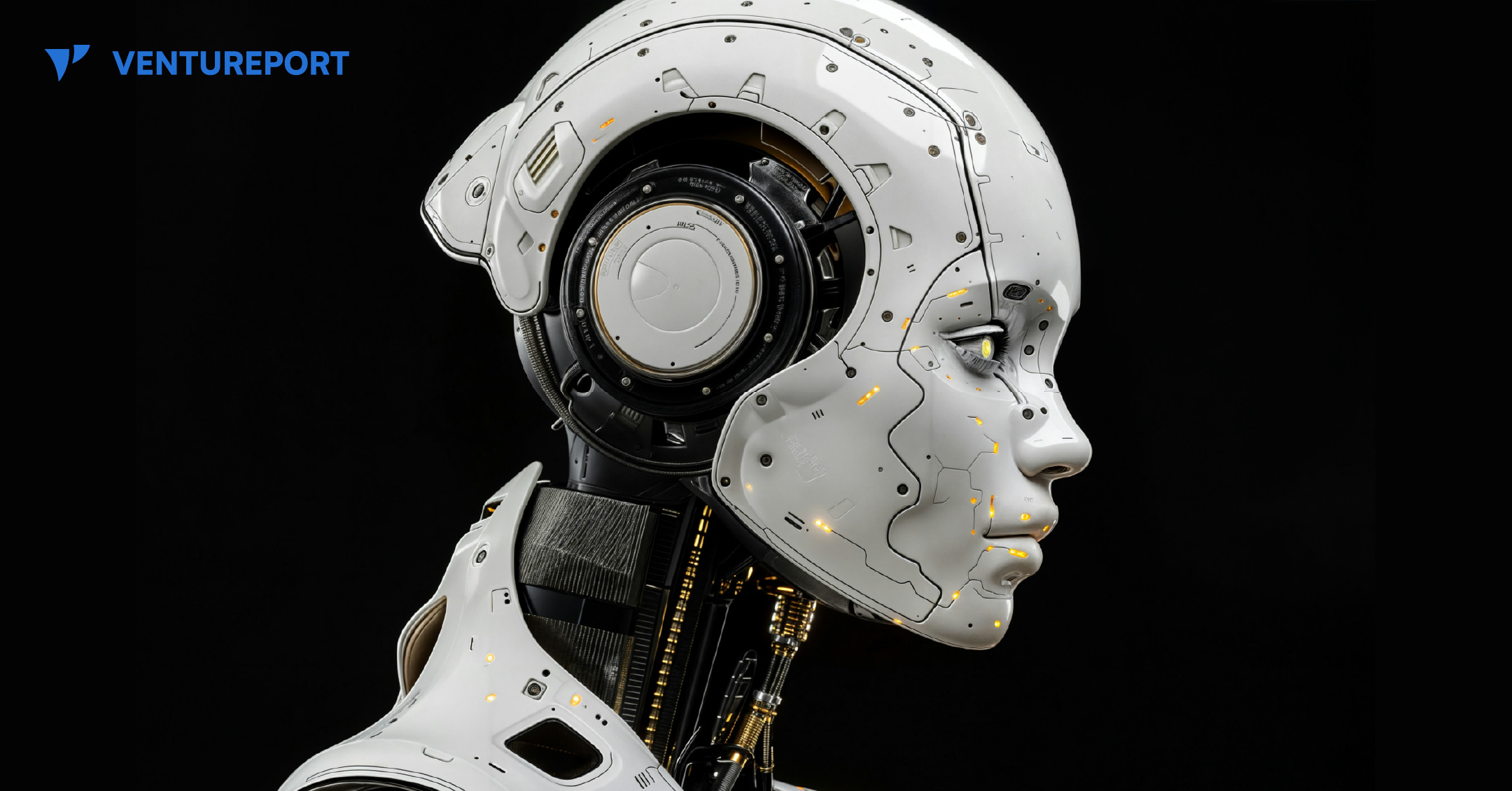
A face of a humanoid robot, side view on black background. PHOTO: UNSPLASH
Humanoid robots are shifting from sci-fi speculation to engineering reality, and the pace of progress is prompting investors to reassess how the next decade of physical automation will unfold. ALM Ventures has launched a new US$100 million early-stage fund aimed squarely at this moment—one where advances in robot control, embodied AI and spatial intelligence are beginning to converge into something commercially meaningful.
ALM Ventures Fund I, is designed for the earliest stages of company formation, targeting seed and pre-seed teams building the foundations of humanoid deployment. It’s a concentrated fund that seeks to take early ownership in a sector that many now consider the next major technological frontier.
For Founder and General Partner Modar Alaoui, the timing is not accidental. “After years of research, humanoids are finally entering a phase where performance, reliability and cost are converging toward commercial viability”, he said. “What the category needs now is focused capital and deep technical diligence to turn prototypes into scalable, enduring companies”.
That framing captures a shift happening across robotics: the field is moving out of the lab and into early commercial readiness. Improvements in perception systems, model-based reasoning and motion control are accelerating the transition. Advances in simulation are also lowering the complexity and cost of integrating humanoid platforms into real environments. As these systems become more capable, the gap between research prototypes and market-ready products is narrowing.
ALM Ventures is positioning itself at this inflection point. Fund I’s thesis centers on the core technologies required to scale humanoids safely and economically. This includes next-generation robot platforms, spatial reasoning engines, embodied intelligence models, world-modeling systems and the infrastructure needed for early deployment. Rather than chasing every robotics trend, the fund is concentrating on the essential layers that will determine whether humanoids can work reliably outside controlled settings.
The firm isn’t starting from zero. During the fund’s formation, ALM Ventures made ten early investments that directly align with its investment focus. The portfolio includes companies building at different layers of the humanoid stack, such as Sanctuary AI, Weave Robotics, Emancro, High Torque Robotics, MicroFactory, Mbodi, Adamo, Haptica Robotics, UMA and O-ID. The list reflects a broad but intentional spread, from hardware to intelligence to manufacturing approaches, all oriented toward enabling scalable physical AI.
Beyond capital, ALM Ventures has been shaping the ecosystem through its global Humanoids Summit series in Silicon Valley, London and Tokyo. The series gives the firm early visibility into emerging technologies, pre-incorporation teams and the senior leaders steering the global robotics landscape. That vantage point has helped the firm identify where commercialization is truly taking root and where bottlenecks still exist.
The rise of humanoids is often compared to the early days of self-driving cars: a long arc of research suddenly meeting an acceleration point. What separates this moment is that advances in embodied AI and spatial intelligence are giving robots a more intuitive understanding of the physical world, making them easier to deploy, teach and scale. ALM Ventures’ Fund I is an attempt to capture that transition while shaping the companies that could define the next technological era.
With US$100 million dedicated to the earliest builders in the space, ALM Ventures is signaling its belief that humanoids are not just another robotics cycle—they may be the next major platform shift in AI.