
ICBC Asia's new competition gives Hong Kong students a chance to test their fintech ideas beyond the classroom.
Updated
October 2, 2026 9:16 AM
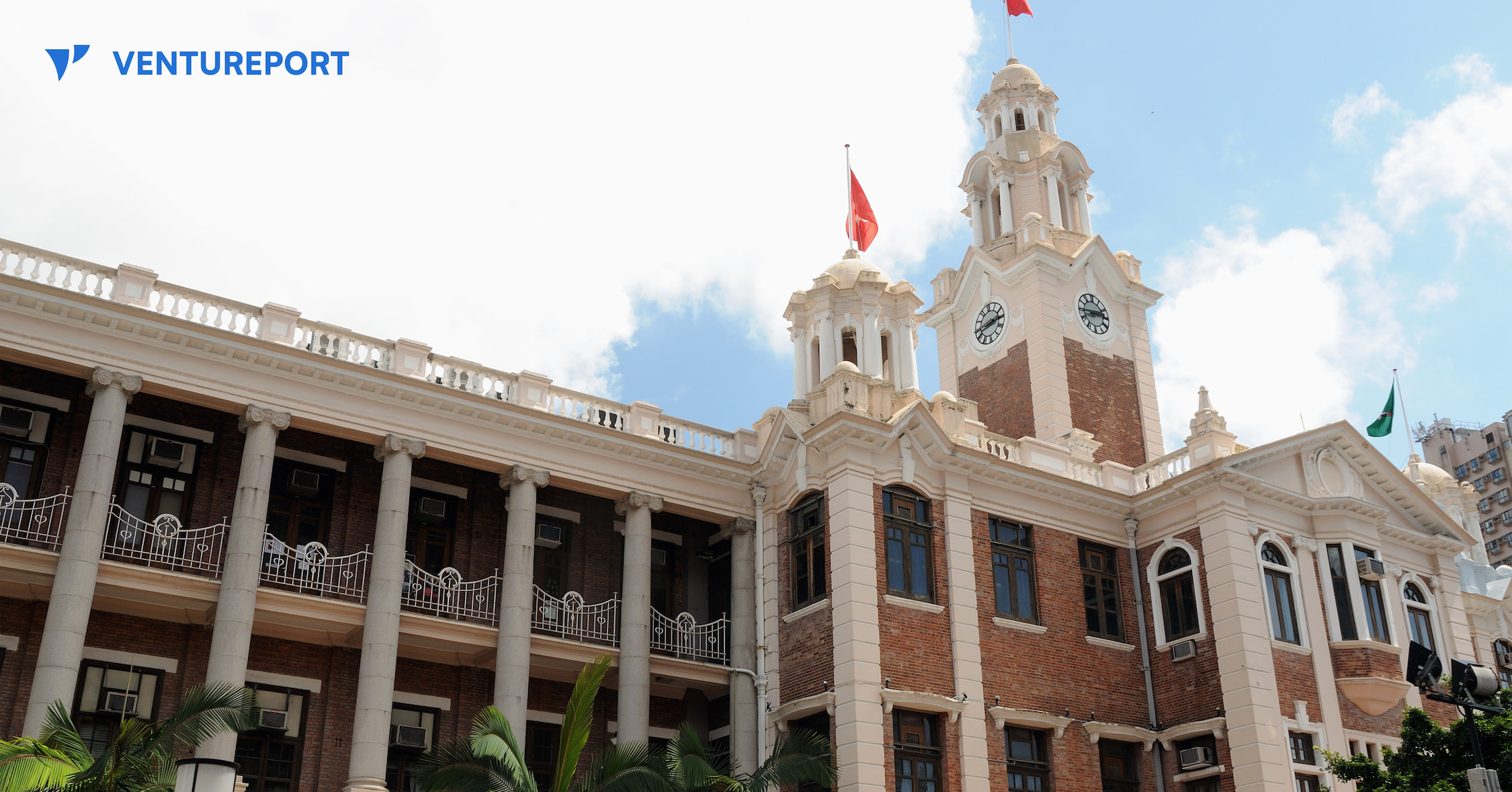
Main Building of the University of Hong Kong. PHOTO: ADOBE STOCK
Hong Kong university students are being invited to take part in the first Hong Kong University Students Fintech Innovation Competition, organised by Industrial and Commercial Bank of China (Asia). The competition gives students a chance to develop ideas around financial technology, with cash prizes, internship opportunities and a route to the national finals of the ICBC Cup on offer.
The competition is part of the 17th ICBC Cup and marks the first time ICBC has established a competition zone in Hong Kong. It is supported by the Financial Services and the Treasury Bureau and the Hong Kong Monetary Authority, with 12 Hong Kong universities also backing the initiative.
The participating universities are the University of Hong Kong, the Chinese University of Hong Kong, Hong Kong University of Science and Technology, Hong Kong Polytechnic University, City University of Hong Kong, Hong Kong Baptist University, Hong Kong Metropolitan University, Lingnan University, Hong Kong Shue Yan University, the Education University of Hong Kong, Hang Seng University of Hong Kong and St. Francis University.
For ICBC Asia, the competition is also intended to support the development of fintech in Hong Kong and expand the city's fintech talent pool. Dr. Liu Yagan, Chairman and Executive Director of Industrial and Commercial Bank of China (Asia), said the competition is designed to encourage students to develop practical applications for financial technology and explore new banking business models.
"This competition encourages university students across Hong Kong to propose practical solutions for fintech applications and banking business model innovation from the perspective of financial products and services, providing a platform for Hong Kong youth to connect with cutting-edge industries and unleash their innovative potential."
The initiative will also connect Hong Kong students with the wider ICBC Group. Liu said this would help deepen exchanges between young talent in Hong Kong and the Mainland.
The competition is open to full-time university students in Hong Kong and carries the theme "Digital Banking, Creating the Future." Students can develop ideas across 10 areas, ranging from fintech and digital finance to green finance, inclusive finance, pension finance and wealth management. The categories also include financial security services, specialised financial services, youth services and open innovation services.
The competition also offers cash prizes: the First Prize winner will receive HK$50,000; two Second Prize winners will receive HK$30,000 each; three Third Prize winners will receive HK$20,000 each; and four Honorable Mention recipients will receive HK$10,000 each.
Beyond the prize money, qualifying winners will have the opportunity to undertake internships at ICBC (Asia). The team that wins the Hong Kong First Prize will also have the opportunity to travel to Beijing in December for the ICBC Cup national finals, where it will compete against teams from across the country.
With registration now open, the competition gives Hong Kong university students an opportunity to take ideas in financial technology from the classroom into areas such as banking products, services and business models.
Keep Reading
Can SPhotonix’s optical memory technology protect data better than today’s storage?
Updated
January 8, 2026 6:32 PM

SPhotonix's 5D Memory Crystals™. PHOTO: SPHOTONIX
SPhotonix, a young deep-tech startup, is working on something unexpected for the data storage world: tiny, glass-like crystals that can hold enormous amounts of information for extremely long periods of time. The company works where light and data meet, using photonics—the science of shaping and guiding light—to build optical components and explore a new form of memory called “5D optical storage”.
It’s based on research that began more than twenty years ago, when Professor Peter Kazansky showed that a small crystal could preserve data—from the human genome to the entire Wikipedia—essentially forever.
Their new US$4.5 million pre-seed round, led by Creator Fund and XTX Ventures, is meant to turn that science into real products. And the timing aligns with a growing problem: the world is generating far more digital data than current storage systems can handle. Most of it isn’t needed every day, but it can’t be thrown away either. This long-term, rarely accessed cold data is piling up faster than existing storage infrastructure can manage and maintaining giant warehouses of servers just to keep it all alive is becoming expensive and environmentally unsustainable.
This is the problem SPhotonix is stepping in to solve. They want to store huge amounts of information in a stable format that doesn’t degrade, doesn’t need electricity to preserve data and doesn’t require constant swapping of hardware. Instead of racks of spinning drives, the idea is a durable optical crystal storage system that could last for generations.
The company’s underlying technology—called FemtoEtch™—uses ultrafast lasers to engrave microscopic patterns inside fused silica. These precisely etched structures can function as high-performance optical components for fields like aerospace, microscopy and semiconductor manufacturing. But the same ultra-controlled process can also encode information in five dimensions within the crystal, transforming the material into a compact, long-lasting archive capable of holding massive amounts of information in a very small footprint.
The new funding allows SPhotonix to expand its engineering team, grow its R&D facility in Switzerland and prepare the technology for real-world deployment. Investors say the opportunity is significant: global data generation has more than doubled in recent years and traditional storage systems—drives, disks, tapes—weren’t designed for the scale or longevity modern data demands.
While the company has been gaining attention in research circles (and even made an appearance in the latest Mission Impossible film), its next step is all about practical adoption. If the technology reaches commercial viability, it could offer an alternative to the energy-hungry, short-lived storage hardware that underpins much of today’s digital infrastructure.
As digital information continues to multiply, preserving it safely and sustainably is becoming one of the biggest challenges in modern computing. SPhotonix’s work points toward a future where long-lasting, low-maintenance optical data storage becomes a practical alternative to today’s fragile systems. It offers a more resilient way to preserve knowledge for the decades ahead.