
ICBC Asia's new competition gives Hong Kong students a chance to test their fintech ideas beyond the classroom.
Updated
October 2, 2026 9:16 AM
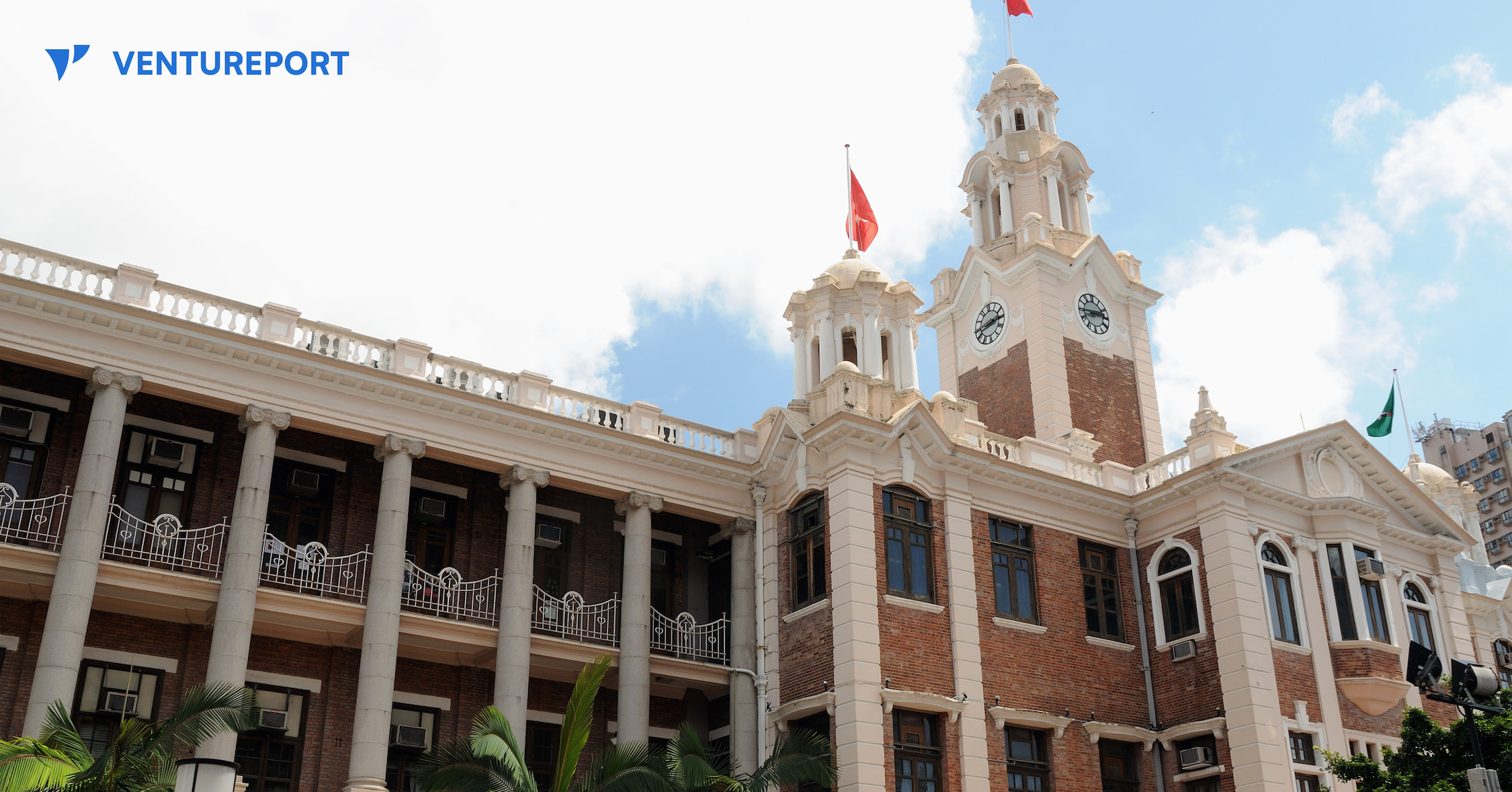
Main Building of the University of Hong Kong. PHOTO: ADOBE STOCK
Hong Kong university students are being invited to take part in the first Hong Kong University Students Fintech Innovation Competition, organised by Industrial and Commercial Bank of China (Asia). The competition gives students a chance to develop ideas around financial technology, with cash prizes, internship opportunities and a route to the national finals of the ICBC Cup on offer.
The competition is part of the 17th ICBC Cup and marks the first time ICBC has established a competition zone in Hong Kong. It is supported by the Financial Services and the Treasury Bureau and the Hong Kong Monetary Authority, with 12 Hong Kong universities also backing the initiative.
The participating universities are the University of Hong Kong, the Chinese University of Hong Kong, Hong Kong University of Science and Technology, Hong Kong Polytechnic University, City University of Hong Kong, Hong Kong Baptist University, Hong Kong Metropolitan University, Lingnan University, Hong Kong Shue Yan University, the Education University of Hong Kong, Hang Seng University of Hong Kong and St. Francis University.
For ICBC Asia, the competition is also intended to support the development of fintech in Hong Kong and expand the city's fintech talent pool. Dr. Liu Yagan, Chairman and Executive Director of Industrial and Commercial Bank of China (Asia), said the competition is designed to encourage students to develop practical applications for financial technology and explore new banking business models.
"This competition encourages university students across Hong Kong to propose practical solutions for fintech applications and banking business model innovation from the perspective of financial products and services, providing a platform for Hong Kong youth to connect with cutting-edge industries and unleash their innovative potential."
The initiative will also connect Hong Kong students with the wider ICBC Group. Liu said this would help deepen exchanges between young talent in Hong Kong and the Mainland.
The competition is open to full-time university students in Hong Kong and carries the theme "Digital Banking, Creating the Future." Students can develop ideas across 10 areas, ranging from fintech and digital finance to green finance, inclusive finance, pension finance and wealth management. The categories also include financial security services, specialised financial services, youth services and open innovation services.
The competition also offers cash prizes: the First Prize winner will receive HK$50,000; two Second Prize winners will receive HK$30,000 each; three Third Prize winners will receive HK$20,000 each; and four Honorable Mention recipients will receive HK$10,000 each.
Beyond the prize money, qualifying winners will have the opportunity to undertake internships at ICBC (Asia). The team that wins the Hong Kong First Prize will also have the opportunity to travel to Beijing in December for the ICBC Cup national finals, where it will compete against teams from across the country.
With registration now open, the competition gives Hong Kong university students an opportunity to take ideas in financial technology from the classroom into areas such as banking products, services and business models.
Keep Reading
The hidden cost of scaling AI: infrastructure, energy, and the push for liquid cooling.
Updated
January 8, 2026 6:31 PM

The inside of a data centre, with rows of server racks. PHOTO: FREEPIK
As artificial intelligence models grow larger and more demanding, the quiet pressure point isn’t the algorithms themselves—it’s the AI infrastructure that has to run them. Training and deploying modern AI models now requires enormous amounts of computing power, which creates a different kind of challenge: heat, energy use and space inside data centers. This is the context in which Supermicro and NVIDIA’s collaboration on AI infrastructure begins to matter.
Supermicro designs and builds large-scale computing systems for data centers. It has now expanded its support for NVIDIA’s Blackwell generation of AI chips with new liquid-cooled server platforms built around the NVIDIA HGX B300. The announcement isn’t just about faster hardware. It reflects a broader effort to rethink how AI data center infrastructure is built as facilities strain under rising power and cooling demands.
At a basic level, the systems are designed to pack more AI chips into less space while using less energy to keep them running. Instead of relying mainly on air cooling—fans, chillers and large amounts of electricity, these liquid-cooled AI servers circulate liquid directly across critical components. That approach removes heat more efficiently, allowing servers to run denser AI workloads without overheating or wasting energy.
Why does that matter outside a data center? Because AI doesn’t scale in isolation. As models become more complex, the cost of running them rises quickly, not just in hardware budgets, but in electricity use, water consumption and physical footprint. Traditional air-cooling methods are increasingly becoming a bottleneck, limiting how far AI systems can grow before energy and infrastructure costs spiral.
This is where the Supermicro–NVIDIA partnership fits in. NVIDIA supplies the computing engines—the Blackwell-based GPUs designed to handle massive AI workloads. Supermicro focuses on how those chips are deployed in the real world: how many GPUs can fit in a rack, how they are cooled, how quickly systems can be assembled and how reliably they can operate at scale in modern data centers. Together, the goal is to make high-density AI computing more practical, not just more powerful.
The new liquid-cooled designs are aimed at hyperscale data centers and so-called AI factories—facilities built specifically to train and run large AI models continuously. By increasing GPU density per rack and removing most of the heat through liquid cooling, these systems aim to ease a growing tension in the AI boom: the need for more computers without an equally dramatic rise in energy waste.
Just as important is speed. Large organizations don’t want to spend months stitching together custom AI infrastructure. Supermicro’s approach packages compute, networking and cooling into pre-validated data center building blocks that can be deployed faster. In a world where AI capabilities are advancing rapidly, time to deployment can matter as much as raw performance.
Stepping back, this development says less about one product launch and more about a shift in priorities across the AI industry. The next phase of AI growth isn’t only about smarter models—it’s about whether the physical infrastructure powering AI can scale responsibly. Efficiency, power use and sustainability are becoming as critical as speed.