
From generative AI to green energy, 15 finalist teams will take the stage after a record 390 teams entered this year's competition.
Updated
October 2, 2026 9:13 AM
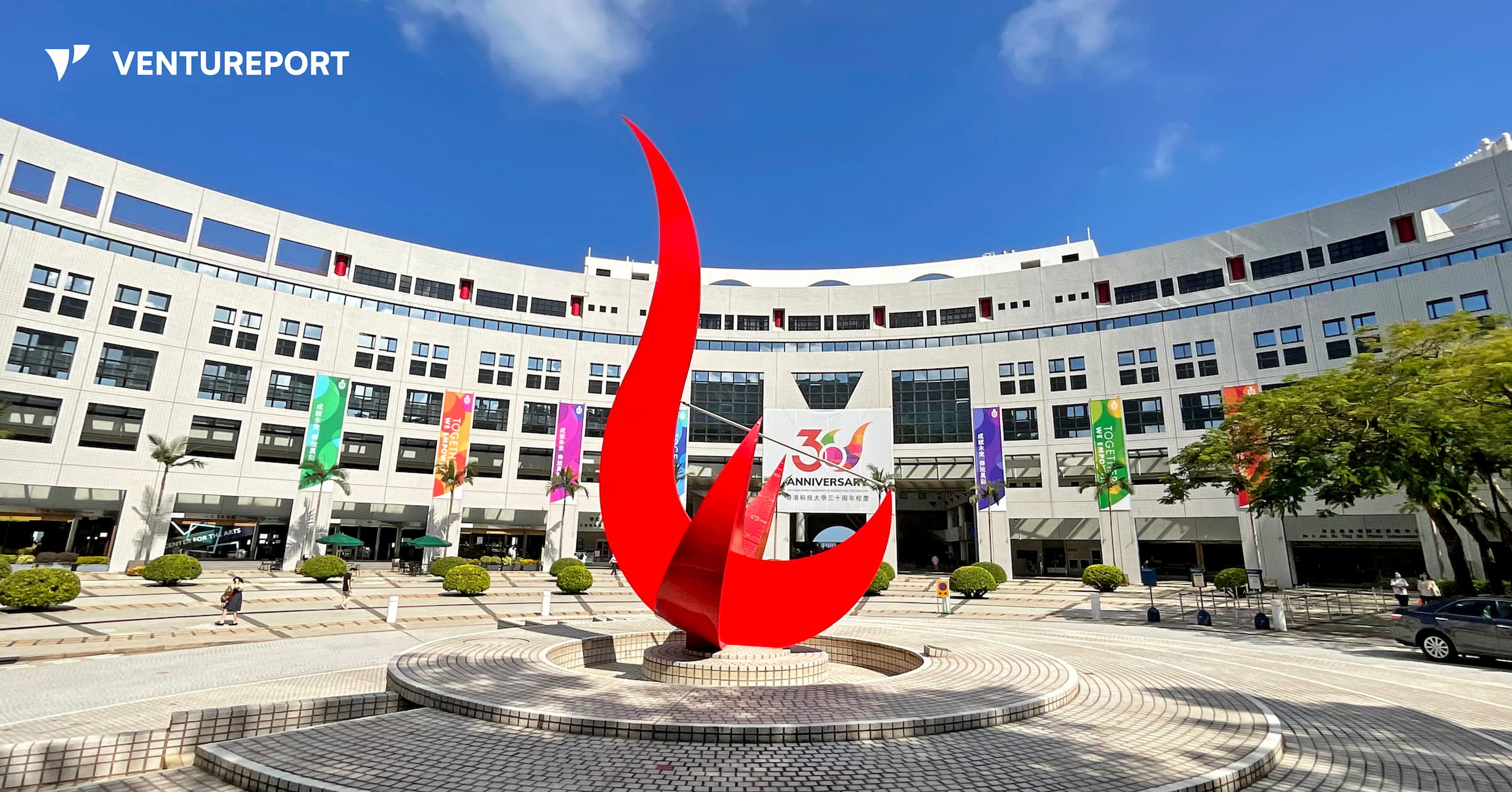
Entrance Piazza, Hong Kong University of Science and Technology. PHOTO: HKUST
The HKUST-Sino Million Dollar Entrepreneurship Competition 2026 will hold its finals on October 12, following a record 390 teams from 24 countries and regions taking part in this year's competition.
Jointly organised by the Hong Kong University of Science and Technology (HKUST) and Sino Group, the competition aims to give young entrepreneurs a platform to develop and present their ideas. Sino Group Deputy Chief Executive Officer Wong Wing-lung said the Group has partnered with HKUST for many years to support young talent and the development of innovation and technology in Hong Kong.
He said the competition gives young entrepreneurs a platform to showcase their creativity, exchange ideas and put their concepts into practice.
The international participation is reflected in the universities and regions represented this year. Participants include students from the University of Oxford in the UK, the University of Pennsylvania in the US and the National University of Singapore. Teams have also joined from Australia and South Africa.
After multiple rounds of assessment, 15 teams have advanced to the finals. Their projects cover health technology, generative AI, smart buildings, and green energy management. At the finals, the teams will present their solutions to a judging panel comprising venture capital investors, industry leaders and academic experts. They will compete for more than HK$1 million in prizes and awards.
The 2026 competition has also expanded the areas it recognises. Three new awards have been introduced this year: the Transformative AI Award, the NextGen Biotech Award and the Societal Influential Award. The competition will also continue to offer the Sustainability Impact Award. Together, the awards focus on areas ranging from emerging technologies to social and sustainability challenges.
The organisers are also adding new activities to help teams develop their ideas further. This year's programme includes pitching skills training, AI workshops, investor matching sessions and mentorship opportunities. The AI workshops will cover areas including generative AI and AI agents, while representatives from venture capital firms such as Gobi Partners and InnoAngel Fund have been invited to share insights on fundraising, product positioning and market expansion.
These activities are intended to help young entrepreneurs strengthen their business plans and presentation skills. They also give teams opportunities to explore technology commercialisation and potential market applications.
The competition will also launch the InnoBay 1M PLUS Program during the Grand Final. The programme will focus initially on Smart City Development and aims to connect HKUST start-ups and competition alumni with industry partners. It will also support potential proof-of-concept opportunities and help promising innovations move towards commercial adoption.
The Grand Final will also include an audience voting segment. Members of the public will be able to vote for the team they believe has the greatest potential and impact, with those who correctly vote for an eventual winning team entering a lucky draw.
For Wong, the competition is part of a broader effort to develop Hong Kong's innovation and technology talent. He noted that Hong Kong's first Five-Year Plan and latest Policy Address both highlight innovation, technology and talent development.
Prof. Tim Cheng Kwang-Ting, HKUST's Vice-President for Research and Development, said the competition has also served as a platform for aspiring entrepreneurs to connect with investors, understand market needs, test their ideas and gain practical entrepreneurial experience. He added that the competition has strengthened its training, mentorship and networking activities this year.
The Group believes that closer cooperation between industry, academia and research institutions can help turn innovative ideas into practical applications. Through the competition and its wider support programmes, young entrepreneurs are given opportunities to develop their ideas, connect with potential partners and explore how they can be taken from early concepts towards real-world applications.
Keep Reading
A new bet on early heart failure detection and why women’s health is at the center.
Updated
January 8, 2026 6:28 PM
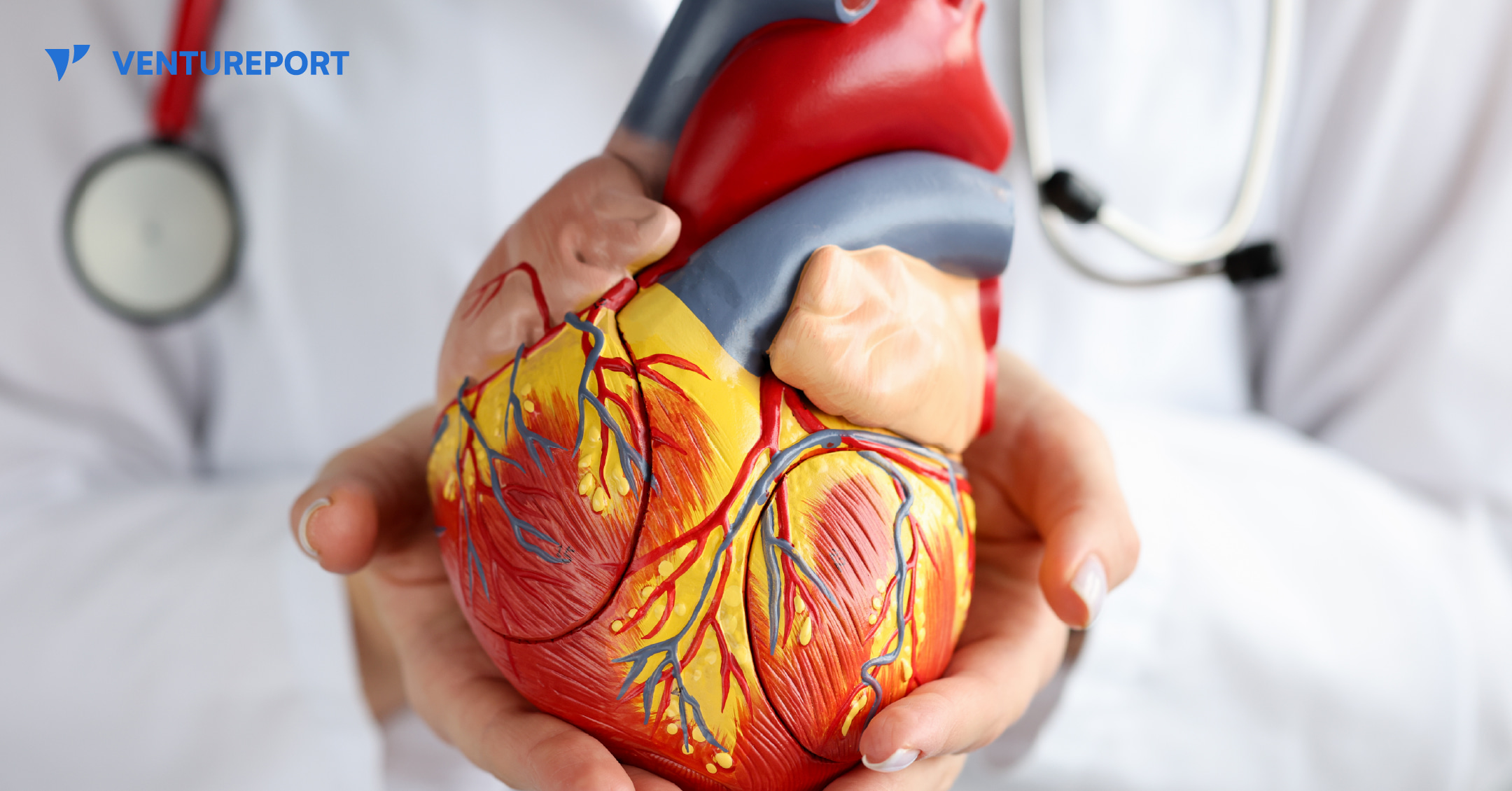
A doctor holding an artificial heart model. PHOTO: ADOBE STOCK
Heart disease does not always announce itself clearly, especially in women. Many of the symptoms are ordinary, including fatigue, shortness of breath and swelling. These signs are frequently dismissed or explained away. As a result, many women are diagnosed late, when treatment options are narrower and outcomes are worse. That diagnostic gap is the context behind a recent investment involving Ultromics and the American Heart Association’s Go Red for Women Venture Fund.
Ultromics is a health technology company that uses artificial intelligence to help doctors spot early signs of heart failure from routine heart scans. It has received a strategic investment from the American Heart Association’s Go Red for Women Venture Fund.
The focus of the investment is a long-standing blind spot in cardiac care. Heart failure with preserved ejection fraction, or HFpEF, affects millions of people worldwide, with women disproportionately impacted. It is one of the most common forms of heart failure, yet also one of the hardest to diagnose. Studies even show women are twice as likely as men to develop the condition and around 64% of cases go undiagnosed in routine clinical practice.
Ultromics works with a tool most patients already experience during heart care: the echocardiogram. There is no new scan and no added burden for patients. Its software analyzes standard heart ultrasound images and looks for subtle patterns that point to early heart failure. The goal is clarity. Give clinicians better signals earlier, before the disease advances.
“Heart failure with preserved ejection fraction is one of the most complex and overlooked diseases in cardiology. For too long, clinicians have been expected to diagnose it using tools that weren't built to detect it and as a result, many patients are identified too late,” said Ross Upton, PhD, CEO and Founder of Ultromics. “By augmenting physicians' decision making with EchoGo, we can help them recognize disease at an earlier stage and treat it more effectively.”
The stakes are high. Research suggests women are twice as likely as men to develop the condition and that a majority of cases are missed in routine clinical practice. That delay matters. New therapies can reduce hospitalizations and improve survival, but only if patients are diagnosed in time.
This is why early detection has become a priority for mission-driven investors. “Closing the diagnostic gap by recognizing disease before irreversible damage occurs is critical to improving health for women—and everyone,” said Tracy Warren, Senior Managing Director, Go Red for Women Venture Fund. “We are gratified to see technologies, such as this one, that are accepted by leading institutions as advances in the field of cardiovascular diagnostics. That's the kind of progress our fund was created to accelerate.”
Ultromics’ platform is already cleared by regulators for clinical use and is being deployed in hospitals across the US and UK. The company says its technology has analyzed hundreds of thousands of heart scans, helping clinicians reach clearer conclusions when traditional methods fall short.
Taken together, the investment reflects a broader shift in healthcare. Attention is shifting earlier—toward detection instead of reaction. Toward tools that fit into existing care rather than complicate it. In this case, the funding is not about introducing something new into the system. It is about seeing what has long been missed—and doing so in time.