
From generative AI to green energy, 15 finalist teams will take the stage after a record 390 teams entered this year's competition.
Updated
October 2, 2026 9:13 AM
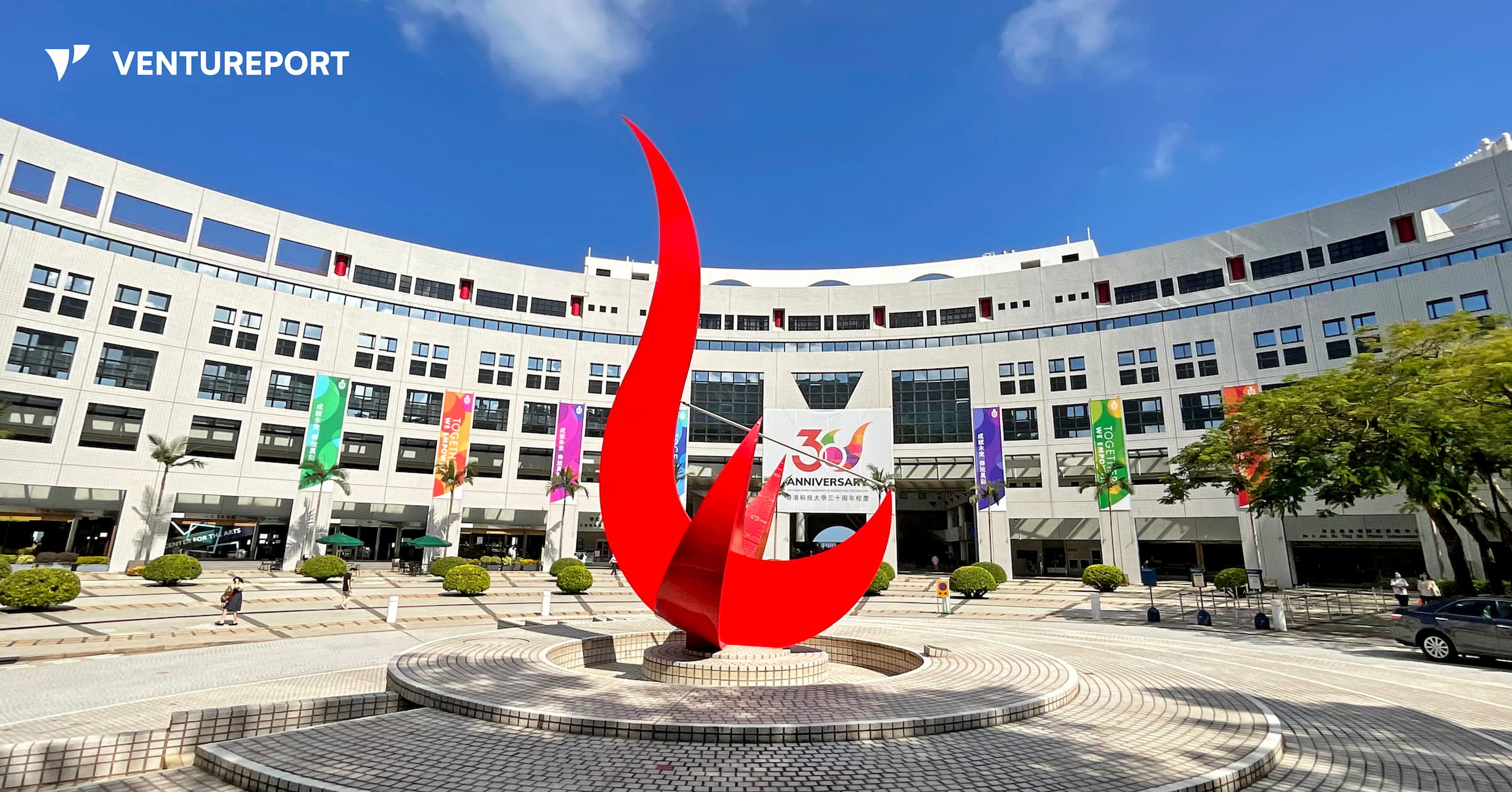
Entrance Piazza, Hong Kong University of Science and Technology. PHOTO: HKUST
The HKUST-Sino Million Dollar Entrepreneurship Competition 2026 will hold its finals on October 12, following a record 390 teams from 24 countries and regions taking part in this year's competition.
Jointly organised by the Hong Kong University of Science and Technology (HKUST) and Sino Group, the competition aims to give young entrepreneurs a platform to develop and present their ideas. Sino Group Deputy Chief Executive Officer Wong Wing-lung said the Group has partnered with HKUST for many years to support young talent and the development of innovation and technology in Hong Kong.
He said the competition gives young entrepreneurs a platform to showcase their creativity, exchange ideas and put their concepts into practice.
The international participation is reflected in the universities and regions represented this year. Participants include students from the University of Oxford in the UK, the University of Pennsylvania in the US and the National University of Singapore. Teams have also joined from Australia and South Africa.
After multiple rounds of assessment, 15 teams have advanced to the finals. Their projects cover health technology, generative AI, smart buildings, and green energy management. At the finals, the teams will present their solutions to a judging panel comprising venture capital investors, industry leaders and academic experts. They will compete for more than HK$1 million in prizes and awards.
The 2026 competition has also expanded the areas it recognises. Three new awards have been introduced this year: the Transformative AI Award, the NextGen Biotech Award and the Societal Influential Award. The competition will also continue to offer the Sustainability Impact Award. Together, the awards focus on areas ranging from emerging technologies to social and sustainability challenges.
The organisers are also adding new activities to help teams develop their ideas further. This year's programme includes pitching skills training, AI workshops, investor matching sessions and mentorship opportunities. The AI workshops will cover areas including generative AI and AI agents, while representatives from venture capital firms such as Gobi Partners and InnoAngel Fund have been invited to share insights on fundraising, product positioning and market expansion.
These activities are intended to help young entrepreneurs strengthen their business plans and presentation skills. They also give teams opportunities to explore technology commercialisation and potential market applications.
The competition will also launch the InnoBay 1M PLUS Program during the Grand Final. The programme will focus initially on Smart City Development and aims to connect HKUST start-ups and competition alumni with industry partners. It will also support potential proof-of-concept opportunities and help promising innovations move towards commercial adoption.
The Grand Final will also include an audience voting segment. Members of the public will be able to vote for the team they believe has the greatest potential and impact, with those who correctly vote for an eventual winning team entering a lucky draw.
For Wong, the competition is part of a broader effort to develop Hong Kong's innovation and technology talent. He noted that Hong Kong's first Five-Year Plan and latest Policy Address both highlight innovation, technology and talent development.
Prof. Tim Cheng Kwang-Ting, HKUST's Vice-President for Research and Development, said the competition has also served as a platform for aspiring entrepreneurs to connect with investors, understand market needs, test their ideas and gain practical entrepreneurial experience. He added that the competition has strengthened its training, mentorship and networking activities this year.
The Group believes that closer cooperation between industry, academia and research institutions can help turn innovative ideas into practical applications. Through the competition and its wider support programmes, young entrepreneurs are given opportunities to develop their ideas, connect with potential partners and explore how they can be taken from early concepts towards real-world applications.
Keep Reading
How ECOPEACE uses autonomous robots and data to monitor and maintain urban water bodies.
Updated
January 23, 2026 10:41 AM

A school of fish swimming among debris and waste. PHOTO: UNSPLASH
South Korea–based water technology company ECOPEACE is working on a practical challenge many cities face today: keeping urban water bodies clean as pollution and algae growth become more frequent. Rather than relying on periodic cleanup drives, the company focuses on systems that can monitor and manage water conditions on an ongoing basis.
At the core of ECOPEACE’s work are autonomous water-cleanup robots known as ECOBOT. These machines operate directly on lakes, reservoirs and rivers, removing algae and surface waste while also collecting information about water quality. The idea is to combine cleaning with constant observation so changes in water conditions do not go unnoticed.
Alongside the robots, ECOPEACE uses a filtration and treatment system designed to process polluted water continuously. This system filters out contaminants using fine metal filters and treats the water using electrical processes. It also cleans itself automatically, which allows it to run for long periods without frequent manual maintenance.
The role of AI in this setup is largely about decision-making rather than direct control. Sensors placed across the water body collect data such as pollution levels and water quality indicators. The software then analyses this data to spot early signs of issues like algae growth. Based on these patterns, the system adjusts how the robots and filtration units operate, such as changing treatment intensity or water flow. In simple terms, the technology helps the system respond sooner instead of waiting for visible problems to appear.
ECOPEACE has already deployed these systems across several reservoirs, rivers and urban waterways in South Korea. Those projects have helped refine how the robots, sensors and software work together in real environments rather than controlled test sites.
Building on that experience, the company has begun expanding beyond Korea. It is currently running pilot and proof-of-concept projects in Singapore and the United Arab Emirates. These deployments are testing how the technology performs in dense urban settings where waterways are closely linked to public health, infrastructure and daily city life.
Both regions have invested heavily in smart city initiatives and water management, making them suitable test beds for automated monitoring and cleanup systems. The pilots focus on algae control, surface cleaning and real-time tracking of water quality rather than large-scale rollout.
As cities continue to grow and climate-related pressures on water systems increase, managing waterways is becoming less about occasional intervention and more about continuous oversight. ECOPEACE’s approach reflects that shift by using automation and data to address problems early and reduce the need for reactive cleanup later.