
From generative AI to green energy, 15 finalist teams will take the stage after a record 390 teams entered this year's competition.
Updated
October 2, 2026 9:13 AM
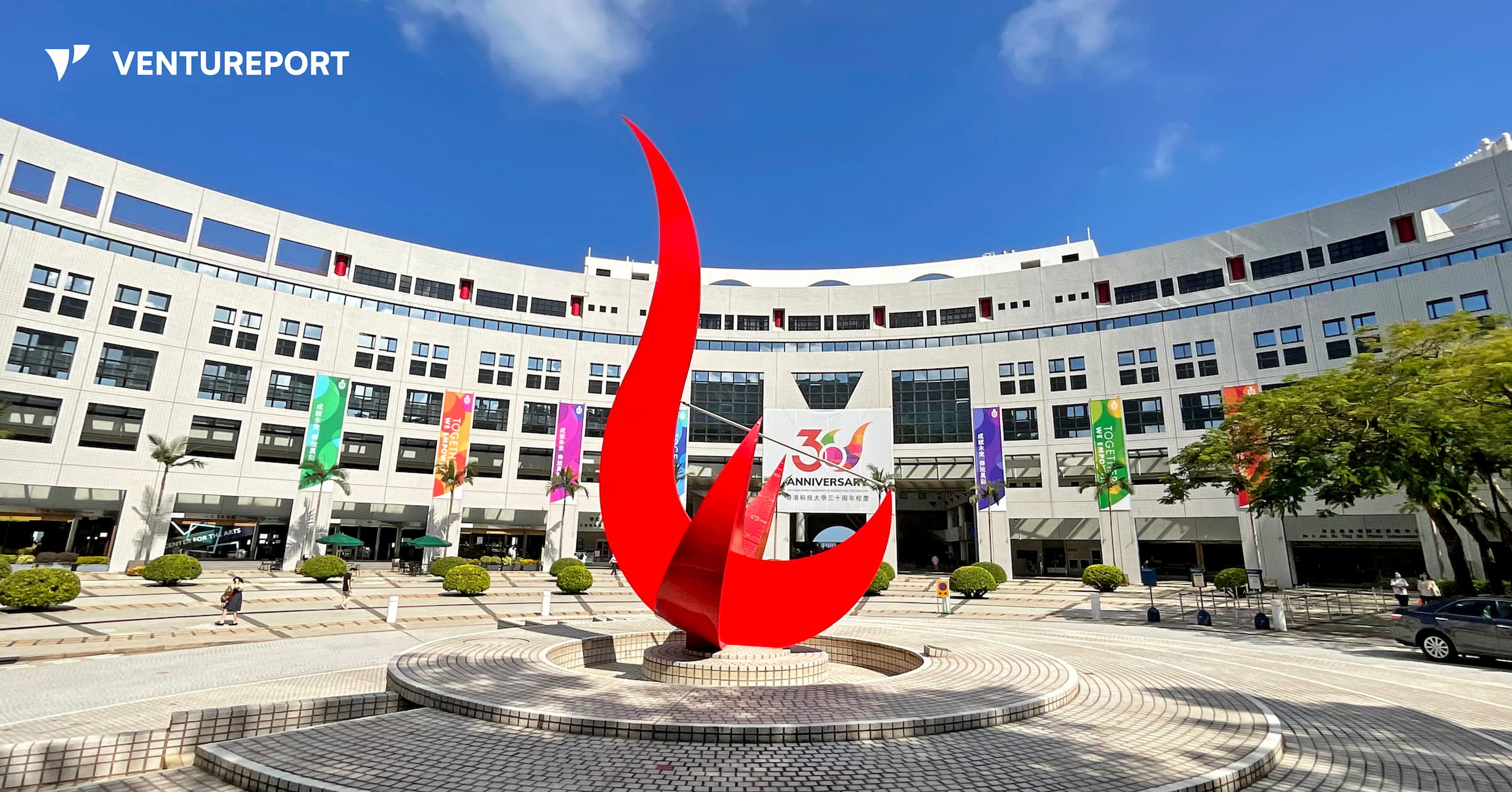
Entrance Piazza, Hong Kong University of Science and Technology. PHOTO: HKUST
The HKUST-Sino Million Dollar Entrepreneurship Competition 2026 will hold its finals on October 12, following a record 390 teams from 24 countries and regions taking part in this year's competition.
Jointly organised by the Hong Kong University of Science and Technology (HKUST) and Sino Group, the competition aims to give young entrepreneurs a platform to develop and present their ideas. Sino Group Deputy Chief Executive Officer Wong Wing-lung said the Group has partnered with HKUST for many years to support young talent and the development of innovation and technology in Hong Kong.
He said the competition gives young entrepreneurs a platform to showcase their creativity, exchange ideas and put their concepts into practice.
The international participation is reflected in the universities and regions represented this year. Participants include students from the University of Oxford in the UK, the University of Pennsylvania in the US and the National University of Singapore. Teams have also joined from Australia and South Africa.
After multiple rounds of assessment, 15 teams have advanced to the finals. Their projects cover health technology, generative AI, smart buildings, and green energy management. At the finals, the teams will present their solutions to a judging panel comprising venture capital investors, industry leaders and academic experts. They will compete for more than HK$1 million in prizes and awards.
The 2026 competition has also expanded the areas it recognises. Three new awards have been introduced this year: the Transformative AI Award, the NextGen Biotech Award and the Societal Influential Award. The competition will also continue to offer the Sustainability Impact Award. Together, the awards focus on areas ranging from emerging technologies to social and sustainability challenges.
The organisers are also adding new activities to help teams develop their ideas further. This year's programme includes pitching skills training, AI workshops, investor matching sessions and mentorship opportunities. The AI workshops will cover areas including generative AI and AI agents, while representatives from venture capital firms such as Gobi Partners and InnoAngel Fund have been invited to share insights on fundraising, product positioning and market expansion.
These activities are intended to help young entrepreneurs strengthen their business plans and presentation skills. They also give teams opportunities to explore technology commercialisation and potential market applications.
The competition will also launch the InnoBay 1M PLUS Program during the Grand Final. The programme will focus initially on Smart City Development and aims to connect HKUST start-ups and competition alumni with industry partners. It will also support potential proof-of-concept opportunities and help promising innovations move towards commercial adoption.
The Grand Final will also include an audience voting segment. Members of the public will be able to vote for the team they believe has the greatest potential and impact, with those who correctly vote for an eventual winning team entering a lucky draw.
For Wong, the competition is part of a broader effort to develop Hong Kong's innovation and technology talent. He noted that Hong Kong's first Five-Year Plan and latest Policy Address both highlight innovation, technology and talent development.
Prof. Tim Cheng Kwang-Ting, HKUST's Vice-President for Research and Development, said the competition has also served as a platform for aspiring entrepreneurs to connect with investors, understand market needs, test their ideas and gain practical entrepreneurial experience. He added that the competition has strengthened its training, mentorship and networking activities this year.
The Group believes that closer cooperation between industry, academia and research institutions can help turn innovative ideas into practical applications. Through the competition and its wider support programmes, young entrepreneurs are given opportunities to develop their ideas, connect with potential partners and explore how they can be taken from early concepts towards real-world applications.
Keep Reading
A look at how motivation, not metrics, is becoming the real frontier in fitness tech
Updated
February 7, 2026 2:18 PM

A group of people running together. PHOTO: FREEPIK
Most running apps focus on measurement. Distance, pace, heart rate, badges. They record activity well, but struggle to help users maintain consistency over time. As a result, many people track diligently at first, then gradually disengage.
That drop-off has pushed developers to rethink what fitness technology is actually for. Instead of just documenting activity, some platforms are now trying to influence behaviour itself. Paceful, an AI-powered running platform developed by SportsTech startup xCREW, is part of that shift — not by adding more metrics, but by focusing on how people stay consistent. The platform is built on a simple behavioural insight: most people don’t stop exercising because they don’t care about health. They stop because routines are fragile. Miss a few days and the habit collapses. Technology that focuses only on performance metrics doesn’t solve that. Systems that reinforce consistency, belonging and feedback loops might.
Instead of treating running as a solo, data-driven task, Paceful is built around two ideas: behavioural incentives and social alignment. The system turns real-world running activity into tangible rewards and it uses AI to connect runners to people, clubs and challenges that fit how and where they actually run.
At the technical level, Paceful connects with existing fitness ecosystems. Users can import workout data from platforms like Apple Health and Strava rather than starting from scratch. Once inside the system, AI models analyse pace, frequency, location and participation patterns. That data is used to recommend running partners, clubs and group challenges that match each runner’s habits and context.
What makes this approach different is not the tracking itself, but what the platform does with the data it collects. Running distance and consistency become inputs for a reward system that offers physical-world incentives, such as gear, race entries or gift cards. The idea is to link effort to something concrete, rather than abstract. The company also built the system around community logic rather than individual competition. Even solo runners are placed into challenge formats designed to simulate the motivation of a group. In practice, that means users feel part of a shared structure even when running alone.
During a six-month beta phase in the US, xCREW tested Paceful with more than 4,000 running clubs and around 50,000 runners. According to the company, users increased their running frequency significantly and weekly retention remained unusually high for a fitness platform. One beta tester summed it up this way: “Strava just logs records, but Paceful rewards you for every run, which is a completely different motivation”.
The company has raised seed funding and plans to expand the platform beyond running, walking, trekking, cycling and swimming. Instead of asking how accurately technology can measure the body, platforms like Paceful are asking a different question: how technology might influence everyday behaviour. Not by adding more data, but by shaping the conditions around effort, feedback and social connection.
As AI becomes more common in consumer products, its real impact may depend less on how advanced the models are and more on what they are applied to. In this case, the focus isn’t speed or performance — it’s consistency. And whether systems like this can meaningfully support it over time.