
From generative AI to green energy, 15 finalist teams will take the stage after a record 390 teams entered this year's competition.
Updated
October 2, 2026 9:13 AM
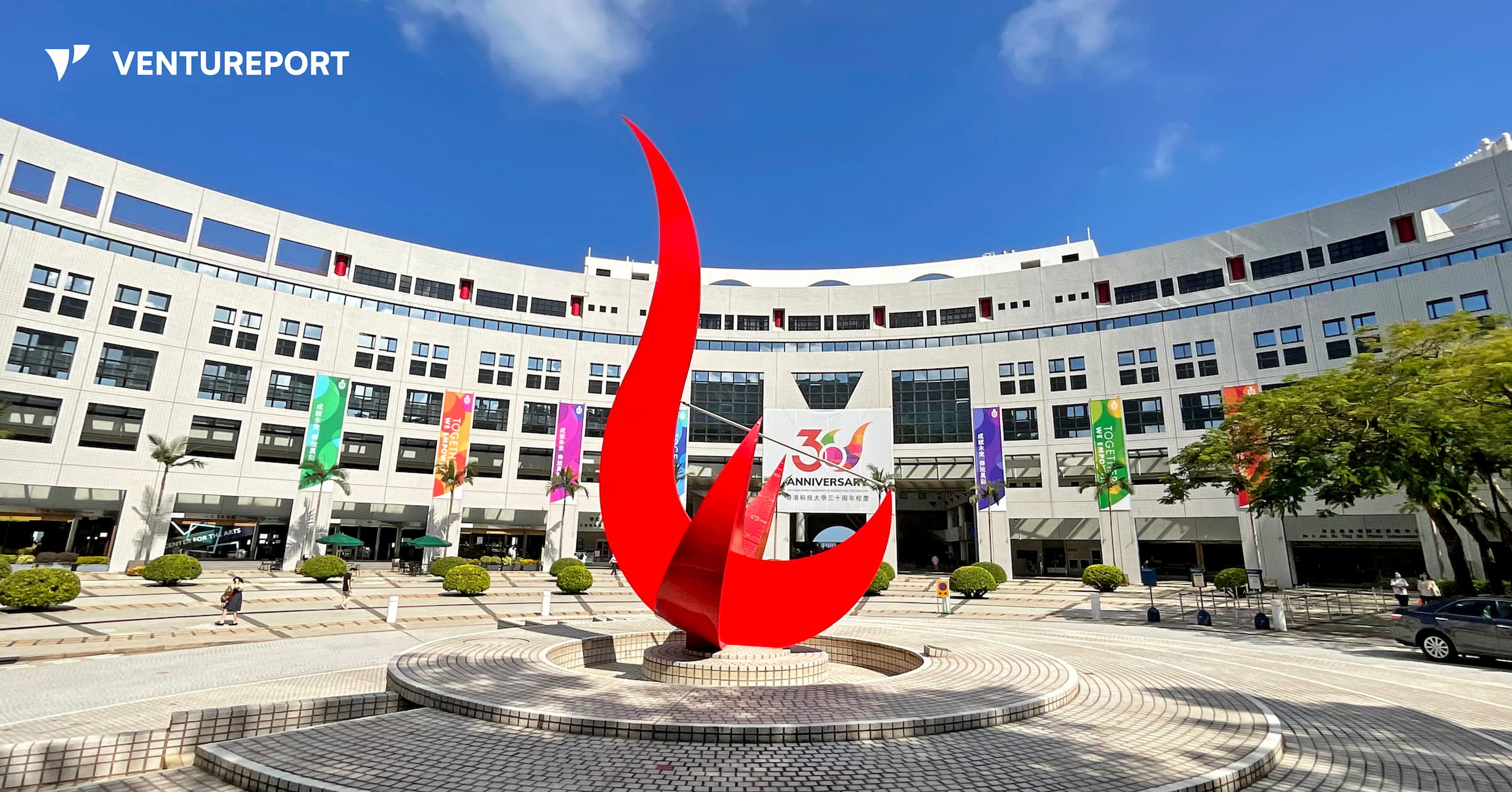
Entrance Piazza, Hong Kong University of Science and Technology. PHOTO: HKUST
The HKUST-Sino Million Dollar Entrepreneurship Competition 2026 will hold its finals on October 12, following a record 390 teams from 24 countries and regions taking part in this year's competition.
Jointly organised by the Hong Kong University of Science and Technology (HKUST) and Sino Group, the competition aims to give young entrepreneurs a platform to develop and present their ideas. Sino Group Deputy Chief Executive Officer Wong Wing-lung said the Group has partnered with HKUST for many years to support young talent and the development of innovation and technology in Hong Kong.
He said the competition gives young entrepreneurs a platform to showcase their creativity, exchange ideas and put their concepts into practice.
The international participation is reflected in the universities and regions represented this year. Participants include students from the University of Oxford in the UK, the University of Pennsylvania in the US and the National University of Singapore. Teams have also joined from Australia and South Africa.
After multiple rounds of assessment, 15 teams have advanced to the finals. Their projects cover health technology, generative AI, smart buildings, and green energy management. At the finals, the teams will present their solutions to a judging panel comprising venture capital investors, industry leaders and academic experts. They will compete for more than HK$1 million in prizes and awards.
The 2026 competition has also expanded the areas it recognises. Three new awards have been introduced this year: the Transformative AI Award, the NextGen Biotech Award and the Societal Influential Award. The competition will also continue to offer the Sustainability Impact Award. Together, the awards focus on areas ranging from emerging technologies to social and sustainability challenges.
The organisers are also adding new activities to help teams develop their ideas further. This year's programme includes pitching skills training, AI workshops, investor matching sessions and mentorship opportunities. The AI workshops will cover areas including generative AI and AI agents, while representatives from venture capital firms such as Gobi Partners and InnoAngel Fund have been invited to share insights on fundraising, product positioning and market expansion.
These activities are intended to help young entrepreneurs strengthen their business plans and presentation skills. They also give teams opportunities to explore technology commercialisation and potential market applications.
The competition will also launch the InnoBay 1M PLUS Program during the Grand Final. The programme will focus initially on Smart City Development and aims to connect HKUST start-ups and competition alumni with industry partners. It will also support potential proof-of-concept opportunities and help promising innovations move towards commercial adoption.
The Grand Final will also include an audience voting segment. Members of the public will be able to vote for the team they believe has the greatest potential and impact, with those who correctly vote for an eventual winning team entering a lucky draw.
For Wong, the competition is part of a broader effort to develop Hong Kong's innovation and technology talent. He noted that Hong Kong's first Five-Year Plan and latest Policy Address both highlight innovation, technology and talent development.
Prof. Tim Cheng Kwang-Ting, HKUST's Vice-President for Research and Development, said the competition has also served as a platform for aspiring entrepreneurs to connect with investors, understand market needs, test their ideas and gain practical entrepreneurial experience. He added that the competition has strengthened its training, mentorship and networking activities this year.
The Group believes that closer cooperation between industry, academia and research institutions can help turn innovative ideas into practical applications. Through the competition and its wider support programmes, young entrepreneurs are given opportunities to develop their ideas, connect with potential partners and explore how they can be taken from early concepts towards real-world applications.
Keep Reading
A plug-and-play export pathway helps regional brands reach Asia without building overseas operations
Updated
March 17, 2026 1:01 AM

Coupang headquarters in Silicon Valley. PHOTO: ADOBE STOCK
Two western Pennsylvania companies — Kate’s Real Food and Healthy Origins — are expanding beyond the U.S. through a partnership with Coupang.
Coupang, a U.S.-technology and Fortune 150 company, operates one of the largest e-commerce platforms in South Korea. It allows American sellers to reach customers overseas without setting up their own distribution networks. Businesses ship products to a domestic Coupang logistics facility. From there, the company manages storage, fulfillment and delivery directly to customers abroad.
For Kate’s Real Food and Healthy Origins, this system opens the door to new markets without requiring on-the-ground operations. Kate’s Real Food makes organic energy and protein bars. Healthy Origins is a family-owned supplements business based near Pittsburgh. Both are now selling to customers in South Korea and in Healthy Origins’ case, Taiwan as well.
That structure addresses a practical gap for growing brands: how to access international demand without building international operations. Instead of navigating foreign warehousing and retail partnerships independently, sellers plug into an existing marketplace and logistics system.
“At Coupang, we’re proud to help thousands of American small and medium-sized businesses, agricultural producers and larger brands sell their goods to customers around the world”, said Coupang vice president Bill Anaya. “We’ve built an innovative, AI-driven export engine that enables great American entrepreneurs — like those who created Kate’s Real Food and Healthy Origins — to expand their horizons, find new revenue abroad and keep growing their local teams".
For Kate’s Real Food, the move marks its entry into South Korea for the first time. For Healthy Origins, the results have been measurable. The company reports that sales of its products on the platform have increased more than 50% year over year since partnering with Coupang. It has also expanded into Taiwan.
“Partnering with Coupang has been a significant step forward for our business”, said Bret Eby, CEO of Healthy Origins. “Coupang makes it easier to deliver a great shopping experience and we’ve appreciated the collaboration and support throughout the process. Its scale, efficiency and consumer reach in Korea are unmatched and launching on Coupang allowed us to elevate our presence and connect with customers in a much more impactful and direct way”.
The broader relevance lies in the model itself. Digital marketplaces are building integrated cross-border infrastructure. That shift changes what international expansion requires. Smaller regional brands no longer need to replicate warehousing, logistics and retail partnerships in every new market. Instead, they can plug into an existing system and reach customers abroad.
In this case, two Pennsylvania companies are doing exactly that. Their expansion illustrates how platform-led trade is reshaping the path from local operations to global reach.