
From generative AI to green energy, 15 finalist teams will take the stage after a record 390 teams entered this year's competition.
Updated
October 2, 2026 9:13 AM
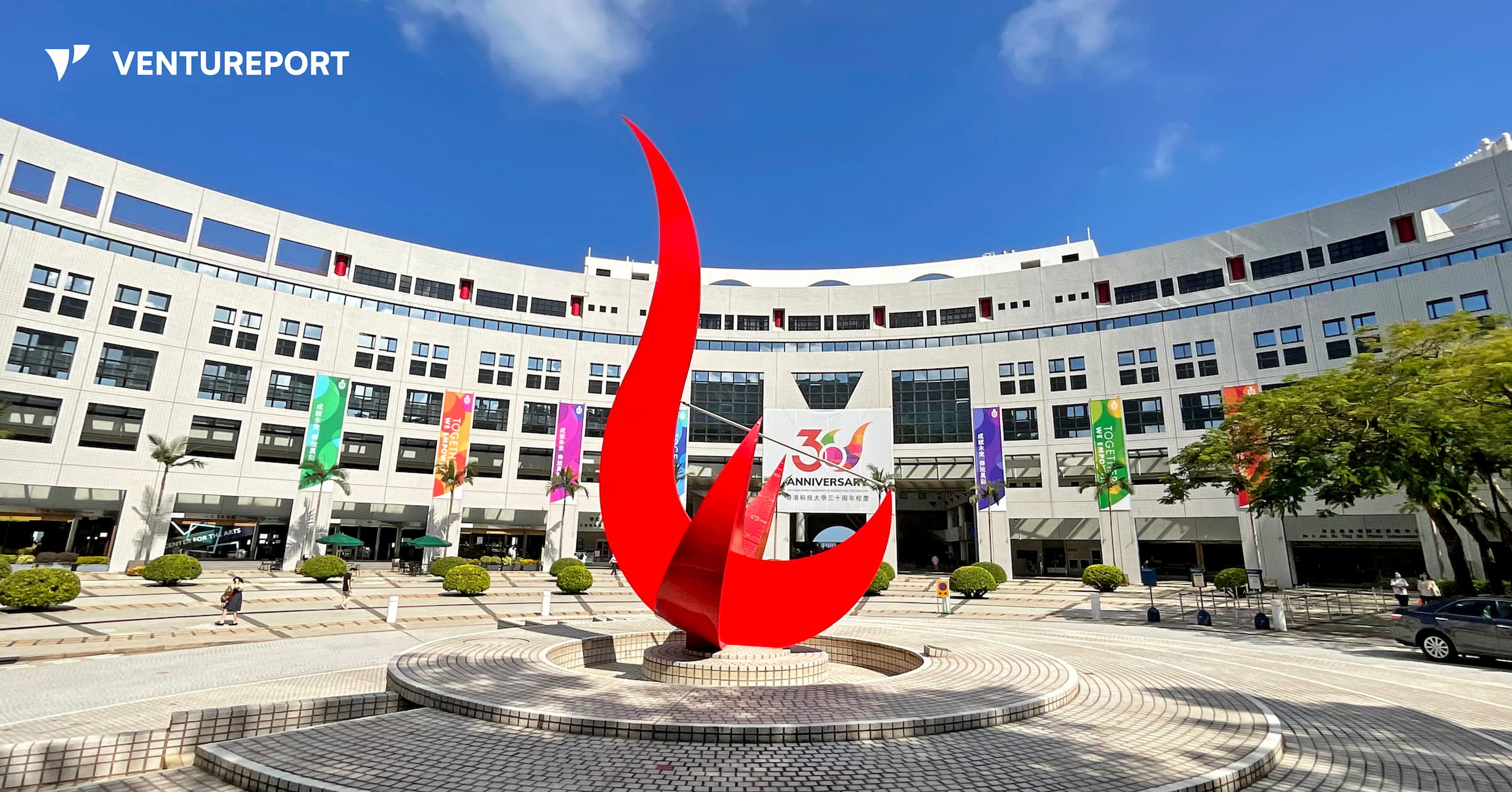
Entrance Piazza, Hong Kong University of Science and Technology. PHOTO: HKUST
The HKUST-Sino Million Dollar Entrepreneurship Competition 2026 will hold its finals on October 12, following a record 390 teams from 24 countries and regions taking part in this year's competition.
Jointly organised by the Hong Kong University of Science and Technology (HKUST) and Sino Group, the competition aims to give young entrepreneurs a platform to develop and present their ideas. Sino Group Deputy Chief Executive Officer Wong Wing-lung said the Group has partnered with HKUST for many years to support young talent and the development of innovation and technology in Hong Kong.
He said the competition gives young entrepreneurs a platform to showcase their creativity, exchange ideas and put their concepts into practice.
The international participation is reflected in the universities and regions represented this year. Participants include students from the University of Oxford in the UK, the University of Pennsylvania in the US and the National University of Singapore. Teams have also joined from Australia and South Africa.
After multiple rounds of assessment, 15 teams have advanced to the finals. Their projects cover health technology, generative AI, smart buildings, and green energy management. At the finals, the teams will present their solutions to a judging panel comprising venture capital investors, industry leaders and academic experts. They will compete for more than HK$1 million in prizes and awards.
The 2026 competition has also expanded the areas it recognises. Three new awards have been introduced this year: the Transformative AI Award, the NextGen Biotech Award and the Societal Influential Award. The competition will also continue to offer the Sustainability Impact Award. Together, the awards focus on areas ranging from emerging technologies to social and sustainability challenges.
The organisers are also adding new activities to help teams develop their ideas further. This year's programme includes pitching skills training, AI workshops, investor matching sessions and mentorship opportunities. The AI workshops will cover areas including generative AI and AI agents, while representatives from venture capital firms such as Gobi Partners and InnoAngel Fund have been invited to share insights on fundraising, product positioning and market expansion.
These activities are intended to help young entrepreneurs strengthen their business plans and presentation skills. They also give teams opportunities to explore technology commercialisation and potential market applications.
The competition will also launch the InnoBay 1M PLUS Program during the Grand Final. The programme will focus initially on Smart City Development and aims to connect HKUST start-ups and competition alumni with industry partners. It will also support potential proof-of-concept opportunities and help promising innovations move towards commercial adoption.
The Grand Final will also include an audience voting segment. Members of the public will be able to vote for the team they believe has the greatest potential and impact, with those who correctly vote for an eventual winning team entering a lucky draw.
For Wong, the competition is part of a broader effort to develop Hong Kong's innovation and technology talent. He noted that Hong Kong's first Five-Year Plan and latest Policy Address both highlight innovation, technology and talent development.
Prof. Tim Cheng Kwang-Ting, HKUST's Vice-President for Research and Development, said the competition has also served as a platform for aspiring entrepreneurs to connect with investors, understand market needs, test their ideas and gain practical entrepreneurial experience. He added that the competition has strengthened its training, mentorship and networking activities this year.
The Group believes that closer cooperation between industry, academia and research institutions can help turn innovative ideas into practical applications. Through the competition and its wider support programmes, young entrepreneurs are given opportunities to develop their ideas, connect with potential partners and explore how they can be taken from early concepts towards real-world applications.
Keep Reading
A Hong Kong pilot explores how creator-led distribution could reshape livestreaming for global competitions
Updated
May 1, 2026 2:25 PM

A dance crew performs in sync on stage at World of Dance under spotlights. PHOTO: WORLD OF DANCE HONG KONG
On January 22, 2026, World of Dance Hong Kong became the first global event to pilot Mitico’s community-based livestreaming model. The idea is simple: rethink how live competitions are shared in a digital-first world.
Instead of relying on a single official broadcast, the event was produced as one centralised live feed. It was then distributed across multiple creators and influencers, each hosting the stream for their own audience.
This gave creators room to add their own commentary, adapt the language and bring in cultural context that suited their communities, while the production remained consistent behind the scenes.
“Dance is a universal language”, said David Gonzalez, President of World of Dance. “Our collaboration with Mitico to produce an international, creator-led livestream in Hong Kong allowed a regional competition to reach a global audience. With personalised commentary from hosts in different languages, we can begin to see how regional events may connect through global communities”. This approach points to a shift away from traditional broadcaster-led distribution and toward creator-led amplification.
.jpg)
Mitico’s approach begins with a familiar industry challenge: the high cost of production and licensing, which often makes it difficult to livestream cultural and sports events at scale.
“Many cultural and sports competitions are never livestreamed because traditional broadcasting is too costly and complex”, said Chengcheng Li, Founder of Mitico. “By distributing a centralised production feed through creators and community hosts, regional events can reach global audiences while maintaining a unified production workflow”.
World of Dance (WOD) offered a natural test environment. It started as a global dance competition platform before entering a television partnership with NBC, which later produced four seasons of the World of Dance reality series. While the television programme concluded in 2021, the competition business has continued to expand through an international network of partners. Today, World of Dance competitions are represented in more than 72 countries, producing nearly 100 events each year, with a digital audience of more than 34 million followers across platforms
Despite that scale, many competitions are not livestreamed due to the high production costs and technical demands associated with traditional broadcasting. The Hong Kong event was selected to assess whether a community-led distribution model could offer a more scalable alternative for live coverage.
While no changes to World of Dance’s broader distribution strategy have been announced, the Hong Kong pilot offers an early indication of how global competitions may rethink livestreaming in an increasingly creator-driven media environment.