
From generative AI to green energy, 15 finalist teams will take the stage after a record 390 teams entered this year's competition.
Updated
October 2, 2026 9:13 AM
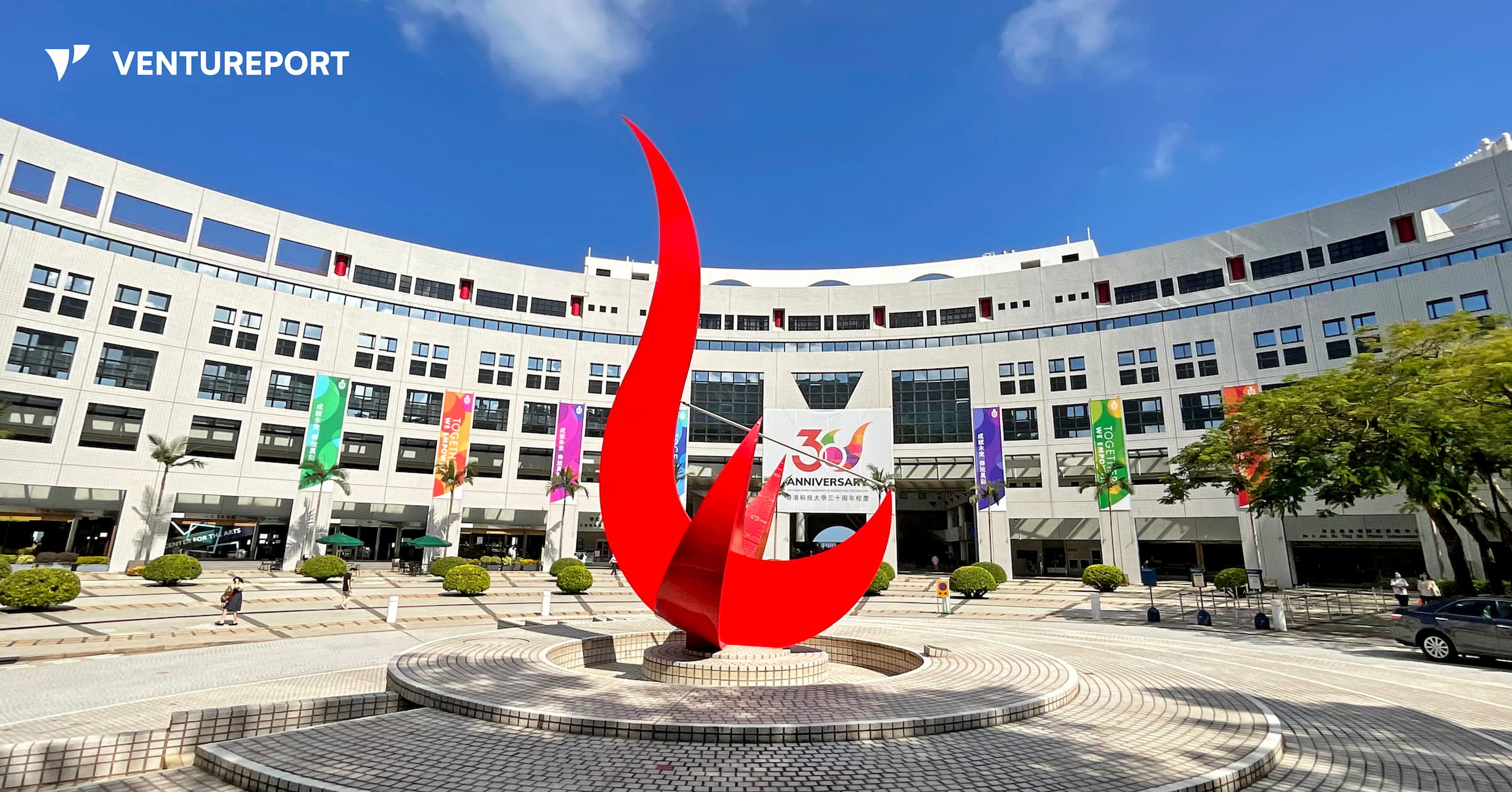
Entrance Piazza, Hong Kong University of Science and Technology. PHOTO: HKUST
The HKUST-Sino Million Dollar Entrepreneurship Competition 2026 will hold its finals on October 12, following a record 390 teams from 24 countries and regions taking part in this year's competition.
Jointly organised by the Hong Kong University of Science and Technology (HKUST) and Sino Group, the competition aims to give young entrepreneurs a platform to develop and present their ideas. Sino Group Deputy Chief Executive Officer Wong Wing-lung said the Group has partnered with HKUST for many years to support young talent and the development of innovation and technology in Hong Kong.
He said the competition gives young entrepreneurs a platform to showcase their creativity, exchange ideas and put their concepts into practice.
The international participation is reflected in the universities and regions represented this year. Participants include students from the University of Oxford in the UK, the University of Pennsylvania in the US and the National University of Singapore. Teams have also joined from Australia and South Africa.
After multiple rounds of assessment, 15 teams have advanced to the finals. Their projects cover health technology, generative AI, smart buildings, and green energy management. At the finals, the teams will present their solutions to a judging panel comprising venture capital investors, industry leaders and academic experts. They will compete for more than HK$1 million in prizes and awards.
The 2026 competition has also expanded the areas it recognises. Three new awards have been introduced this year: the Transformative AI Award, the NextGen Biotech Award and the Societal Influential Award. The competition will also continue to offer the Sustainability Impact Award. Together, the awards focus on areas ranging from emerging technologies to social and sustainability challenges.
The organisers are also adding new activities to help teams develop their ideas further. This year's programme includes pitching skills training, AI workshops, investor matching sessions and mentorship opportunities. The AI workshops will cover areas including generative AI and AI agents, while representatives from venture capital firms such as Gobi Partners and InnoAngel Fund have been invited to share insights on fundraising, product positioning and market expansion.
These activities are intended to help young entrepreneurs strengthen their business plans and presentation skills. They also give teams opportunities to explore technology commercialisation and potential market applications.
The competition will also launch the InnoBay 1M PLUS Program during the Grand Final. The programme will focus initially on Smart City Development and aims to connect HKUST start-ups and competition alumni with industry partners. It will also support potential proof-of-concept opportunities and help promising innovations move towards commercial adoption.
The Grand Final will also include an audience voting segment. Members of the public will be able to vote for the team they believe has the greatest potential and impact, with those who correctly vote for an eventual winning team entering a lucky draw.
For Wong, the competition is part of a broader effort to develop Hong Kong's innovation and technology talent. He noted that Hong Kong's first Five-Year Plan and latest Policy Address both highlight innovation, technology and talent development.
Prof. Tim Cheng Kwang-Ting, HKUST's Vice-President for Research and Development, said the competition has also served as a platform for aspiring entrepreneurs to connect with investors, understand market needs, test their ideas and gain practical entrepreneurial experience. He added that the competition has strengthened its training, mentorship and networking activities this year.
The Group believes that closer cooperation between industry, academia and research institutions can help turn innovative ideas into practical applications. Through the competition and its wider support programmes, young entrepreneurs are given opportunities to develop their ideas, connect with potential partners and explore how they can be taken from early concepts towards real-world applications.
Keep Reading
Sonilo and Shutterstock are betting that licensed training data could define the future of AI music.
Updated
August 10, 2026 5:56 PM

A human operating a digital turntable. PHOTO: UNSPLASH
As copyright disputes continue to grow around AI-generated music, Sonilo, the world’s first professionally licensed video-to-music AI platform, has partnered with Shutterstock to train its models on licensed music catalogs.
The agreement gives Sonilo access to Shutterstock’s music library for AI model training. According to the companies, it is Shutterstock’s first partnership with a video-to-music AI platform and the timing is significant. AI music companies are facing growing pressure over how their systems are trained. Artists and record labels have increasingly challenged the use of copyrighted music in AI datasets, especially when licensing agreements or compensation structures are unclear.
That tension has created a divide across the industry. Some companies have continued building models around scraped or disputed data. Others are trying to position licensing as part of the product itself.
Sonilo falls into the second group. The company says its models are trained only on licensed material where artists and rights holders have agreed to participate and receive compensation. The Shutterstock partnership strengthens that position while giving Sonilo access to a larger pool of commercially cleared music.
The collaboration also points to a broader change happening inside generative AI. As AI tools move into commercial production, companies are being pushed to show not just what their models can generate, but also where their training data comes from.
Sonilo’s platform is built around video rather than text prompts. The system analyses footage directly, studies pacing and emotional tone, then generates an original soundtrack to match the content. The company says this removes the need for manual music searches, syncing or editing workflows. The generated tracks are cleared for commercial use across social media, branded content and broadcast production.
Shawn Song, CEO of Sonilo, said: "Music has always been the last unsolved layer of video creation, and video has always carried its own soundtrack. We built Sonilo to hear it and compose from it, without a single text prompt. But how we build matters as much as what we build. While others have chosen to take artists' work without permission and charge creators for the privilege, we've chosen a different path—one where artists are compensated from day one. Partnering with Shutterstock reflects that standard. Every model we train meets a bar the music industry can stand behind, because the most innovative AI platforms don't have to come at the expense of the artists who make all of these possible."
For Shutterstock, the deal expands the company’s growing role in generative AI infrastructure. The company has increasingly focused on licensing content for AI systems across images, video and music.
Jessica April, Vice President of Data Licensing & AI Services at Shutterstock, said: "AI innovation depends on access to high-quality, rights-cleared content and trusted licensing partnerships. Sonilo's approach reflects the growing demand for responsibly sourced training data and commercially safe AI workflows. We're pleased to support companies building generative AI products with licensed content and scalable data solutions that help accelerate innovation while respecting creators and rights holders."
The partnership also comes as Sonilo expands into creator and developer ecosystems. Earlier this month, the company launched as a native node inside ComfyUI, an open-source AI workflow platform used by millions of creators. Sonilo also offers API access for integration into creator tools, video platforms, game engines and other AI systems.
As AI-generated music becomes more common across advertising, creator platforms and digital media, the industry’s focus is shifting beyond generation alone. Questions around licensing, ownership and compensation are increasingly shaping how AI music companies position themselves and build trust with creators.