
From generative AI to green energy, 15 finalist teams will take the stage after a record 390 teams entered this year's competition.
Updated
October 2, 2026 9:13 AM
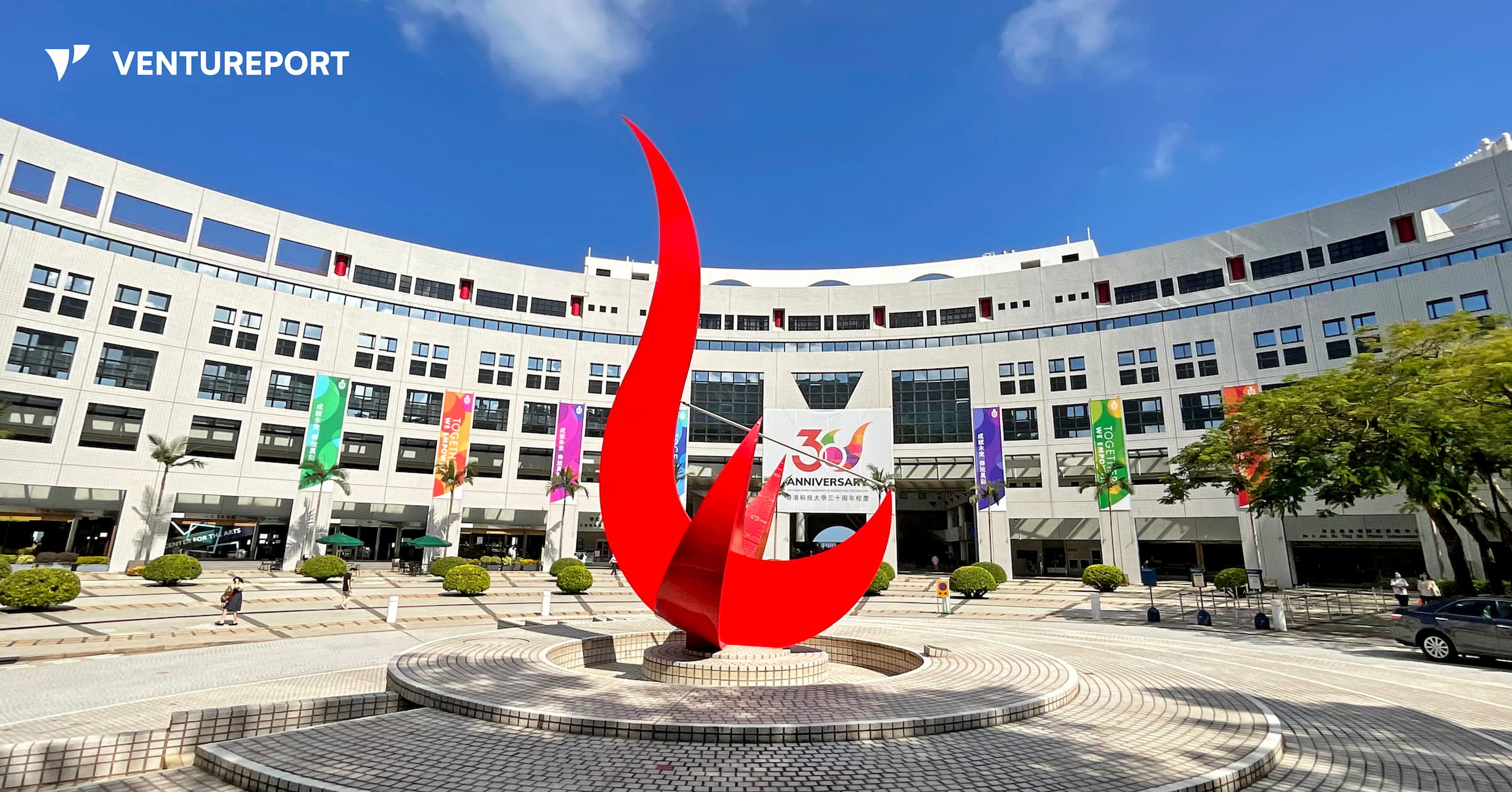
Entrance Piazza, Hong Kong University of Science and Technology. PHOTO: HKUST
The HKUST-Sino Million Dollar Entrepreneurship Competition 2026 will hold its finals on October 12, following a record 390 teams from 24 countries and regions taking part in this year's competition.
Jointly organised by the Hong Kong University of Science and Technology (HKUST) and Sino Group, the competition aims to give young entrepreneurs a platform to develop and present their ideas. Sino Group Deputy Chief Executive Officer Wong Wing-lung said the Group has partnered with HKUST for many years to support young talent and the development of innovation and technology in Hong Kong.
He said the competition gives young entrepreneurs a platform to showcase their creativity, exchange ideas and put their concepts into practice.
The international participation is reflected in the universities and regions represented this year. Participants include students from the University of Oxford in the UK, the University of Pennsylvania in the US and the National University of Singapore. Teams have also joined from Australia and South Africa.
After multiple rounds of assessment, 15 teams have advanced to the finals. Their projects cover health technology, generative AI, smart buildings, and green energy management. At the finals, the teams will present their solutions to a judging panel comprising venture capital investors, industry leaders and academic experts. They will compete for more than HK$1 million in prizes and awards.
The 2026 competition has also expanded the areas it recognises. Three new awards have been introduced this year: the Transformative AI Award, the NextGen Biotech Award and the Societal Influential Award. The competition will also continue to offer the Sustainability Impact Award. Together, the awards focus on areas ranging from emerging technologies to social and sustainability challenges.
The organisers are also adding new activities to help teams develop their ideas further. This year's programme includes pitching skills training, AI workshops, investor matching sessions and mentorship opportunities. The AI workshops will cover areas including generative AI and AI agents, while representatives from venture capital firms such as Gobi Partners and InnoAngel Fund have been invited to share insights on fundraising, product positioning and market expansion.
These activities are intended to help young entrepreneurs strengthen their business plans and presentation skills. They also give teams opportunities to explore technology commercialisation and potential market applications.
The competition will also launch the InnoBay 1M PLUS Program during the Grand Final. The programme will focus initially on Smart City Development and aims to connect HKUST start-ups and competition alumni with industry partners. It will also support potential proof-of-concept opportunities and help promising innovations move towards commercial adoption.
The Grand Final will also include an audience voting segment. Members of the public will be able to vote for the team they believe has the greatest potential and impact, with those who correctly vote for an eventual winning team entering a lucky draw.
For Wong, the competition is part of a broader effort to develop Hong Kong's innovation and technology talent. He noted that Hong Kong's first Five-Year Plan and latest Policy Address both highlight innovation, technology and talent development.
Prof. Tim Cheng Kwang-Ting, HKUST's Vice-President for Research and Development, said the competition has also served as a platform for aspiring entrepreneurs to connect with investors, understand market needs, test their ideas and gain practical entrepreneurial experience. He added that the competition has strengthened its training, mentorship and networking activities this year.
The Group believes that closer cooperation between industry, academia and research institutions can help turn innovative ideas into practical applications. Through the competition and its wider support programmes, young entrepreneurs are given opportunities to develop their ideas, connect with potential partners and explore how they can be taken from early concepts towards real-world applications.
Keep Reading
Robots that learn on the job: AgiBot tests reinforcement learning in real-world manufacturing.
Updated
January 8, 2026 6:34 PM

A humanoid robot works on a factory line, showcasing advanced automation in real-world production. PHOTO: AGIBOT
Shanghai-based robotics firm AgiBot has taken a major step toward bringing artificial intelligence into real manufacturing. The company announced that its Real-World Reinforcement Learning (RW-RL) system has been successfully deployed on a pilot production line run in partnership with Longcheer Technology. It marks one of the first real applications of reinforcement learning in industrial robotics.
The project represents a key shift in factory automation. For years, precision manufacturing has relied on rigid setups: robots that need custom fixtures, intricate programming and long calibration cycles. Even newer systems combining vision and force control often struggle with slow deployment and complex maintenance. AgiBot’s system aims to change that by letting robots learn and adapt on the job, reducing the need for extensive tuning or manual reconfiguration.
The RW-RL setup allows a robot to pick up new tasks within minutes rather than weeks. Once trained, the system can automatically adjust to variations, such as changes in part placement or size tolerance, maintaining steady performance throughout long operations. When production lines switch models or products, only minor hardware tweaks are needed. This flexibility could significantly cut downtime and setup costs in industries where rapid product turnover is common.
The system’s main strengths lie in faster deployment, high adaptability and easier reconfiguration. In practice, robots can be retrained quickly for new tasks without needing new fixtures or tools — a long-standing obstacle in consumer electronics production. The platform also works reliably across different factory layouts, showing potential for broader use in complex or varied manufacturing environments.
Beyond its technical claims, the milestone demonstrates a deeper convergence between algorithmic intelligence and mechanical motion.Instead of being tested only in the lab, AgiBot’s system was tried in real factory settings, showing it can perform reliably outside research conditions.
This progress builds on years of reinforcement learning research, which has gradually pushed AI toward greater stability and real-world usability. AgiBot’s Chief Scientist Dr. Jianlan Luo and his team have been at the forefront of that effort, refining algorithms capable of reliable performance on physical machines. Their work now underpins a production-ready platform that blends adaptive learning with precision motion control — turning what was once a research goal into a working industrial solution.
Looking forward, the two companies plan to extend the approach to other manufacturing areas, including consumer electronics and automotive components. They also aim to develop modular robot systems that can integrate smoothly with existing production setups.