
Bambi Dang's startup aims to turn attendees' needs into useful connections
Updated
November 26, 2026 2:58 PM

Bambi Dang, CEO of FunFox AI, during a panel discussion. PHOTO: BAMBI DANG
An attendee list may show someone's name, company and job title, but it may not tell you what they are looking for or whether they would be relevant to you.
That leaves attendees figuring out who is relevant, searching through attendee profiles and sending meeting requests themselves.
FunFox AI is Bambi Dang's attempt to take some of that work off attendees' hands. The startup is an AI matchmaking agent for professional events and communities, designed to help people find relevant connections based on their professional goals.
The process begins when an event organiser creates a FunFox link for a particular event and shares it with attendees. Attendees can then speak with FunFox's voice AI agent or type to share who they are, what they are working on, what they hope to achieve and the kind of people they want to meet. Dang prefers the voice-based approach because a natural conversation allows users to share more context than they might through a traditional form or static profile.
FunFox uses this information to identify relevant people within the event or community. Rather than simply matching people based on their profiles, it looks at what each person is seeking and what they can offer in return, creating matches based on mutual relevance.
Dang's experience in the startup ecosystem helped shape the idea. She worked in sales and marketing at an early-stage startup in Helsinki and later built an education platform for students preparing to study abroad. Through building companies and communities, she says she repeatedly saw how much value could come from putting the right people together.
Event organisers and community managers are FunFox AI's paying customers. They pay an annual subscription based on the number of events they organise and the total number of attendees, while attendees can use the platform without an additional fee.
However, getting organisers on board is not always straightforward. Many already rely on established event-management platforms that handle registration, ticketing, agendas and speakers. Dang says some of these providers have multi-year agreements with organisers, making it harder for FunFox to introduce another tool into their existing workflows. The challenge at the moment is to show organisers why they need a dedicated matchmaking solution alongside the systems they already use.
The company is now moving beyond its initial pilot stage. Dang said the pilot events have been successful and FunFox is entering its first agreements with paying customers, including startup ecosystems. The team is also working with these customers to organise events together.
For now, her focus remains on developing the product and working closely with customers. She is open to exploring investor interest further when the time is right.
Keep Reading
A breakdown of the mission aiming to turn space into the next layer of digital infrastructure.
Updated
January 8, 2026 6:32 PM
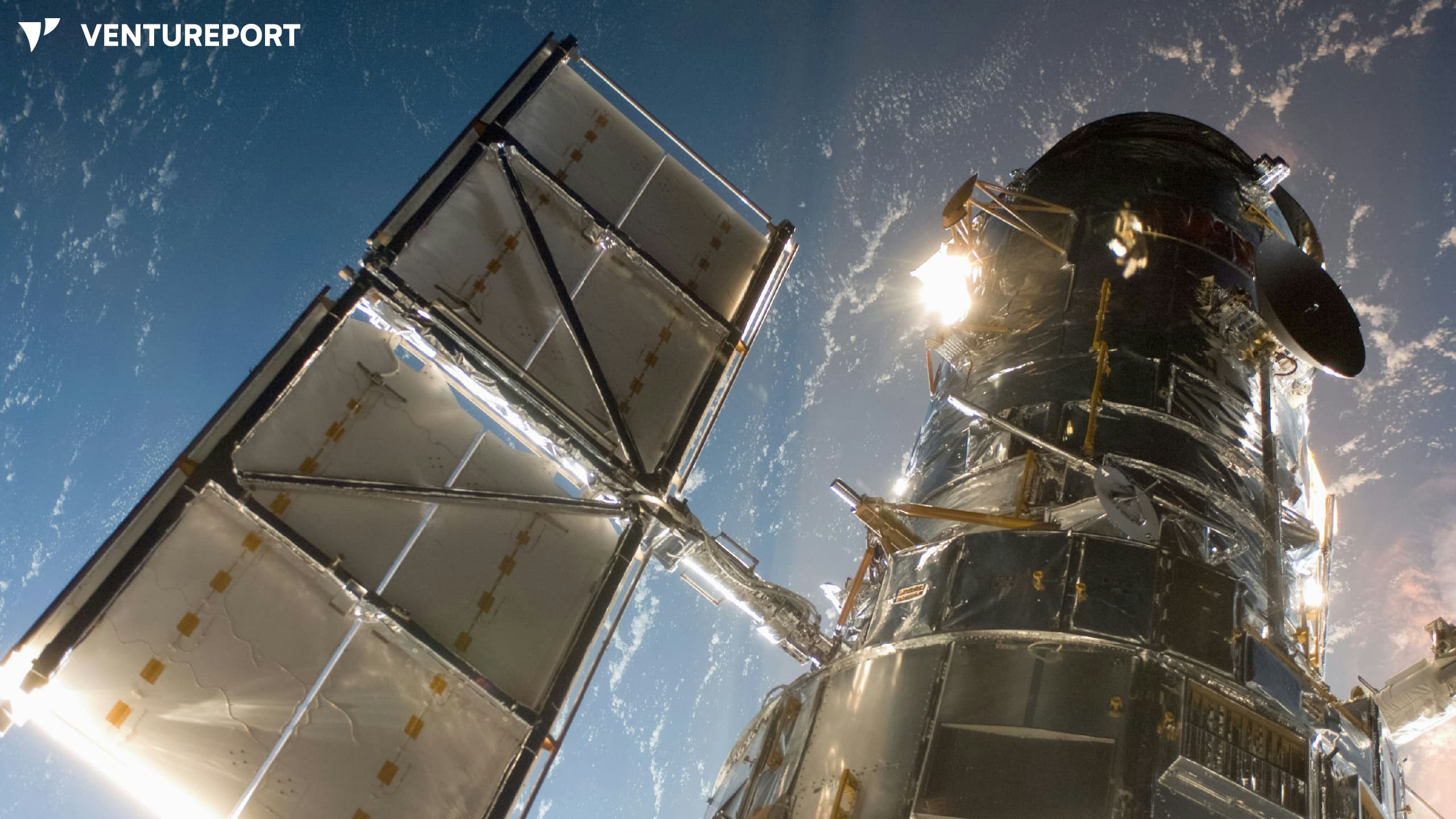
The Hubble Space Telescope, one of the fist space infrastructures. PHOTO: UNSPLASH
PowerBank Corporation and Smartlink AI, the company behind Orbit AI, are preparing to send a very different kind of satellite into space. Their upcoming mission, scheduled for December 2025, aims to test what they call the world’s first “Orbital Cloud” — a system that moves parts of today’s digital infrastructure off the ground and into orbit. While satellites already handle GPS, TV signals and weather data, this project tries to do something bigger: turn space itself into a platform for computing, artificial intelligence (AI) and secure blockchain-based digital transactions. In essence, it marks the beginning of space-based cloud computing.
To understand why this matters, it is helpful to examine the limitations of our current systems. As AI tools grow more advanced, they require massive data centers that consume enormous amounts of electricity, especially for cooling. These facilities depend on national power grids, face regulatory constraints and are concentrated in just a few regions. Meanwhile, global connectivity still struggles with inequalities, censorship, congestion and geopolitical bottlenecks. The Orbital Cloud is meant to plug these gaps by building a computing and communication layer above Earth — a solar-powered, space-cooled network in Low Earth Orbit (LEO) that no single nation or company fully controls.
Orbit AI’s approach brings together two new systems. The first, called DeStarlink, is a decentralized satellite network designed for global internet-style connectivity and resilient communication. The second, DeStarAI, is a set of AI-focused in-orbit data centers placed directly on satellites, using space’s naturally cold environment instead of the energy-hungry cooling towers used on Earth. When these two ideas merge, the result is a floating digital layer where information can be transmitted, processed and verified without touching terrestrial infrastructure — a key shift in how AI workloads and cloud computing may be handled in the future.
PowerBank enters the picture by supplying the electricity and temperature-control technology needed to keep these satellites running. In space, sunlight is constant and uninterrupted — no clouds, no storms, no nighttime periods where panels lie idle. PowerBank plans to provide high-efficiency solar arrays and adaptive thermal systems that help the satellites manage heat in orbit. This collaboration marks a shift for PowerBank, which is expanding from traditional solar and battery projects into the realm of digital infrastructure, AI energy systems and next-generation satellite technology.
Describing the ambition behind this move, Dr. Richard Lu, CEO of PowerBank, said: “The next frontier of human innovation isn't just in space exploration, it's in building the infrastructure of tomorrow above the Earth”. He pointed to a future market that could surpass US$700 billion, driven by orbital satellites, AI computing in space, blockchain verification and solar-powered data systems. Integrating solar energy with orbital computing, he said, could help create “a globally sovereign, AI-enabled digital layer in space, which is a system that can help power finance, communications and critical infrastructure”.
Orbit AI’s Co-Founder and CEO, Gus Liu, describes their satellites as deliberately autonomous and intelligent. “Orbit AI is creating the first truly intelligent layer in orbit — satellites that compute, verify and optimize themselves autonomously”, he said, “The Orbital Cloud turns space into a platform for AI, blockchain and global connectivity. By leveraging solar-powered compute payloads and decentralized verification nodes, we are opening an entirely new, potentially US$700+ billion-dollar market opportunity — one that combines energy, data and sovereignty to reshape industries from finance to government and Web3. PowerBank's expertise in advanced solar energy systems will be significant in supporting this initiative."
This vision is not isolated. Earlier this year, Jeff Bezos echoed a similar idea at Italian Tech Week, saying: “We will be able to beat the cost of terrestrial data centres in space in the next couple of decades. These giant training clusters will be better built in space, because we have solar power there, 24/7 — no clouds, no rain, no weather. The next step is going to be data centres and then other kinds of manufacturing.” His comments reflect a growing industry belief that space-based data centers will eventually outperform those on Earth.
The idea gains traction because the advantages are practical. Space offers free, constant solar power. It provides natural cooling, which is one of the costliest parts of running data centers on Earth. And above all, satellites in low-Earth orbit operate beyond national firewalls and political boundaries, making them more resilient to outages, censorship and conflict. For industries that rely heavily on secure connectivity and real-time data — finance, defense, AI, blockchain networks and global cloud providers — this could become an important alternative layer of infrastructure.
The upcoming Genesis-1 satellite is designed as a demonstration mission. It will test an Ethereum wallet, run a blockchain verification node and perform simple AI tasks in orbit. If the technology works as expected, Orbit AI plans to add several more satellites in 2026, expand into larger networks by 2027 and 2028 and begin full commercial operations by the decade’s end.
To build this system, Orbit AI plans to source technologies from some of the world’s most influential players: NVIDIA for AI processors, the Ethereum Foundation for blockchain tools, Galaxy Space and SparkX Satellite for satellite components, Galactic Energy for launch systems and AscendX Aerospace for advanced materials.
If successful, the Orbital Cloud could become the first step toward a world where part of humanity’s data, computing power and digital services run not in massive buildings on Earth, but in clusters of autonomous satellites illuminated by constant sunlight. For now, the journey begins with a single launch — a test satellite aiming to show that space can do far more than connect us. It may soon help power the systems that run our economies, technologies and global communication networks.