
Two-Day Event to be Held on 4-5 November. Bringing Together Global Investors and Entrepreneurs to Explore New Frontiers in Agentic AI, One-Person Companies (OPCs), and Hong Kong’s Role as an International Innovation, Funding, and Technology Hub
Updated
October 30, 2026 9:22 PM

Hong Kong, 26 October 2026 – As the global venture capital market evolves amid economic shifts, investment flows are increasingly concentrated, particularly in artificial intelligence (AI), which continues to drive significant momentum. The annual flagship event, Cyberport Venture & Capital Forum (CVCF), will take place on 4-5 November 2026 at Cyberport. Themed “Scaling in a Changing World: Winning the Next Competitive Cycle”, this year’s CVCF will unite influential global investors and entrepreneurs to explore key themes including Enterprise and Agentic AI, One-Person Companies (OPCs), frontier technologies, and spotlight Hong Kong's unique position as a strategic gateway connecting Chinese Mainland, ASEAN, the Middle East, global innovation and funding networks. The forum aims to empower start-ups and investors to break through financing and market expansion barriers, seizing new market opportunities.

Dr Rocky Cheng, CEO of Cyberport, said, “As global innovation and capital markets undergo accelerated reshaping, AI, data technology, and emerging industries have become crucial engines driving economic growth. CVCF is dedicated to building a bridge between innovation and capital. This year’s forum focuses on new trends such as AI, digital assets, and One-Person Companies (OPCs), exploring emerging market opportunities and global expansion strategies. It decodes how enterprises can drive scalable growth with speed and resilience in a rapidly changing market. Through our investor matching activities, we aim to facilitate the commercialisation of innovations and cross-regional collaboration. Cyberport will continue to leverage its role as Hong Kong’s digital tech flagship and AI accelerator to foster a thriving I&T ecosystem and inject new momentum into building Hong Kong as an international innovation and technology hub.”
Cyberport’s start-ups have demonstrated robust fundraising performance over the past year. With 481 companies joining the community during this period, Cyberport start-ups have raised over HK$74.5 billion in funding. During the year, 19 Cyberport companies successfully listed, alongside the addition of 2 new unicorns. Recent high-value fundraising rounds include Finloop, Qupital, Premialab, and Buy&Ship, many of which leverage AI, blockchain, and digital assets - reflecting sustained market confidence in these emerging technologies and underscoring Cyberport's success in fostering their development.

Hendrick Sin, Chairman of Cyberport Investors Network (CIN) Steering Group; Co-Founder of CMGE Technology Group Limited; Chairman of China Prosperity Capital, said, “Cyberport Investors Network (CIN) has come to its 9th anniversary this year, and our network of over 240 global investors has successfully facilitated more than HK$6 billion across over 133 project matchings, representing an increase of over 19 projects compared to last year. Simultaneously, the Cyberport Macro Fund (CMF), alongside co-investments, has directed HK$2.7 billion into high-potential ventures, with a co-investment ratio of 1:9:3., reflecting strong investor confidence in Cyberport companies. Through dedicated initiatives and our targeted investor matching sessions, CVCF continues to bridge high-growth ventures with institutional co-investment partners, public-private funds and foster collaboration across government, industry, academia, research, investment, and users, propelling enterprise scale across regional corridors.”
As Hong Kong’s digital tech hub, AI accelerator and key incubator, Cyberport leverages the Cyberport Investors Network (CIN) to attract influential investment units from around the world to connect with high-potential Cyberport enterprises to accelerate their development. Since its inception in 2017, the total investments facilitated by CIN have reached over HK$6 billion across a cumulative total of 133 project matchings. CIN’s investment units have surpassed 240, with 15% from the Greater Bay Area and 14% from the Asia-Pacific region, alongside continuous expansion into the Middle East and ASEAN, successfully aggregating global venture capital.
Another key financing channel, Cyberport Macro Fund (CMF), continues to invest in high-potential start-ups while enhancing their fundraising capabilities. As of September 2026, CMF has invested in 30 start-up projects, with the total investment, including co-investments, exceeding HK$2.7 billion, with a co-investment ratio of 1:9.3 — meaning every HK$1 invested by Cyberport attracts an additional HK$9.3 in co-investment. Further augmenting ecosystem liquidity, Cyberport, BOCHK Asset Management, and BOC Group Investment have formed a strategic partnership in May 2026 around a completed venture capital fund to back promising Hong Kong I&T start-ups. This demonstrates Cyberport’s sustained ability to attract and secure capital in a challenging environment.
Cyberport companies have recently achieved remarkable success across venture capital fundraising, advanced technology commercialisation, and international market expansion. Among them, leading Cyberport community members, including global Web5 wealth technology platform Finloop, independent fintech and data analytics platform Premialab, and cross-border fintech platform Qupital, shared their insights on navigating capital cycles, deploying next-generation financial architectures, and scaling from Hong Kong into regional and global markets.
Zhao Yang, Deputy CEO of Finloop, said, “While originating from an established corporate background, we strategically chose Cyberport as the ideal launchpad to spin off our project and scale our vision. Cyberport has been an indispensable catalyst for Finloop’s growth as we develop our AI-driven, one-stop Web5 wealth technology and RWA issuance platform, delivering AI-native liquidity solutions to institutions and SMEs. Beyond providing a vibrant community of innovators, Cyberport’s dynamic ecosystem provides an invaluable springboard for us with leading commercial banks, brokerages, and External Asset Managers (EAMs) across Hong Kong and Singapore, accelerating our mission to build compliant and institutional-grade infrastructure that unlocks new liquidity and value flows across the region.”
Pierre Trecourt, Co-Founder and Chief Operating Officer of Premialab, emphasized the growing importance of advanced data analytics in multi-asset investing, “In an increasingly complex and volatile market environment, institutional investors need greater transparency and sophisticated analytics to construct resilient portfolios, benchmark systematic investment strategies, and manage risk. Hong Kong’s unique position as a global financial hub, combined with its exceptional talent pool and Cyberport’s extensive ecosystem, provides an ideal environment for fintech companies to innovate, expand internationally, and scale their businesses.”
Winston Wong, Co-Founder and CEO of Qupital, discussed their milestone achievements in digital economy lending and underscored Cyberport’s long-standing backing throughout their journey, “Cyberport has played an integral role throughout Qupital’s journey from a homegrown startup to a profitable Series C fintech company. Under the support of Cyberport’s investor networks and platforms, we are proud to have become the first platform in Asia to securitise e-commerce merchant loans while sustaining industry-leading credit performance and profitability. Our journey truly reflects how Cyberport empowers homegrown fintech pioneers to scale sustainable cross-border supply chain financing across the Greater Bay Area and global markets.”
Cyberport Venture & Capital Forum 2026 will feature opening remarks by Lillian Cheong, Acting Secretary for Innovation, Technology and Industry, and bring together venture capital leaders, including representatives from Taara, Gobi Partners, Alumni Ventures, Rasmal Ventures, Primavera Capital, Draper Dragon, Pegasus Tech Ventures, Plug & Play and more to discuss the latest technology and market focus:
CVCF 2026 will continue to feature the popular “Investor Matching” session, offering face-to-face and online interactions to pair investors with start-ups based on their technological focus and investment preferences, enhancing collaboration efficiency. Additional highlights include over 80 physical showcase booths, funder power pitches, start-up clinic & workshop, providing attendees with practical insights and strategic advice. Memorandum of Understanding (MoU) signing ceremonies between Cyberport and international partners including Gobi Partners and Thailand’s National Innovation Agency (NIA) will also be held on the day.
The Agentic Economy Summit, a key highlight of the forum, will feature a keynote speech from Mr Joseph CHAN, JP, Under Secretary for Financial Services and the Treasury, bringing together AI pioneers, regulators, and financial giants to examine how digital identity, institutional tokenisation, HKD stablecoin issuance, programmable payments and machine-to-machine commerce are building the financial rails of the future. Featured speakers will also include representatives from HashKey, Cobo, Unlimit, Anchorpoint, UBS, Monk’s Hill Ventures, and more. The summit will also be exploring the emerging phenomenon of One-Person Companies (OPCs), highlighting how AI agents enable lean entrepreneurial ventures to achieve unprecedented operational scale.
As Cyberport’s flagship venture capital event, CVCF connects investors and entrepreneurs in the global digital technology. In 2025, the hybrid event attracted over 2,700 participants, achieved more than 180,000 views and facilitated more than 500 deal flows, fostering partnerships and investment opportunities. For more details, please visit the website: http://cvcf.cyberport.hk/.
The annual flagship event, Cyberport Venture Capital Forum (CVCF) 2026, will take place on 4-5 November 2026 at Cyberport. Themed “Scaling in a Changing World: Winning the Next Competitive Cycle”, this year’s CVCF will unite influential global investors and entrepreneurs to explore key themes include Enterprise AI, One-Person Companies (OPCs), frontier technologies, and spotlight Hong Kong's unique position as a strategic gateway connecting Chinese Mainland, ASEAN, the Middle East, global innovation and funding networks. The forum aims to empower start-ups and investors to break through financing and market expansion barriers, seizing new market opportunities. Dr Rocky Cheng, CEO of Cyberport (third right), Hendrick Sin, Chairman of Cyberport Investors Network (CIN) Steering Group (third left); Ir Eric Chan, Chief Public Mission Officer of Cyberport (second right), and Cyberport community members, Zhao Yang, Deputy CEO of Finloop (second left), Pierre Trecourt, Co-Founder and Chief Operating Officer of Premialab (first right), and Winston Wong, Co-Founder and CEO of Qupital (first left), attended the media briefing.

Ir Eric Chan, Chief Public Mission Officer of Cyberport introduced the speakers and highlights of the two-day Cyberport Venture Capital Forum 2025, as well as the Web3.0 Innovation Expo.

Ir Eric Chan, Chief Public Mission Officer of Cyberport (first left) and Cyberport community members, Zhao Yang, Deputy CEO of Finloop (second left), Pierre Trecourt, Co-Founder and Chief Operating Officer of Premialab (second right), and Winston Wong, Co-Founder and CEO of Qupital (first right), shared investment insights and experiences in facilitating fundraising during the discussion session.
Keep Reading
At under US$1,000, Hypernova isn’t just eyewear—it’s Meta’s push to make AR feel ordinary.
Updated
January 8, 2026 6:34 PM
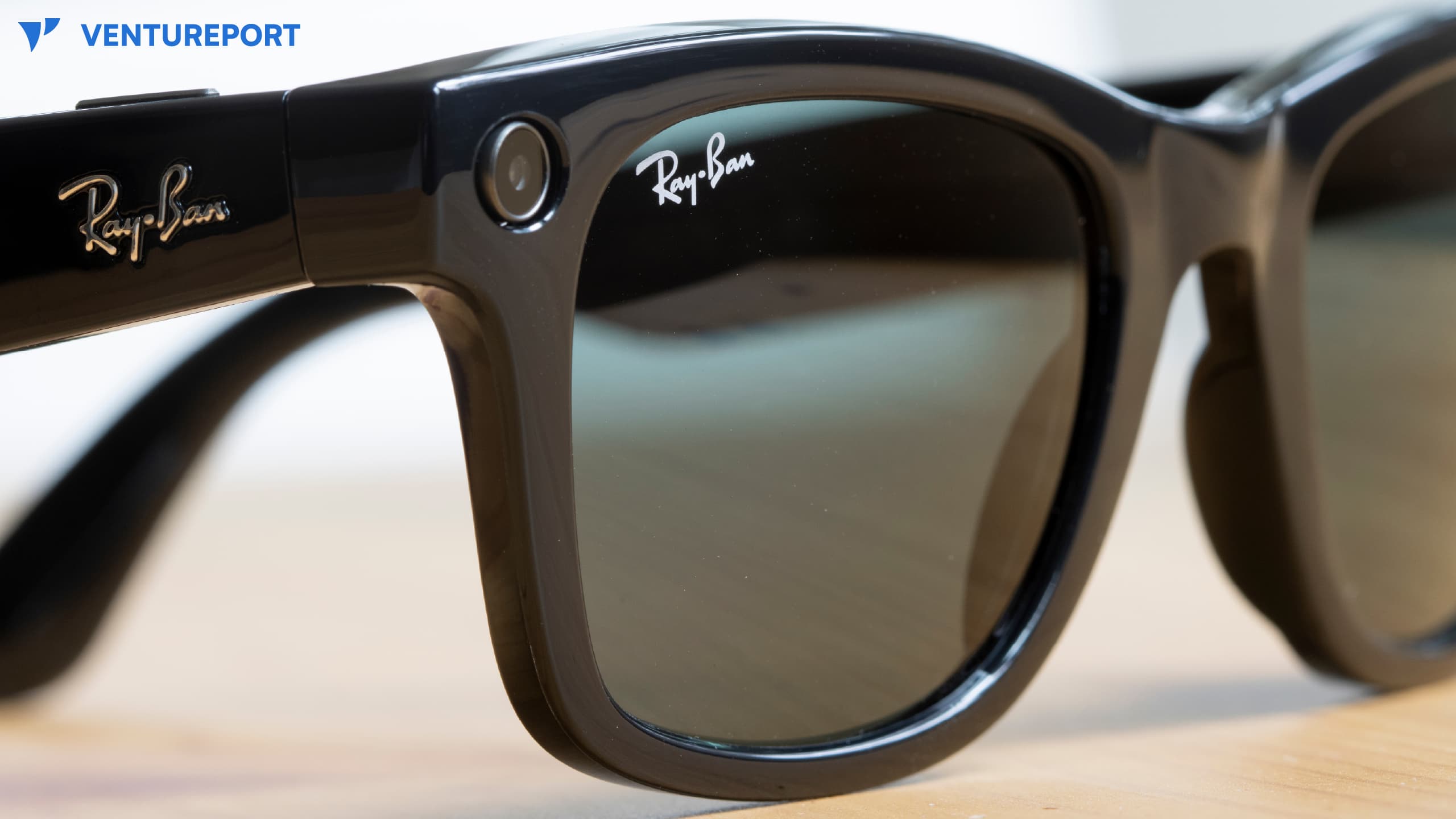
Closeup of the Ray-Ban logo and the built-in ultra-wide 12 MP camera on a pair of new Ray-Ban Meta Wayfarer smart glasses. PHOTO: ADOBE STOCK
Meta is preparing to launch its next big wearable: the Hypernova smart glasses. Unlike earlier experiments like the Ray-Ban Stories, these new glasses promise more advanced features at a price point under US$1,000. With a launch set for September 17 at Meta’s annual Connect conference, the Hypernova is already drawing attention for blending design, technology and accessibility.
In this article, let’s take a closer look at Hypernova’s design, features, pricing and the challenges Meta faces as it tries to bring smart glasses into everyday life.
Meta’s earlier Ray-Ban glasses offered cameras and audio but no display. Hypernova changes that: The glasses will ship with a built-in micro-display, giving wearers quick access to maps, messages, notifications and even Meta’s AI assistant. It’s a step toward everyday AR that feels useful and natural, not experimental.
Perhaps most importantly, the price makes them attainable. While early estimates placed the cost above US$1,000, Meta has committed to a launch price of around US$800. That’s still premium, but it moves AR smart glasses into reach for more consumers.
Hypernova weighs about 70 grams, roughly 20 grams heavier than the Ray-Ban Meta models. The added weight likely comes from added components like the new display and extra sensors.
To keep the glasses stylish, Meta continues its partnership with EssilorLuxottica, the company behind Ray-Ban and Prada eyewear. Thicker frames—especially Prada’s designs—help hide the hardware like chips, microphones and batteries without making the glasses look oversized.
The glasses stick close to the classic Ray-Ban silhouette but feature slightly bulkier arms. On the left side, a touch-sensitive bar lets users control functions with taps and swipes. For example, a two-finger tap can trigger a photo or start video recording.
Hypernova introduces something the earlier Ray-Ban glasses never had: a display built right into the lens. In the bottom-right corner of the right lens, a small micro-screen uses waveguide optics to project a digital overlay with about a 20° field of view. This means you can glance at turn-by-turn directions, check a notification or quickly consult Meta’s AI assistant without pulling out your phone. It’s discreet, practical and a major step up from the older models, which were limited to capturing photos and videos, handling calls and playing music via speakers.
Alongside the glasses comes the Ceres wristband, a companion device powered by electromyography (EMG). The band picks up the tiny electrical signals in your wrist and fingers, translating them into commands. A pinch might let you select something, a wrist flick could scroll a page, and a swipe could move between screens. The idea is to avoid clunky buttons or having to talk to your glasses in public. Meta has also been experimenting with handwriting recognition through the band, though it’s not clear if that feature will be ready in time for launch.
Meta doesn’t just want Hypernova to be useful—it wants it to be fun. Code found in leaked firmware revealed a small game called Hypertrail. It looks to borrow ideas from the 1981 arcade shooter Galaga, letting wearers play a simple, retro-inspired game right through their glasses. It’s not the main attraction, but it shows Meta is trying to make Hypernova feel more like a playful everyday gadget rather than just a piece of serious tech.
Hypernova runs on a customized version of Android and pairs with smartphones through the Meta View app. Out of the box, it should support the basics: calls, music and message notifications. Leaks suggest several apps will come preinstalled, including Camera, Gallery, Maps, WhatsApp, Messenger and Meta AI. A Qualcomm processor powers the whole setup, helping it run smoothly while keeping energy demands reasonable.
Meta is also trying to bring in outside developers. In August 2025, CNBC reported that the company invited third-party developers—especially in generative AI—to build experimental apps for Hypernova and the Ceres wristband. The Meta Connect 2025 agenda even highlights sessions on a new smart glasses SDK and toolkit. The push shows Meta’s interest in making Hypernova more than just a device; it wants a broader platform with apps that go beyond its own first-party software.
During development, Hypernova was rumored to cost as much as US$1,400. By pricing it around US$800, Meta signals that it wants adoption more than profit. The company is keeping production limited (around 150,000 units), showing it sees this as a market test rather than a mass rollout. Still, the sub-US$1,000 price tag makes advanced AR far more accessible than before.
Despite its promise, Hypernova may still face hurdles. The Ceres wristband can struggle if worn loosely, and some testers have reported issues based on which arm it’s worn on or even when wearing long sleeves. In short, getting EMG input right for everyone will be critical.
Privacy is another major concern. In past experiments, researchers hacked Ray-Ban Meta glasses to run facial recognition, instantly identifying strangers and pulling personal info. Meta has added guidelines, like a recording indicator light, but critics argue these measures are too easy to ignore. Moreover, data captured by smart glasses can feed into AI training, raising questions about consent and surveillance.
The Meta Hypernova smart glasses mark a turning point in wearable tech. They’re lighter and more stylish than bulky AR headsets, while offering real-world features like navigation, messaging and hands-free control. At under US$1,000, they aim to make AR glasses more than a luxury gadget—they’re a step toward everyday use.
Whether Hypernova succeeds will depend on how well it balances style, usability and privacy. But one thing is clear: Meta is betting that always-on, glanceable AR can move from science fiction to daily life.