
Join us at CVCF 2026 to explore how startups can scale and win in the age of AI.
Updated
October 29, 2026 11:39 PM

CVCF 2026 takes place on 4–5 November at Cyberport, Hong Kong. IMAGE: CYBERPORT
AI can help you build a startup, but it won’t automatically make you stand out. When everyone has access to similar tools, you need to give customers a reason to choose you and investors a reason to back you. So, how do you turn innovation into a competitive edge?
That question sits at the heart of Cyberport Venture & Capital Forum (CVCF) 2026, taking place on 4–5 November under the theme “Scaling in a Changing World: Winning the Next Competitive Cycle” and the message “Scale Up & Win.”
The two-day forum will feature more than 80 speakers discussing venture investment, AI-driven growth, emerging technologies and expansion into new markets. Day 1 will explore global investment trends and the next wave of innovation. Day 2 will feature CVCF 2026’s spotlight event, the Agentic Economy Summit, examining how agentic AI and digital assets could reshape business and finance. The wider programme will also include investor matching, founder pitches, 100+ Innovator Showcase, startup workshops and clinics.
With founders and investors navigating a fast-changing technology landscape, CVCF 2026 will explore what it takes to stay competitive, scale into new markets and turn emerging opportunities into business growth. Here’s a look at the key programmes lined up for this year’s forum.

Keynotes and Panels: Finding the Next Big Opportunity
Taara founder and CEO Mahesh Krishnaswamy will deliver the keynote The Innovation Playbook: Capitalizing on Moonshots and Faster Cycles in the Age of AI. The wider Day 1 programme will cover global investment trends, expansion into new markets, agentic AI and one-person companies.
For startups navigating the AI market, the panel Mastering the AI Bubble: Capital Rerouting and How Global Champions Stand Out will bring together panellists from Quona Capital, Alumni Ventures, FOV Ventures and Capital6 to discuss how investors assess startups and distinguish commercial potential from market hype. Other sessions will explore emerging technologies beyond AI software, including embodied AI, advanced computing and commercial aerospace.
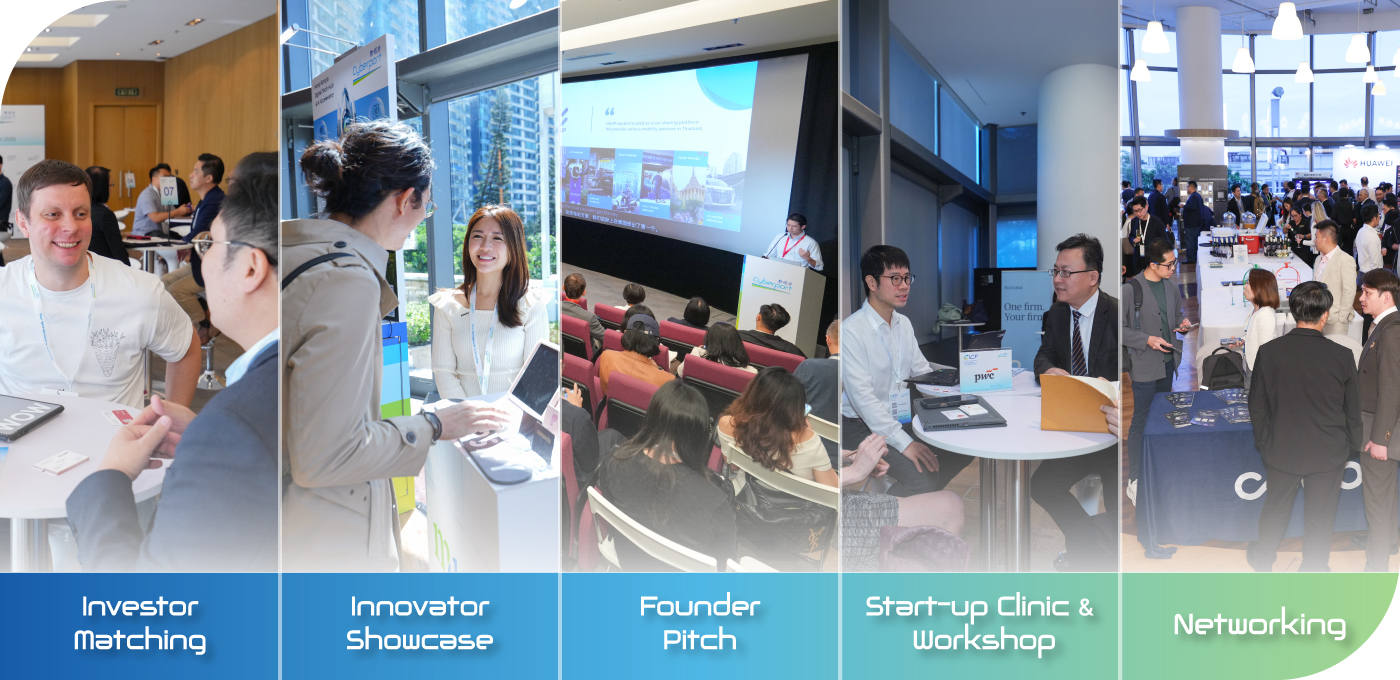
Investor Matching and Networking: Connecting with Capital
Away from the conference sessions, MatchEasy will help founders and investors arrange one-to-one meetings, either onsite or online. Confirmed participants will receive access to the platform to explore potential matches and schedule meetings.
Investors can also discover local and international startups through the Founder Pitch programme, where entrepreneurs present their projects and ventures. Meanwhile, the Innovator Showcase offers a separate opportunity to explore emerging technology solutions through a virtual platform and selected on-site exhibits.
For founders seeking more tailored guidance, the Startup Clinics will offer one-to-one discussions with industry experts and experienced entrepreneurs on business challenges, fundraising and growth. Advance registration is required.
Hands-On Workshops: Strengthening Your Investment Pitch
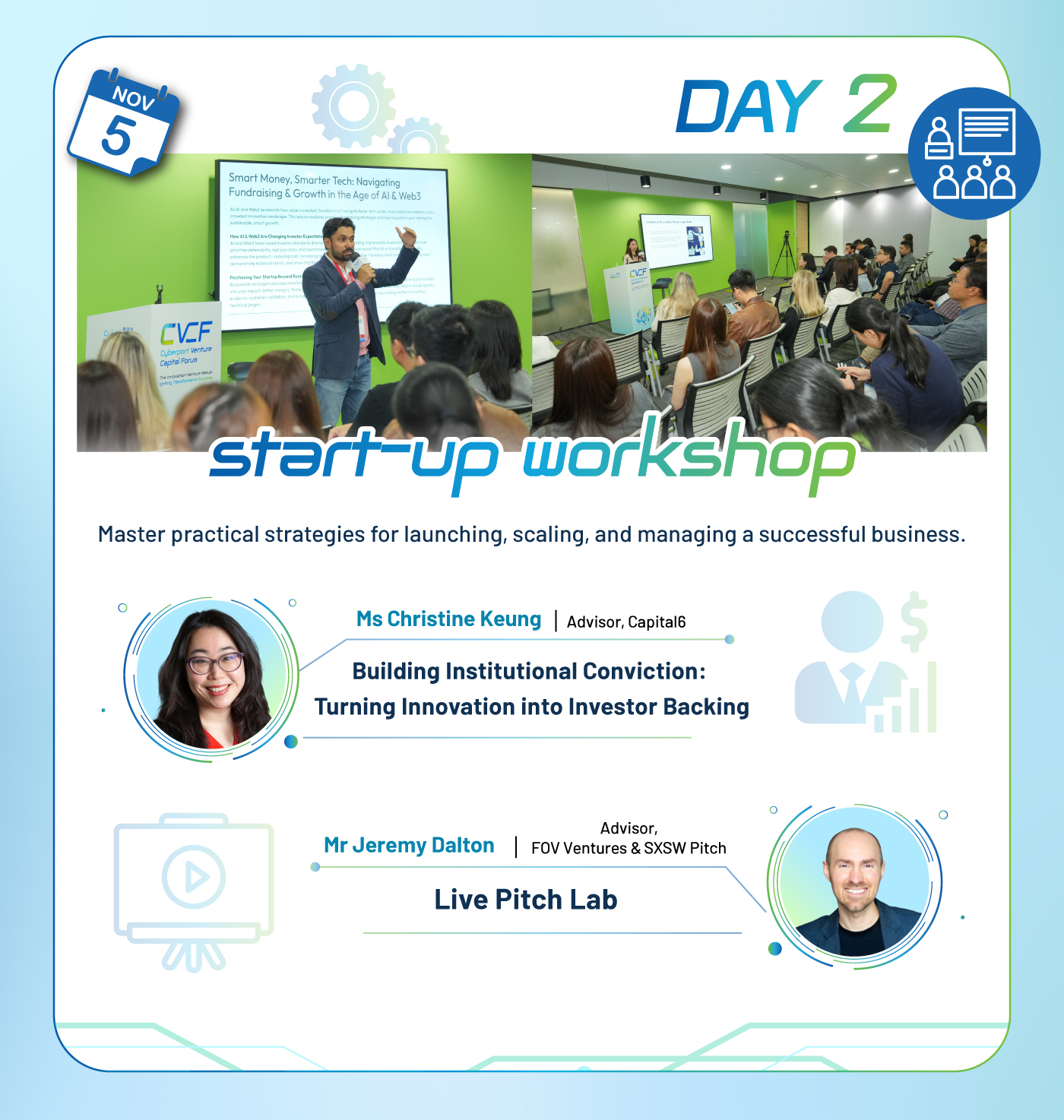
Turning an innovative idea into a business that investors can back takes more than a strong pitch. CVCF 2026 will host practical workshops to help founders strengthen their fundraising strategies and make a stronger case to investors.
Led by Capital6 advisor Christine Keung, one workshop will explore how founders can align technical innovation with business goals, communicate their product’s value and prepare for fundraising. Another, led by Jeremy Dalton, advisor at FOV Ventures and SXSW Pitch, will help founders understand how investors assess startups, with opportunities to pitch live and receive direct feedback.

CVCF 2026’s spotlight event, the Agentic Economy Summit, will take place on 5 November under the theme “Intelligent Frontiers, Tokenised Horizons: Where Agentic AI Reshapes Business and Digital Assets Redefine How Value Moves.”
The summit will bring together technology and finance leaders to explore how agentic AI and digital assets could change the way businesses operate. Wolf Ruzicka, chief commercial officer at Unlimit, a global payments company, will discuss building and scaling agentic AI applications. Dr Feng Xiao, chairman and CEO of HashKey Group, will examine how digital identity, tokenised assets and money connect on-chain.
The discussions will also look at agent-led commerce, including how AI agents could help customers choose products and make purchases, and the payment systems needed to support these transactions. Other topics include Hong Kong dollar stablecoins and their potential role in payments and settlement, as well as the rise of one-person companies. The summit will also explore how founders can use AI agents to run their businesses with smaller teams, find customers and generate recurring revenue.
From AI-driven growth and cross-border investment to agentic AI and digital assets, CVCF 2026 brings together the people and ideas shaping the next phase of business. Whether you're preparing to raise capital, exploring new markets or assessing emerging technologies, the forum offers an opportunity to gain fresh perspectives and connect with investors, founders and industry leaders.
Exclusive for Ventureport readers: Use the promotional code cvcf26vp to access a Full Access Pass for HK$300, subject to confirmation of the offer by the organiser.
Date: 4–5 November 2026
Function Rooms, Level 3, Core E, Cyberport 3, Hong Kong
Keep Reading
A look at how motivation, not metrics, is becoming the real frontier in fitness tech
Updated
February 7, 2026 2:18 PM

A group of people running together. PHOTO: FREEPIK
Most running apps focus on measurement. Distance, pace, heart rate, badges. They record activity well, but struggle to help users maintain consistency over time. As a result, many people track diligently at first, then gradually disengage.
That drop-off has pushed developers to rethink what fitness technology is actually for. Instead of just documenting activity, some platforms are now trying to influence behaviour itself. Paceful, an AI-powered running platform developed by SportsTech startup xCREW, is part of that shift — not by adding more metrics, but by focusing on how people stay consistent. The platform is built on a simple behavioural insight: most people don’t stop exercising because they don’t care about health. They stop because routines are fragile. Miss a few days and the habit collapses. Technology that focuses only on performance metrics doesn’t solve that. Systems that reinforce consistency, belonging and feedback loops might.
Instead of treating running as a solo, data-driven task, Paceful is built around two ideas: behavioural incentives and social alignment. The system turns real-world running activity into tangible rewards and it uses AI to connect runners to people, clubs and challenges that fit how and where they actually run.
At the technical level, Paceful connects with existing fitness ecosystems. Users can import workout data from platforms like Apple Health and Strava rather than starting from scratch. Once inside the system, AI models analyse pace, frequency, location and participation patterns. That data is used to recommend running partners, clubs and group challenges that match each runner’s habits and context.
What makes this approach different is not the tracking itself, but what the platform does with the data it collects. Running distance and consistency become inputs for a reward system that offers physical-world incentives, such as gear, race entries or gift cards. The idea is to link effort to something concrete, rather than abstract. The company also built the system around community logic rather than individual competition. Even solo runners are placed into challenge formats designed to simulate the motivation of a group. In practice, that means users feel part of a shared structure even when running alone.
During a six-month beta phase in the US, xCREW tested Paceful with more than 4,000 running clubs and around 50,000 runners. According to the company, users increased their running frequency significantly and weekly retention remained unusually high for a fitness platform. One beta tester summed it up this way: “Strava just logs records, but Paceful rewards you for every run, which is a completely different motivation”.
The company has raised seed funding and plans to expand the platform beyond running, walking, trekking, cycling and swimming. Instead of asking how accurately technology can measure the body, platforms like Paceful are asking a different question: how technology might influence everyday behaviour. Not by adding more data, but by shaping the conditions around effort, feedback and social connection.
As AI becomes more common in consumer products, its real impact may depend less on how advanced the models are and more on what they are applied to. In this case, the focus isn’t speed or performance — it’s consistency. And whether systems like this can meaningfully support it over time.