
Join us at CVCF 2026 to explore how startups can scale and win in the age of AI.
Updated
October 29, 2026 11:39 PM

CVCF 2026 takes place on 4–5 November at Cyberport, Hong Kong. IMAGE: CYBERPORT
AI can help you build a startup, but it won’t automatically make you stand out. When everyone has access to similar tools, you need to give customers a reason to choose you and investors a reason to back you. So, how do you turn innovation into a competitive edge?
That question sits at the heart of Cyberport Venture & Capital Forum (CVCF) 2026, taking place on 4–5 November under the theme “Scaling in a Changing World: Winning the Next Competitive Cycle” and the message “Scale Up & Win.”
The two-day forum will feature more than 80 speakers discussing venture investment, AI-driven growth, emerging technologies and expansion into new markets. Day 1 will explore global investment trends and the next wave of innovation. Day 2 will feature CVCF 2026’s spotlight event, the Agentic Economy Summit, examining how agentic AI and digital assets could reshape business and finance. The wider programme will also include investor matching, founder pitches, 100+ Innovator Showcase, startup workshops and clinics.
With founders and investors navigating a fast-changing technology landscape, CVCF 2026 will explore what it takes to stay competitive, scale into new markets and turn emerging opportunities into business growth. Here’s a look at the key programmes lined up for this year’s forum.
Keynotes and Panels: Finding the Next Big Opportunity
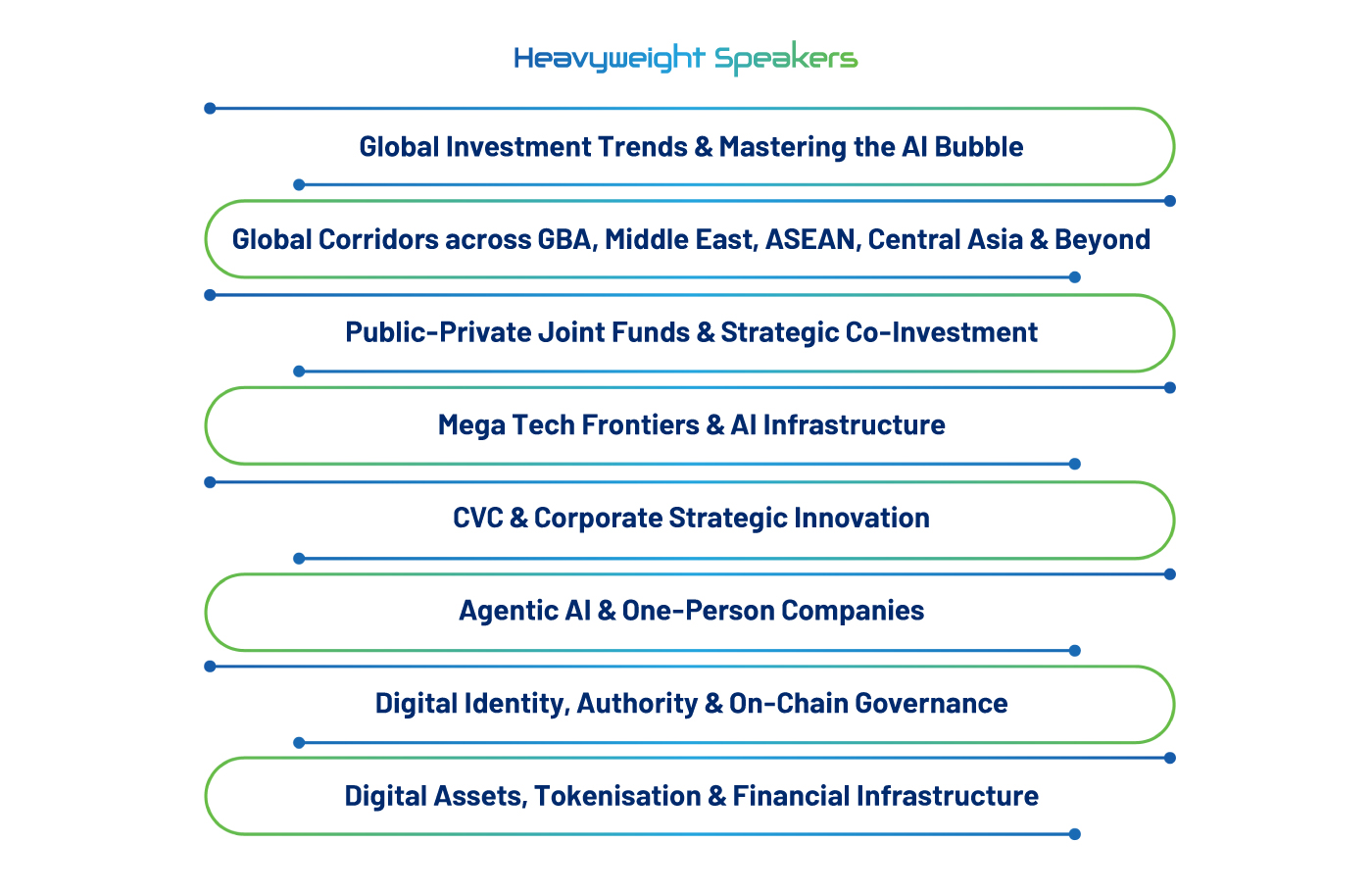
Taara founder and CEO Mahesh Krishnaswamy will deliver the keynote The Innovation Playbook: Capitalizing on Moonshots and Faster Cycles in the Age of AI. The wider Day 1 programme will cover global investment trends, expansion into new markets, agentic AI and one-person companies.
For startups navigating the AI market, the panel Mastering the AI Bubble: Capital Rerouting and How Global Champions Stand Out will bring together panellists from Quona Capital, Alumni Ventures, FOV Ventures and Capital6 to discuss how investors assess startups and distinguish commercial potential from market hype. Other sessions will explore emerging technologies beyond AI software, including embodied AI, advanced computing and commercial aerospace.
Investor Matching and Networking: Connecting with Capital
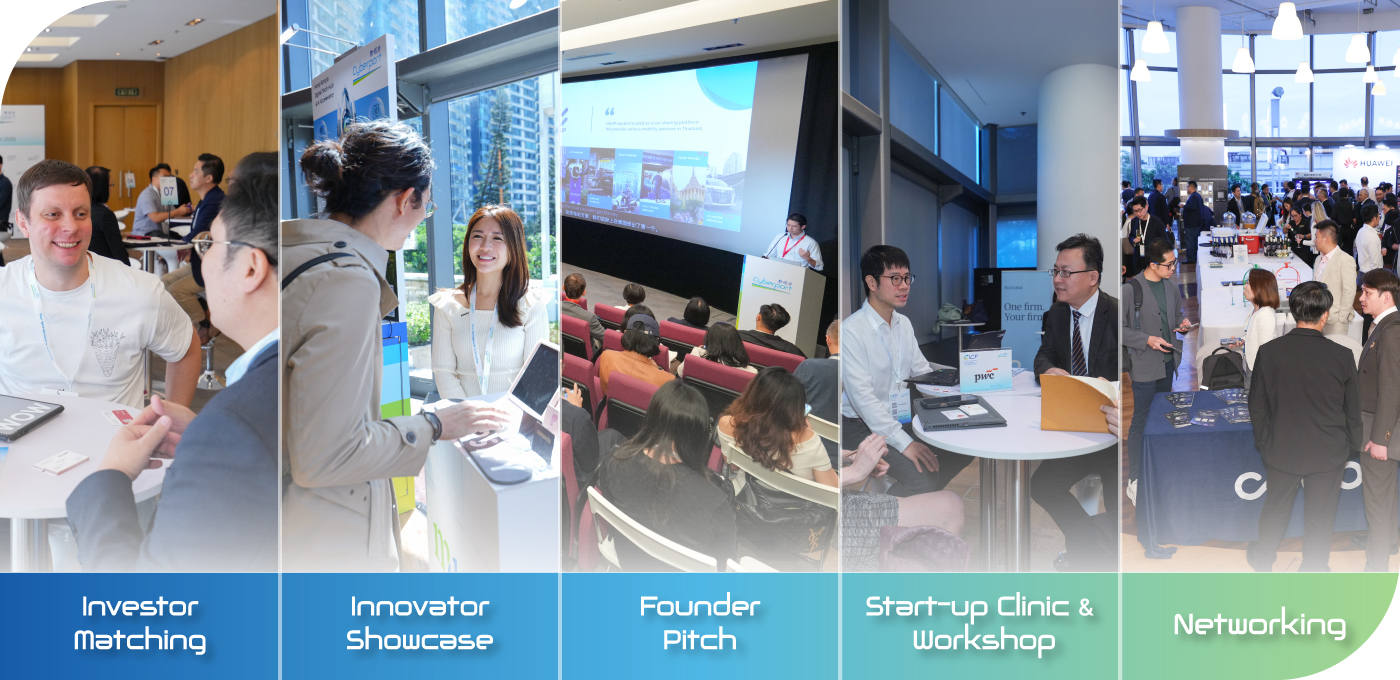
Away from the conference sessions, MatchEasy will help founders and investors arrange one-to-one meetings, either onsite or online. Confirmed participants will receive access to the platform to explore potential matches and schedule meetings.
Investors can also discover local and international startups through the Founder Pitch programme, where entrepreneurs present their projects and ventures. Meanwhile, the Innovator Showcase offers a separate opportunity to explore emerging technology solutions through a virtual platform and selected on-site exhibits.
For founders seeking more tailored guidance, the Startup Clinics will offer one-to-one discussions with industry experts and experienced entrepreneurs on business challenges, fundraising and growth. Advance registration is required.
Hands-On Workshops: Strengthening Your Investment Pitch
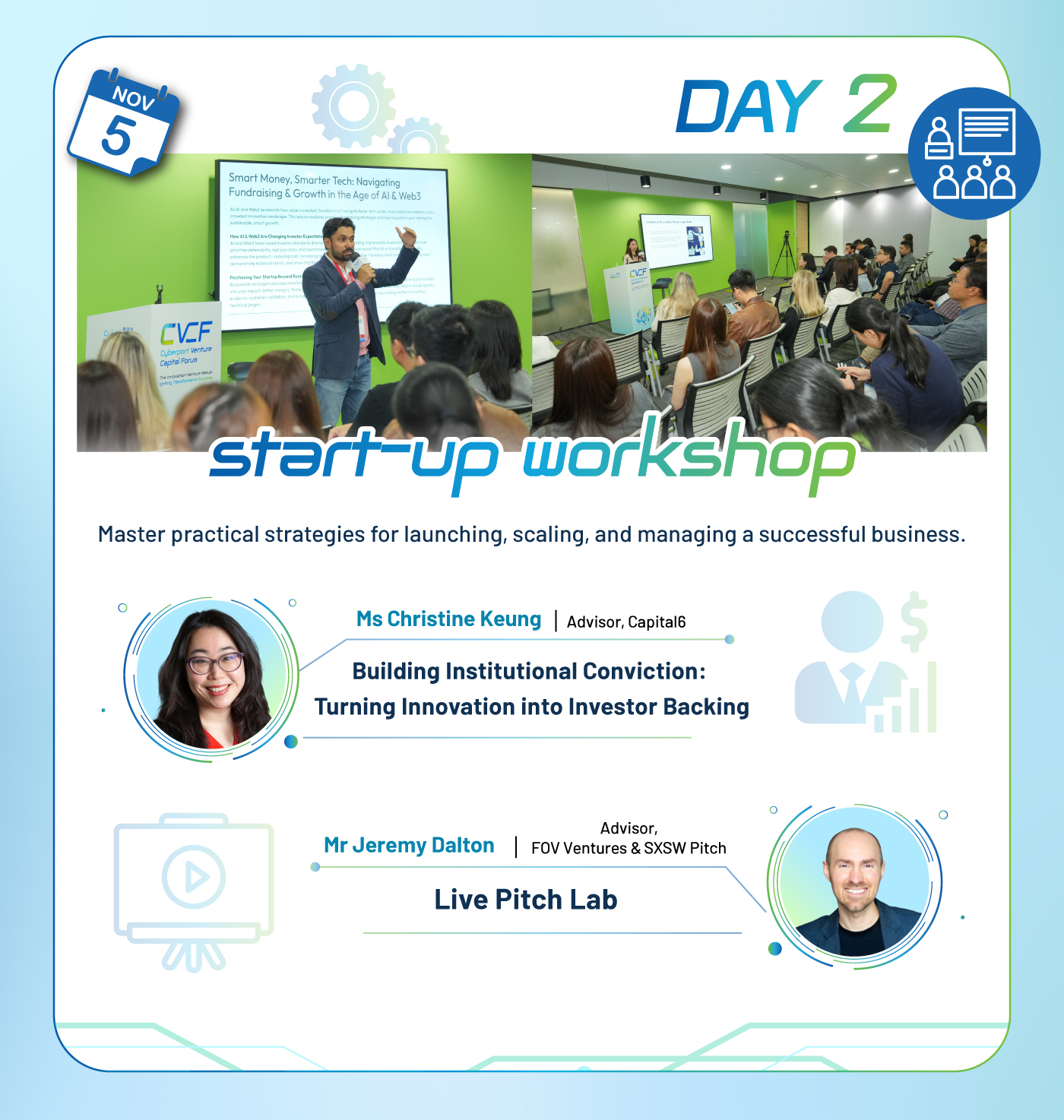
Turning an innovative idea into a business that investors can back takes more than a strong pitch. CVCF 2026 will host practical workshops to help founders strengthen their fundraising strategies and make a stronger case to investors.
Led by Capital6 advisor Christine Keung, one workshop will explore how founders can align technical innovation with business goals, communicate their product’s value and prepare for fundraising. Another, led by Jeremy Dalton, advisor at FOV Ventures and SXSW Pitch, will help founders understand how investors assess startups, with opportunities to pitch live and receive direct feedback.

CVCF 2026’s spotlight event, the Agentic Economy Summit, will take place on 5 November under the theme “Intelligent Frontiers, Tokenised Horizons: Where Agentic AI Reshapes Business and Digital Assets Redefine How Value Moves.”
The summit will bring together technology and finance leaders to explore how agentic AI and digital assets could change the way businesses operate. Wolf Ruzicka, chief commercial officer at Unlimit, a global payments company, will discuss building and scaling agentic AI applications. Dr Feng Xiao, chairman and CEO of HashKey Group, will examine how digital identity, tokenised assets and money connect on-chain.
The discussions will also look at agent-led commerce, including how AI agents could help customers choose products and make purchases, and the payment systems needed to support these transactions. Other topics include Hong Kong dollar stablecoins and their potential role in payments and settlement, as well as the rise of one-person companies. The summit will also explore how founders can use AI agents to run their businesses with smaller teams, find customers and generate recurring revenue.
From AI-driven growth and cross-border investment to agentic AI and digital assets, CVCF 2026 brings together the people and ideas shaping the next phase of business. Whether you're preparing to raise capital, exploring new markets or assessing emerging technologies, the forum offers an opportunity to gain fresh perspectives and connect with investors, founders and industry leaders.
Exclusive for Ventureport readers: Use the promotional code cvcf26vp to access a Full Access Pass for HK$300, subject to confirmation of the offer by the organiser.
Date: 4–5 November 2026
Function Rooms, Level 3, Core E, Cyberport 3, Hong Kong
Keep Reading
From plush figures to digital pets, a new class of AI toys is emerging — built not around screens or sensors, but around memory, language and emotional awareness
Updated
March 17, 2026 1:02 AM

Spielwarenmesse toy fair. PHOTO: SPIELWARENMESSE
Spielwarenmesse in Nuremberg is the global meeting point for the toy industry, where brands and designers preview what will shape how children play and learn next. At this year’s fair, one message stood out clearly: toys are no longer built just to entertain, but to listen, respond and grow with children. Tuya Smart, a global AI cloud platform company, used the event to show how AI-powered toys are turning familiar formats into interactive companions that can talk, react emotionally and adapt over time.
The company’s central argument was simple but far-reaching. The next generation of artificial intelligence toys will not be defined by motors, sensors or screens alone, but by how well they understand human behavior. Instead of being single-function objects, smart toys for children are becoming systems that combine language models, emotion recognition and memory to support ongoing interaction.
One of the most talked-about examples was Tuya Smart’s Nebula Plush AI Toy. At first glance, it looks like a soft, expressive plush figure. Inside, it uses emotional recognition to change its LED facial expressions in real time. If a child sounds sad or excited, the toy’s eyes respond visually. It supports natural conversation, reacts to hugs and touch and combines storytelling, news-style updates and interactive games. Over time, it builds memory, allowing it to behave less like a gadget and more like an interactive AI toy that recalls past interactions.
Another example was Walulu, also developed using Tuya’s AI toy platform. Walulu is an AI pet built around personalization. It can detect up to 19 emotional states and speak more than 60 languages. It connects to major large language models such as ChatGPT, Gemini, DeepSeek, Qwen and Doubao. Through simple app-based controls, users choose traits like cheerful, quiet, curious or thoughtful. Those choices shape how Walulu talks and reacts. Instead of repeating scripts, it adjusts its tone and behavior over time. The result is not a novelty item, but an emotionally responsive AI toy that feels consistent in daily use.
Tuya also showed how educational AI toys can extend into learning and exploration. Its AI Learning Camera blends computer vision with interactive content. When it recognizes an object, it links it to cultural and learning material. If a child points it at a foreign word, it offers real-time pronunciation and translation. It can also turn drawings into digital artwork, encouraging active creativity rather than passive screen time. In this sense, AI toys for kids are becoming tools for learning as much as play.
These products point to a larger strategy. Tuya is not just making toys — it is building the AI toy development platform behind them. Through its AI Toy Solution, developers can design a toy’s personality, memory logic and behavior without training models from scratch. The system integrates with leading AI models and supports multi-turn conversation and emotional feedback, turning standard hardware into responsive AI companions.
The platform supports multiple development paths. Brands can use ready-to-market OEM solutions, add AI to existing products or build custom toys around their own characters. Plush toys, robots, educational tools and wearables can all become AI-powered toys without changing their physical design.
Because these products are made for children and families, safety is built in. Tuya’s system includes parental controls, conversation history review and content management. It supports standards such as GDPR and CCPA with encryption and data localization.
From a business standpoint, Tuya’s pitch is speed and scale. The company says its AI toy infrastructure can cut development time by more than half and reduce R&D costs by up to 50 percent. Its AIoT network spans over 200 countries and supports more than 60 languages, making global deployment of AI toys easier.
What emerged at Spielwarenmesse 2026 was not just a lineup of smart gadgets, but a clear shift in the category. AI toys are evolving into emotionally aware systems that talk, listen, remember and adapt. Their value lies not in sounding clever, but in fitting naturally into everyday life.
The fair did not present AI toys as a distant future. It showed them as products already entering the mainstream. The real question now is not whether toys will use AI, but how carefully that intelligence is designed for children.