
Join us at CVCF 2026 to explore how startups can scale and win in the age of AI.
Updated
October 28, 2026 6:18 PM
CVCF 2026 takes place on 4–5 November at Cyberport, Hong Kong. IMAGE: CYBERPORT
AI can help you build a startup, but it won’t automatically make you stand out. When everyone has access to similar tools, you need to give customers a reason to choose you and investors a reason to back you. So, how do you turn innovation into a competitive edge?
That question sits at the heart of Cyberport Venture & Capital Forum (CVCF) 2026, taking place on 4–5 November under the theme “Scaling in a Changing World: Winning the Next Competitive Cycle” and the message “Scale Up & Win.”
The two-day forum will feature more than 80 speakers discussing venture investment, AI-driven growth, emerging technologies and expansion into new markets. Day 1 will explore global investment trends and the next wave of innovation. Day 2 will feature CVCF 2026’s spotlight event, the Agentic Economy Summit, examining how agentic AI and digital assets could reshape business and finance. The wider programme will also include investor matching, founder pitches, 100+ Innovator Showcase, startup workshops and clinics.
With founders and investors navigating a fast-changing technology landscape, CVCF 2026 will explore what it takes to stay competitive, scale into new markets and turn emerging opportunities into business growth. Here’s a look at the key programmes lined up for this year’s forum.
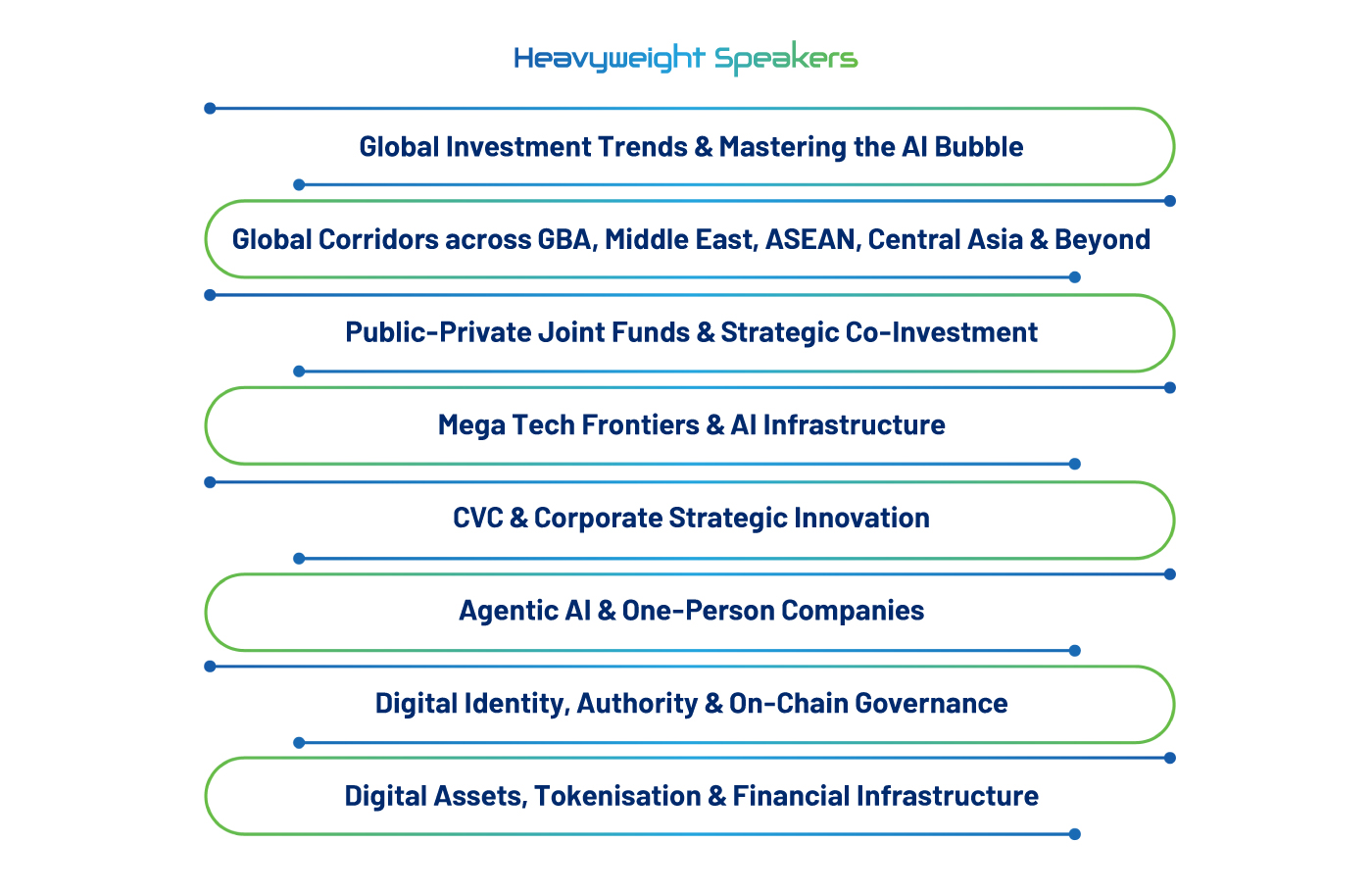
CVCF 2026 will explore investment trends, global expansion, AI and digital assets. IMAGE: CYBERPORT
Keynotes and Panels: Finding the Next Big Opportunity
Taara founder and CEO Mahesh Krishnaswamy will deliver the keynote The Innovation Playbook: Capitalizing on Moonshots and Faster Cycles in the Age of AI. The wider Day 1 programme will cover global investment trends, expansion into new markets, agentic AI and one-person companies.
For startups navigating the AI market, the panel Mastering the AI Bubble: Capital Rerouting and How Global Champions Stand Out will bring together panellists from Quona Capital, Alumni Ventures, FOV Ventures and Capital6 to discuss how investors assess startups and distinguish commercial potential from market hype. Other sessions will explore emerging technologies beyond AI software, including embodied AI, advanced computing and commercial aerospace.
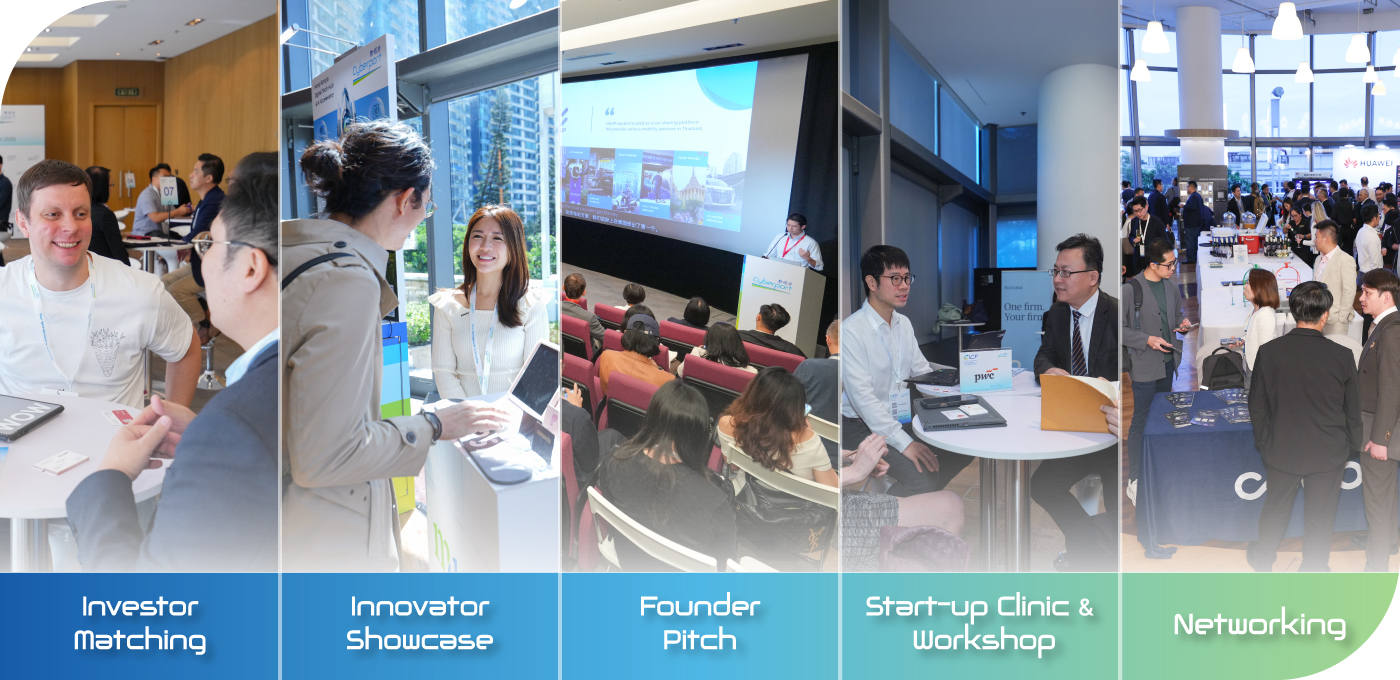
Investor Matching and Networking: Connecting with Capital
Away from the conference sessions, MatchEasy will help founders and investors arrange one-to-one meetings, either onsite or online. Confirmed participants will receive access to the platform to explore potential matches and schedule meetings.
Investors can also discover local and international startups through the Founder Pitch programme, where entrepreneurs present their projects and ventures. Meanwhile, the Innovator Showcase offers a separate opportunity to explore emerging technology solutions through a virtual platform and selected on-site exhibits.
For founders seeking more tailored guidance, the Startup Clinics will offer one-to-one discussions with industry experts and experienced entrepreneurs on business challenges, fundraising and growth. Advance registration is required.
Hands-On Workshops: Strengthening Your Investment Pitch
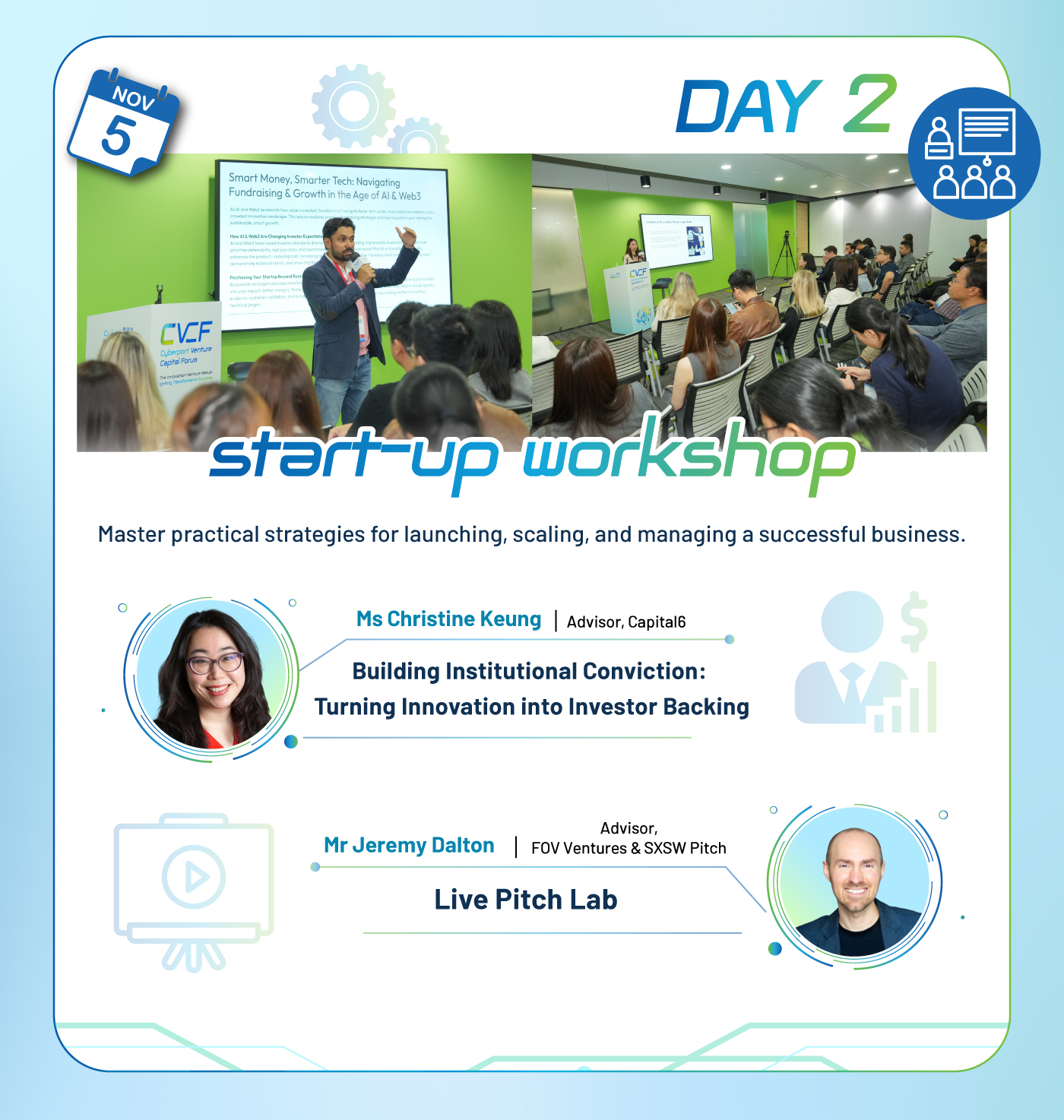
Turning an innovative idea into a business that investors can back takes more than a strong pitch. CVCF 2026 will host practical workshops to help founders strengthen their fundraising strategies and make a stronger case to investors.
Led by Capital6 advisor Christine Keung, one workshop will explore how founders can align technical innovation with business goals, communicate their product’s value and prepare for fundraising. Another, led by Jeremy Dalton, advisor at FOV Ventures and SXSW Pitch, will help founders understand how investors assess startups, with opportunities to pitch live and receive direct feedback.

CVCF 2026’s spotlight event, the Agentic Economy Summit, will take place on 5 November under the theme “Intelligent Frontiers, Tokenised Horizons: Where Agentic AI Reshapes Business and Digital Assets Redefine How Value Moves.”
The summit will bring together technology and finance leaders to explore how agentic AI and digital assets could change the way businesses operate. Wolf Ruzicka, chief commercial officer at Unlimit, a global payments company, will discuss building and scaling agentic AI applications. Dr Feng Xiao, chairman and CEO of HashKey Group, will examine how digital identity, tokenised assets and money connect on-chain.
The discussions will also look at agent-led commerce, including how AI agents could help customers choose products and make purchases, and the payment systems needed to support these transactions. Other topics include Hong Kong dollar stablecoins and their potential role in payments and settlement, as well as the rise of one-person companies. The summit will also explore how founders can use AI agents to run their businesses with smaller teams, find customers and generate recurring revenue.
From AI-driven growth and cross-border investment to agentic AI and digital assets, CVCF 2026 brings together the people and ideas shaping the next phase of business. Whether you're preparing to raise capital, exploring new markets or assessing emerging technologies, the forum offers an opportunity to gain fresh perspectives and connect with investors, founders and industry leaders.
Exclusive for Ventureport readers: Use the promotional code cvcf26vp to access a Full Access Pass for HK$300, subject to confirmation of the offer by the organiser.
Date: 4–5 November 2026
Function Rooms, Level 3, Core E, Cyberport 3, Hong Kong
Keep Reading
AI growth is increasingly becoming a manufacturing, packaging and deployment challenge — not just a computing one.
Updated
August 10, 2026 5:56 PM

Taipei 101 and Taipei Nan Shan Plaza, viewed from Elephant Mountain. PHOTO: UNSPLASH
As AI companies continue scaling larger models and data centers, the pressure is no longer falling only on chip design. Manufacturing capacity, advanced packaging and infrastructure deployment are becoming equally important parts of the AI race. AMD’s latest investment announcement reflects how quickly that shift is accelerating.
The US chipmaker announced plans to invest more than US$10 billion across Taiwan’s semiconductor and manufacturing ecosystem to support next-generation AI infrastructure. The investment focuses on expanding partnerships and increasing advanced packaging capacity needed for future AI systems.
The announcement highlights a growing reality across the AI industry. Building powerful AI chips is no longer enough on its own. Companies now also need the manufacturing networks, packaging technologies and supply chain coordination required to deploy AI infrastructure at global scale.
AMD’s investments center heavily around advanced chip packaging, an area becoming increasingly critical as AI systems demand higher performance and greater power efficiency. Traditional chip architectures are struggling to keep pace with the size and complexity of modern AI workloads. Advanced packaging helps connect processors, memory and computing systems more efficiently while managing power and cooling limitations inside large-scale AI environments.
The company said it is working with Taiwan-based partners including ASE, SPIL and PTI to develop next-generation packaging technologies for its upcoming 6th Gen AMD EPYC processors, codenamed “Venice.” AMD also said it had qualified what it described as the industry’s first 2.5D panel-based EFB interconnect technology alongside PTI.
At the center of the broader strategy is AMD Helios, the company’s rack-scale AI infrastructure platform scheduled for deployment beginning in the second half of 2026. The platform combines AMD Instinct MI450X GPUs, 6th Gen EPYC CPUs, networking systems and AMD’s ROCm software stack into integrated AI infrastructure systems designed for hyperscale deployment.
Rather than selling individual processors alone, companies are increasingly building complete AI infrastructure platforms that combine hardware, software, cooling systems and power management into unified deployments. That transition is reshaping how AI infrastructure is designed, manufactured and delivered.
Taiwan is also becoming more deeply embedded in that process. AMD’s investment spans not only semiconductor packaging companies but also manufacturing and system integration partners including Sanmina, Wiwynn, Wistron and Inventec. The partnerships reflect Taiwan’s growing role as one of the operational centers of the global AI infrastructure economy.
Dr. Lisa Su, Chair and CEO of AMD, said: “As AI adoption accelerates, our global customers are rapidly scaling AI infrastructure to meet growing compute demand. By combining AMD leadership in high-performance computing with the Taiwan ecosystem and our strategic global partners, we are enabling integrated, rack-scale AI infrastructure that helps customers accelerate deployment of next-generation AI systems”.
Power efficiency is becoming another major challenge shaping AI infrastructure decisions. As AI workloads consume more electricity and generate more heat, infrastructure providers are increasingly being forced to rethink cooling systems, interconnect technologies and deployment economics.
AMD’s announcement signals how the AI competition is evolving beyond model development and raw computing power. The next stage may depend just as heavily on who can manufacture, package and deploy AI infrastructure fast enough to support global demand.