
Discus Fish of Cobo and Samuel Tse of Animoca Brands discuss how AI agents, digital identity and blockchain could change the way money moves.
Updated
November 2, 2026 12:03 PM
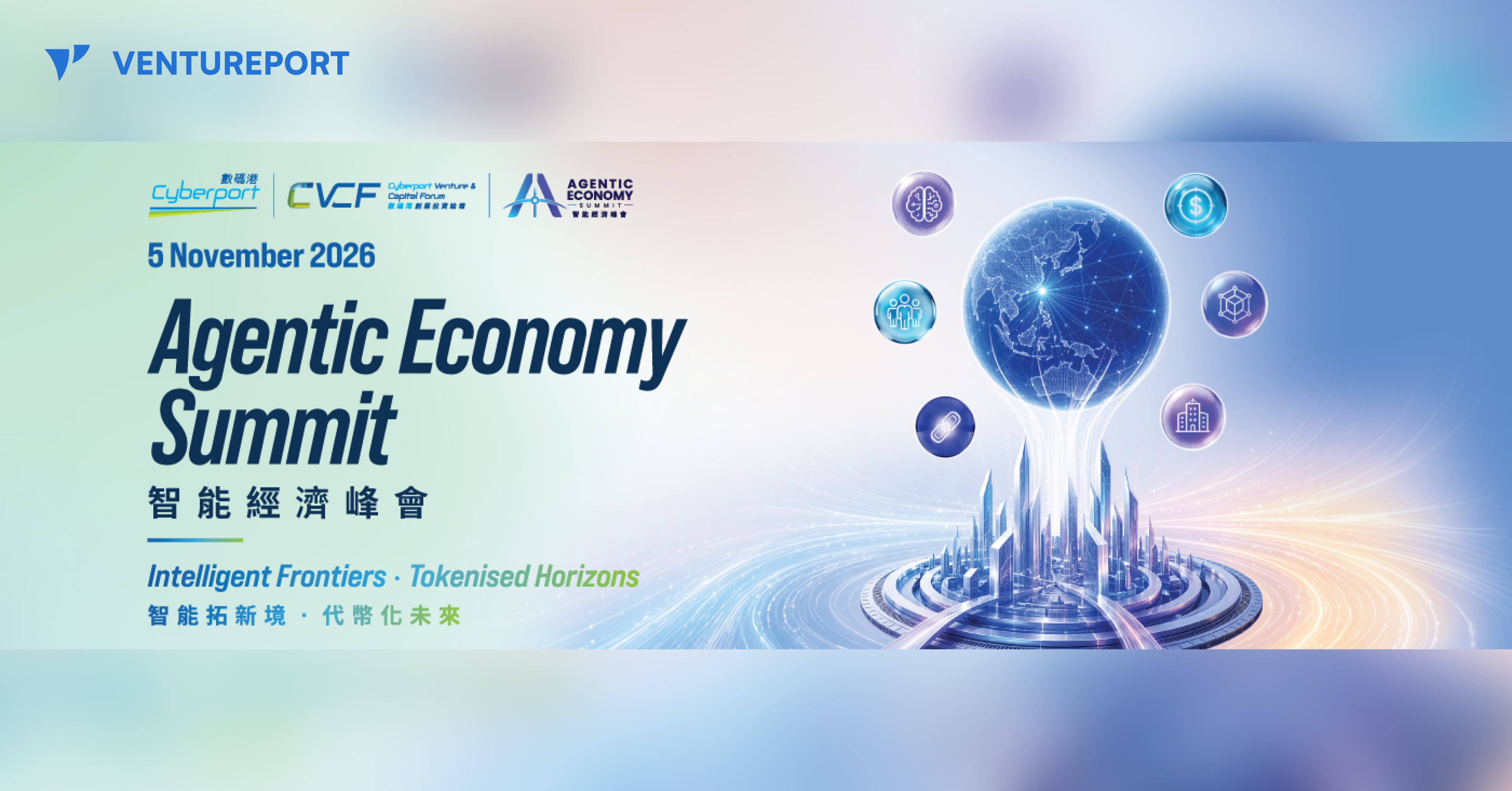
The Agentic Economy Summit at CVCF 2026 explores how AI agents and digital assets could shape the future of business and finance. IMAGE: CYBERPORT
For an AI agent to manage money on someone’s behalf, it needs more than the ability to follow instructions. It must be able to establish whom it represents, access funds and transact within agreed limits.
These are among the questions informing the discussion of AI and digital assets at Cyberport Venture Capital Forum (CVCF) 2026. Ahead of the forum, Discus Fish, CEO and Co-founder of Cobo, and Samuel Tse, Head of Investment and Corporate Finance at Animoca Brands, shared their views on how this convergence could develop—and where they see opportunities for businesses.
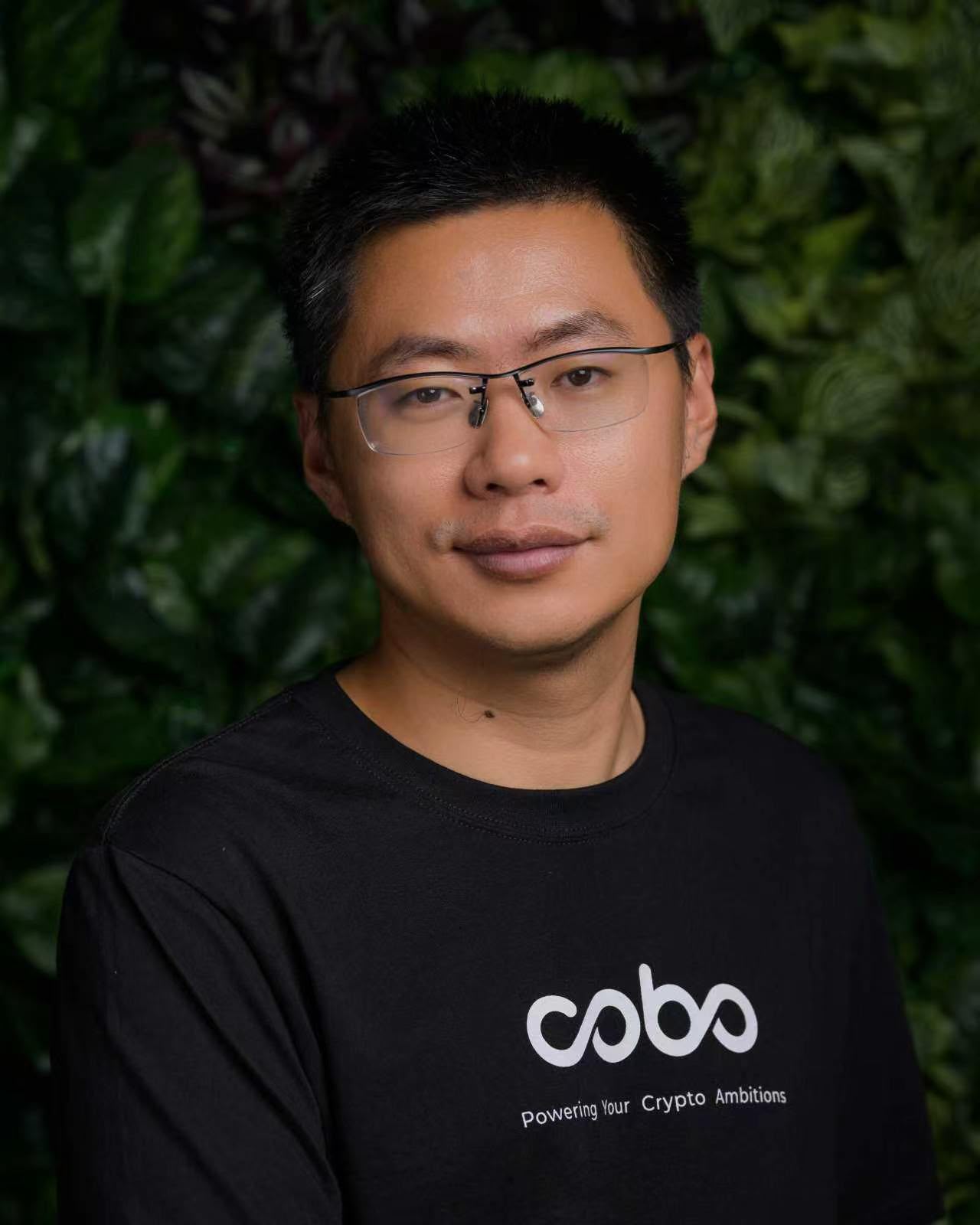
Discus Fish points to a longstanding challenge: blockchain can be difficult for everyday users to navigate, but AI agents may find it easier to interact with these networks.
“Blockchains have always been hard for ordinary people to use. AI agents may be better users: the chain is fully transparent and every record is traceable, which suits agents well.”
His outlook comes with a qualification. Both the agents and the networks they would use still need to develop.
“Agents aren’t capable enough yet, and chains are still adapting. But once agents truly run on-chain, the number of users and what’s possible will grow by an order of magnitude.”
Discus Fish says blockchain could reshape how financial assets are issued, traded and settled over the next five years. He also notes that institutional adoption has progressed faster than Cobo initially expected, with individual users no longer leading the shift. “Since 2017, we have believed blockchain will become part of the financial infrastructure of the future. We expected individual users to lead, but institutions moved faster.”
For Fish, the next stage involves a broader range of assets and financial clients.
“What gets redefined next is how assets are issued, traded, and settled. As traditional assets like US equities come on-chain, a much wider range of financial clients will follow.”

Samuel Tse, Head of Investment and Corporate Finance at Animoca Brands, focuses on investment opportunities across digital assets and agentic AI. He sees digital identity as essential to allowing AI agents to act on behalf of people while keeping transactions within the permissions they set.
He believes users should set clear rules for what an AI agent can do, allowing it to complete transactions without requiring approval for each one.
“Once agents can prove who they represent, hold digital assets, and move value under clear rules, the economy stops being click-by-click. You set the policy once—who, how much, for what—and the agent transacts inside it.”
He describes applications ranging from everyday payments and transfers to subscriptions, swaps and earning returns on idle funds. “That’s agentic transactions: payments, transfers, subscriptions, swaps, even chasing a better rate on idle cash. Identity is the trust layer. Assets and credentials are the spending authority—always accountable to the human who granted permission.”
In Tse’s account, the human remains the source of that authority. The agent acts within the permissions granted to it.
To illustrate how AI agents, digital identity and digital assets might work together, Tse offers a hypothetical Hong Kong parent's weekday.
“A Hong Kong parent’s weekday: top up the child’s Octopus, book a weekend football slot, translate a school notice for the helper, check weather before pickup, restock milk at the member price, and keep leftover budget earning until tomorrow.”
At present, he says, completing these tasks requires navigating services that often operate separately.
“Today that means many apps that don't talk to each other, and rails that struggle with micro payments.”
His proposed alternative brings the tasks together under instructions established by the user.
“With an agent, they set the rules once and let it decide what to do. Identity unlocks trust and member prices without oversharing. Digital assets fit the money—per-use fees, hard limits, yield until spend.”
For Tse, this combination could create opportunities across payments, merchants, identity providers and digital-asset platforms. He compares the potential scale of agentic commerce to an earlier change in how consumers accessed services.
“The iPhone in 2007 rewired how people buy and use services for 20 years. We are just at the beginning of a similar paradigm shift, with outcomes we can barely imagine.”
Discus Fish and Samuel Tse offer two perspectives on the emerging agentic economy, from the blockchain infrastructure enabling transactions to the digital identity and permissions that allow AI agents to act on people's behalf. At CVCF 2026, these ideas will become part of a wider conversation with the leaders building and investing in this evolving space.
Be part of the conversation. Join industry leaders, founders and investors at CVCF 2026 on 4–5 November and explore the technologies and opportunities shaping the next phase of business.
Exclusive for Ventureport readers: Use code cvcf26vp to access a Full Access Pass for HK$300, subject to confirmation by the organiser.
Keep Reading
Examining how robots are moving from demonstrations to daily use.
Updated
January 28, 2026 5:53 PM

An industrial robotic arm capable of autonomous welding. PHOTO: ADOBE STOCK
CES 2026 did not frame robotics as a distant future or a technological spectacle. Instead, it highlighted machines designed for the slow, practical work of fitting into human systems. Across the show floor, robots were no longer performing for attention but being shaped by real-world constraints—space, safety, fatigue and repetition.
They appeared in factories, homes, emergency settings and industrial sites, each responding to a specific kind of human limitation. Together, these four robots reveal how robotics is being redefined: not as a replacement for people, but as infrastructure that quietly takes on work humans are least meant to carry alone.
Hyundai Motor unveiled its electric humanoid robot, Atlas, during a media day on January 5, 2026, at the Mandalay Bay Convention Center in Las Vegas as part of CES 2026. Developed with Boston Dynamics, Hyundai’s U.S.-based robotics subsidiary, Atlas was presented in two forms: a research prototype and a commercial model designed for real factory environments.
Shown under the theme “AI Robotics, Beyond the Lab to Life: Partnering Human Progress,” Atlas is designed to work alongside humans rather than replace them. The premise is straightforward—robots take on physically demanding and repetitive tasks such as sorting and assembly, while people focus on work requiring judgment, creativity and decision-making.
Built for industrial use, the commercial version of Atlas is designed to adapt quickly, with Hyundai stating it can learn new tasks within a day. Its adult-sized humanoid form features 56 degrees of freedom, enabling flexible, human-like movement. Tactile sensors in its hands and a 360-degree vision system support spatial awareness and precise operation.
Atlas is also engineered for demanding conditions. It can lift up to 50 kilograms, operate in temperatures ranging from –20°C to 40°C and is waterproof, making it suitable for challenging factory settings.
Looking ahead, Hyundai expects Atlas to begin with parts sorting and sequencing by 2028, move into assembly by 2030 and later take on precision tasks that require sustained physical effort and focus.
Widemount’s Smart Firefighting Robot is designed to operate in environments that are difficult and dangerous for humans to enter. Developed by Widemount Dynamics, a spinout from the Hong Kong Polytechnic University, the robot is built to support emergency teams during fires, particularly in enclosed and smoke-filled spaces.
The robot can move through buildings and industrial facilities even when visibility is near zero. Rather than relying on cameras or GPS, it uses radar-based mapping to understand its surroundings and determine a safe path forward. This allows it to continue operating when smoke, heat or debris would normally restrict access.
As it approaches a fire, the robot analyses the burning object. Its onboard AI helps identify the material involved and selects an appropriate extinguishing method. Sensors simultaneously assess flame intensity and send real-time updates to command centres, giving responders clearer situational awareness.
When actively fighting a fire, the robot can aim directly at the source and deploy extinguishing agents autonomously. The system continuously adjusts its actions based on incoming sensor data, reducing the need for constant human intervention during high-risk situations.
At CES 2026, LG Electronics offered a glimpse into how household work could gradually shift from people to machines. The company introduced LG CLOiD, an AI-powered home robot designed to manage everyday chores by working directly with connected appliances within LG’s ThinQ ecosystem.
Designed for indoor living spaces, CLOiD features a compact upper body with two articulated arms, a head unit and a wheeled base that enables steady movement across floors. Its torso can tilt to adjust height, allowing it to reach items placed low or on kitchen counters. The arms and hands are built for careful handling, enabling the robot to grip common household objects rather than heavy tools. The head also functions as a mobile control unit, housing cameras, sensors, a display and voice interaction capabilities for communication and monitoring.
In practice, CLOiD acts as a task coordinator. It can retrieve items from appliances, operate ovens and washing machines and manage laundry cycles from start to finish, including folding and stacking clothes. By connecting multiple devices through the ThinQ system, the robot turns separate appliances into a single, coordinated workflow.
These capabilities are supported by LG’s Physical AI system. CLOiD uses vision to recognise objects and interpret its surroundings, language processing to understand instructions and action control to execute tasks step by step. Together, these systems allow the robot to follow routines, respond to user input and adjust task execution over time.
Doosan Robotics introduced Scan & Go at CES 2026, an AI-driven robotic system designed to automate large-scale surface repair and inspection. The solution targets environments with complex, irregular surfaces that are difficult to pre-program, such as aircraft structures, wind turbine blades and large industrial installations.
Scan & Go operates by scanning surfaces on site and building an understanding of their shape in real time. Instead of relying on detailed digital models or manual coding, the system plans its movements based on live data. This enables it to adapt to variations in size, curvature and surface condition without extensive setup.
The underlying technology combines 3D sensing with AI-based motion planning. The system interprets surface data, generates tool paths and refines its actions as work progresses. In practical terms, this reduces manual intervention while maintaining consistency across large work areas.
By handling surface preparation and inspection tasks that are time-consuming and physically demanding, Scan & Go is positioned as a support tool for industrial teams operating at scale.
Taken together, these robots signal a clear shift in how machines are being designed and deployed. Across factories, homes, emergency sites and industrial infrastructure, robotics is moving beyond demonstrations and into practical roles that support human work.
The unifying theme is not replacement, but relief—robots taking on tasks that are repetitive, hazardous or physically demanding. CES 2026 suggests that robotics is evolving from spectacle to utility, with a growing focus on systems that adapt to real environments, respond to genuine constraints and integrate into everyday workflows.