
Discus Fish of Cobo and Samuel Tse of Animoca Brands discuss how AI agents, digital identity and blockchain could change the way money moves.
Updated
November 2, 2026 12:03 PM

The Agentic Economy Summit at CVCF 2026 explores how AI agents and digital assets could shape the future of business and finance. IMAGE: CYBERPORT
For an AI agent to manage money on someone’s behalf, it needs more than the ability to follow instructions. It must be able to establish whom it represents, access funds and transact within agreed limits.
These are among the questions informing the discussion of AI and digital assets at Cyberport Venture Capital Forum (CVCF) 2026. Ahead of the forum, Discus Fish, CEO and Co-founder of Cobo, and Samuel Tse, Head of Investment and Corporate Finance at Animoca Brands, shared their views on how this convergence could develop—and where they see opportunities for businesses.
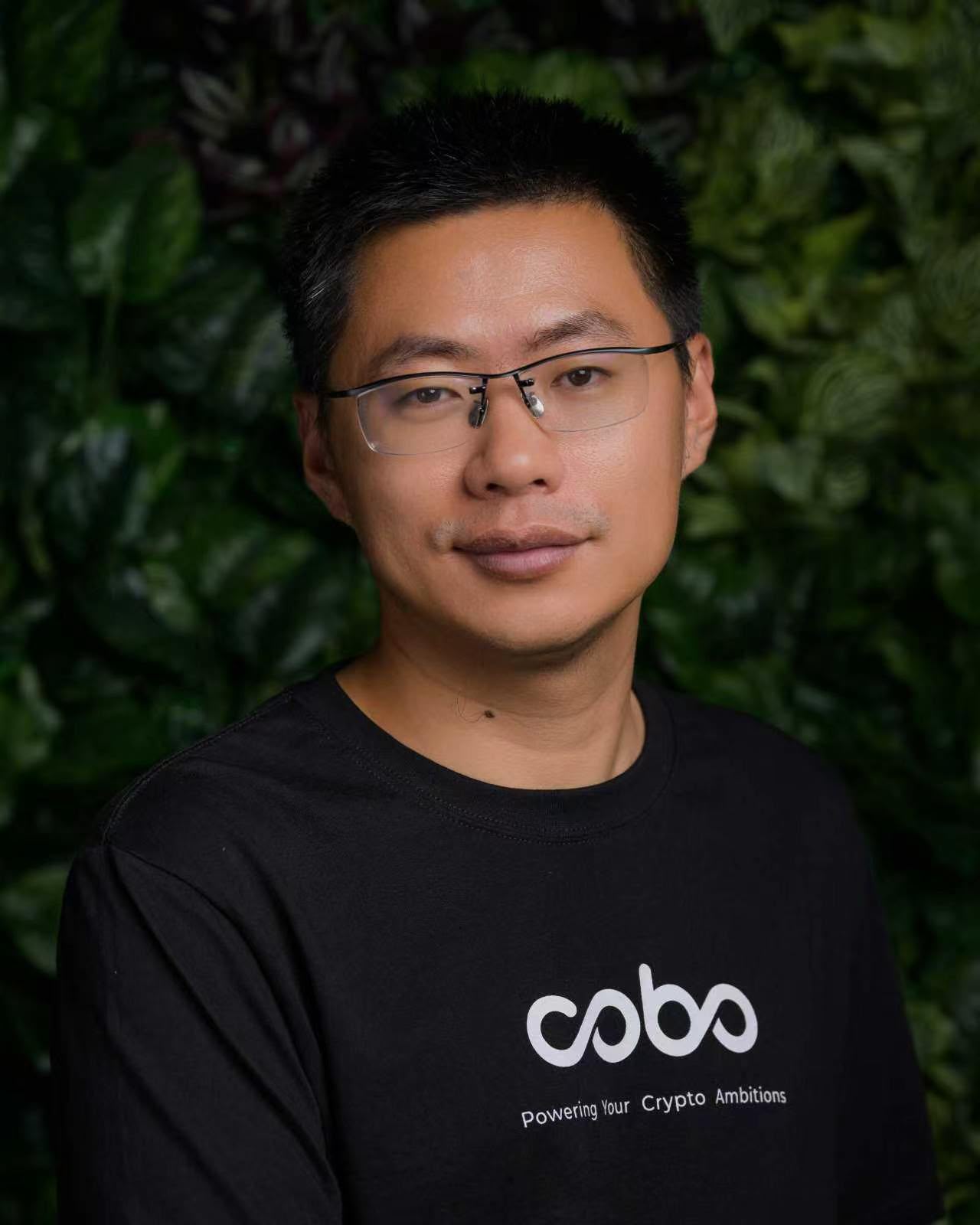
Discus Fish points to a longstanding challenge: blockchain can be difficult for everyday users to navigate, but AI agents may find it easier to interact with these networks.
“Blockchains have always been hard for ordinary people to use. AI agents may be better users: the chain is fully transparent and every record is traceable, which suits agents well.”
His outlook comes with a qualification. Both the agents and the networks they would use still need to develop.
“Agents aren’t capable enough yet, and chains are still adapting. But once agents truly run on-chain, the number of users and what’s possible will grow by an order of magnitude.”
Discus Fish says blockchain could reshape how financial assets are issued, traded and settled over the next five years. He also notes that institutional adoption has progressed faster than Cobo initially expected, with individual users no longer leading the shift. “Since 2017, we have believed blockchain will become part of the financial infrastructure of the future. We expected individual users to lead, but institutions moved faster.”
For Fish, the next stage involves a broader range of assets and financial clients.
“What gets redefined next is how assets are issued, traded, and settled. As traditional assets like US equities come on-chain, a much wider range of financial clients will follow.”

Samuel Tse, Head of Investment and Corporate Finance at Animoca Brands, focuses on investment opportunities across digital assets and agentic AI. He sees digital identity as essential to allowing AI agents to act on behalf of people while keeping transactions within the permissions they set.
He believes users should set clear rules for what an AI agent can do, allowing it to complete transactions without requiring approval for each one.
“Once agents can prove who they represent, hold digital assets, and move value under clear rules, the economy stops being click-by-click. You set the policy once—who, how much, for what—and the agent transacts inside it.”
He describes applications ranging from everyday payments and transfers to subscriptions, swaps and earning returns on idle funds. “That’s agentic transactions: payments, transfers, subscriptions, swaps, even chasing a better rate on idle cash. Identity is the trust layer. Assets and credentials are the spending authority—always accountable to the human who granted permission.”
In Tse’s account, the human remains the source of that authority. The agent acts within the permissions granted to it.
To illustrate how AI agents, digital identity and digital assets might work together, Tse offers a hypothetical Hong Kong parent's weekday.
“A Hong Kong parent’s weekday: top up the child’s Octopus, book a weekend football slot, translate a school notice for the helper, check weather before pickup, restock milk at the member price, and keep leftover budget earning until tomorrow.”
At present, he says, completing these tasks requires navigating services that often operate separately.
“Today that means many apps that don't talk to each other, and rails that struggle with micro payments.”
His proposed alternative brings the tasks together under instructions established by the user.
“With an agent, they set the rules once and let it decide what to do. Identity unlocks trust and member prices without oversharing. Digital assets fit the money—per-use fees, hard limits, yield until spend.”
For Tse, this combination could create opportunities across payments, merchants, identity providers and digital-asset platforms. He compares the potential scale of agentic commerce to an earlier change in how consumers accessed services.
“The iPhone in 2007 rewired how people buy and use services for 20 years. We are just at the beginning of a similar paradigm shift, with outcomes we can barely imagine.”
Discus Fish and Samuel Tse offer two perspectives on the emerging agentic economy, from the blockchain infrastructure enabling transactions to the digital identity and permissions that allow AI agents to act on people's behalf. At CVCF 2026, these ideas will become part of a wider conversation with the leaders building and investing in this evolving space.
Be part of the conversation. Join industry leaders, founders and investors at CVCF 2026 on 4–5 November and explore the technologies and opportunities shaping the next phase of business.
Exclusive for Ventureport readers: Use code cvcf26vp to access a Full Access Pass for HK$300, subject to confirmation by the organiser.
Keep Reading
The US$50.8 million deal strengthens TECO’s push into modular infrastructure and faster data center deployment across Southeast Asia.
Updated
August 10, 2026 5:56 PM

Kuala Lumpur, Malaysia. PHOTO: UNSPLASH
TECO Electric & Machinery is expanding further into Southeast Asia’s AI data center infrastructure market through a new acquisition in Malaysia.
The Taiwan-based company has signed an agreement to acquire approximately 78 percent of Malaysian engineering firm Dynaciate Engineering in a deal valued at around MYR 200 million (US$50.8 million). According to TECO, the acquisition is aimed at strengthening its modular data center manufacturing capabilities and supporting its expansion across Southeast Asia’s data center infrastructure sector.
Under the agreement, Dynaciate will become TECO’s global manufacturing hub for modular data center and power equipment products. The company will also serve as an engineering hub supporting TECO’s regional expansion efforts, particularly in AI data center infrastructure projects.
TECO Chairman Morris Li said the integration between both companies has improved execution efficiency and increased the company’s in-house modular prefabrication capabilities. According to the company, the collaboration has reduced data center delivery timelines to as little as six months.
Dynaciate is headquartered in Johor Bahru, Malaysia. Its facilities span approximately 36,000 square meters and include eight production buildings focused on stainless steel and carbon steel fabrication. The company said the site is also eligible for export tax incentives that support future global supply chain deployment.
According to TECO, Dynaciate has experience in engineering, steel fabrication and large-scale industrial projects for multinational corporations. The company added that Dynaciate has expanded into the data center engineering market since 2025 through projects involving international cloud service provider clients.
TECO estimates that after the acquisition, around 65 percent of future data center-related revenue will come from modular data centers and prefabricated products, while the remaining 35 percent will come from AI data center engineering projects. The company also forecasts that data center-related revenue within its Power & Energy Business Group will rise from below 10 percent to 30 percent this year.
Dynaciate CEO Ng Kim Thiea said the company is entering a new phase of growth through the partnership with TECO. He added that Dynaciate has extensive experience supporting engineering and industrial projects across the region.
The acquisition marks a further expansion of TECO’s presence in the AI data center infrastructure sector as companies continue increasing investments in modular infrastructure and regional engineering capacity.