
Discus Fish of Cobo and Samuel Tse of Animoca Brands discuss how AI agents, digital identity and blockchain could change the way money moves.
Updated
November 2, 2026 12:03 PM

The Agentic Economy Summit at CVCF 2026 explores how AI agents and digital assets could shape the future of business and finance. IMAGE: CYBERPORT
For an AI agent to manage money on someone’s behalf, it needs more than the ability to follow instructions. It must be able to establish whom it represents, access funds and transact within agreed limits.
These are among the questions informing the discussion of AI and digital assets at Cyberport Venture Capital Forum (CVCF) 2026. Ahead of the forum, Discus Fish, CEO and Co-founder of Cobo, and Samuel Tse, Head of Investment and Corporate Finance at Animoca Brands, shared their views on how this convergence could develop—and where they see opportunities for businesses.

Discus Fish points to a longstanding challenge: blockchain can be difficult for everyday users to navigate, but AI agents may find it easier to interact with these networks.
“Blockchains have always been hard for ordinary people to use. AI agents may be better users: the chain is fully transparent and every record is traceable, which suits agents well.”
His outlook comes with a qualification. Both the agents and the networks they would use still need to develop.
“Agents aren’t capable enough yet, and chains are still adapting. But once agents truly run on-chain, the number of users and what’s possible will grow by an order of magnitude.”
Discus Fish says blockchain could reshape how financial assets are issued, traded and settled over the next five years. He also notes that institutional adoption has progressed faster than Cobo initially expected, with individual users no longer leading the shift. “Since 2017, we have believed blockchain will become part of the financial infrastructure of the future. We expected individual users to lead, but institutions moved faster.”
For Fish, the next stage involves a broader range of assets and financial clients.
“What gets redefined next is how assets are issued, traded, and settled. As traditional assets like US equities come on-chain, a much wider range of financial clients will follow.”

Samuel Tse, Head of Investment and Corporate Finance at Animoca Brands, focuses on investment opportunities across digital assets and agentic AI. He sees digital identity as essential to allowing AI agents to act on behalf of people while keeping transactions within the permissions they set.
He believes users should set clear rules for what an AI agent can do, allowing it to complete transactions without requiring approval for each one.
“Once agents can prove who they represent, hold digital assets, and move value under clear rules, the economy stops being click-by-click. You set the policy once—who, how much, for what—and the agent transacts inside it.”
He describes applications ranging from everyday payments and transfers to subscriptions, swaps and earning returns on idle funds. “That’s agentic transactions: payments, transfers, subscriptions, swaps, even chasing a better rate on idle cash. Identity is the trust layer. Assets and credentials are the spending authority—always accountable to the human who granted permission.”
In Tse’s account, the human remains the source of that authority. The agent acts within the permissions granted to it.
To illustrate how AI agents, digital identity and digital assets might work together, Tse offers a hypothetical Hong Kong parent's weekday.
“A Hong Kong parent’s weekday: top up the child’s Octopus, book a weekend football slot, translate a school notice for the helper, check weather before pickup, restock milk at the member price, and keep leftover budget earning until tomorrow.”
At present, he says, completing these tasks requires navigating services that often operate separately.
“Today that means many apps that don't talk to each other, and rails that struggle with micro payments.”
His proposed alternative brings the tasks together under instructions established by the user.
“With an agent, they set the rules once and let it decide what to do. Identity unlocks trust and member prices without oversharing. Digital assets fit the money—per-use fees, hard limits, yield until spend.”
For Tse, this combination could create opportunities across payments, merchants, identity providers and digital-asset platforms. He compares the potential scale of agentic commerce to an earlier change in how consumers accessed services.
“The iPhone in 2007 rewired how people buy and use services for 20 years. We are just at the beginning of a similar paradigm shift, with outcomes we can barely imagine.”
Discus Fish and Samuel Tse offer two perspectives on the emerging agentic economy, from the blockchain infrastructure enabling transactions to the digital identity and permissions that allow AI agents to act on people's behalf. At CVCF 2026, these ideas will become part of a wider conversation with the leaders building and investing in this evolving space.
Be part of the conversation. Join industry leaders, founders and investors at CVCF 2026 on 4–5 November and explore the technologies and opportunities shaping the next phase of business.
Exclusive for Ventureport readers: Use code cvcf26vp to access a Full Access Pass for HK$300, subject to confirmation by the organiser.
Keep Reading
At under US$1,000, Hypernova isn’t just eyewear—it’s Meta’s push to make AR feel ordinary.
Updated
January 8, 2026 6:34 PM
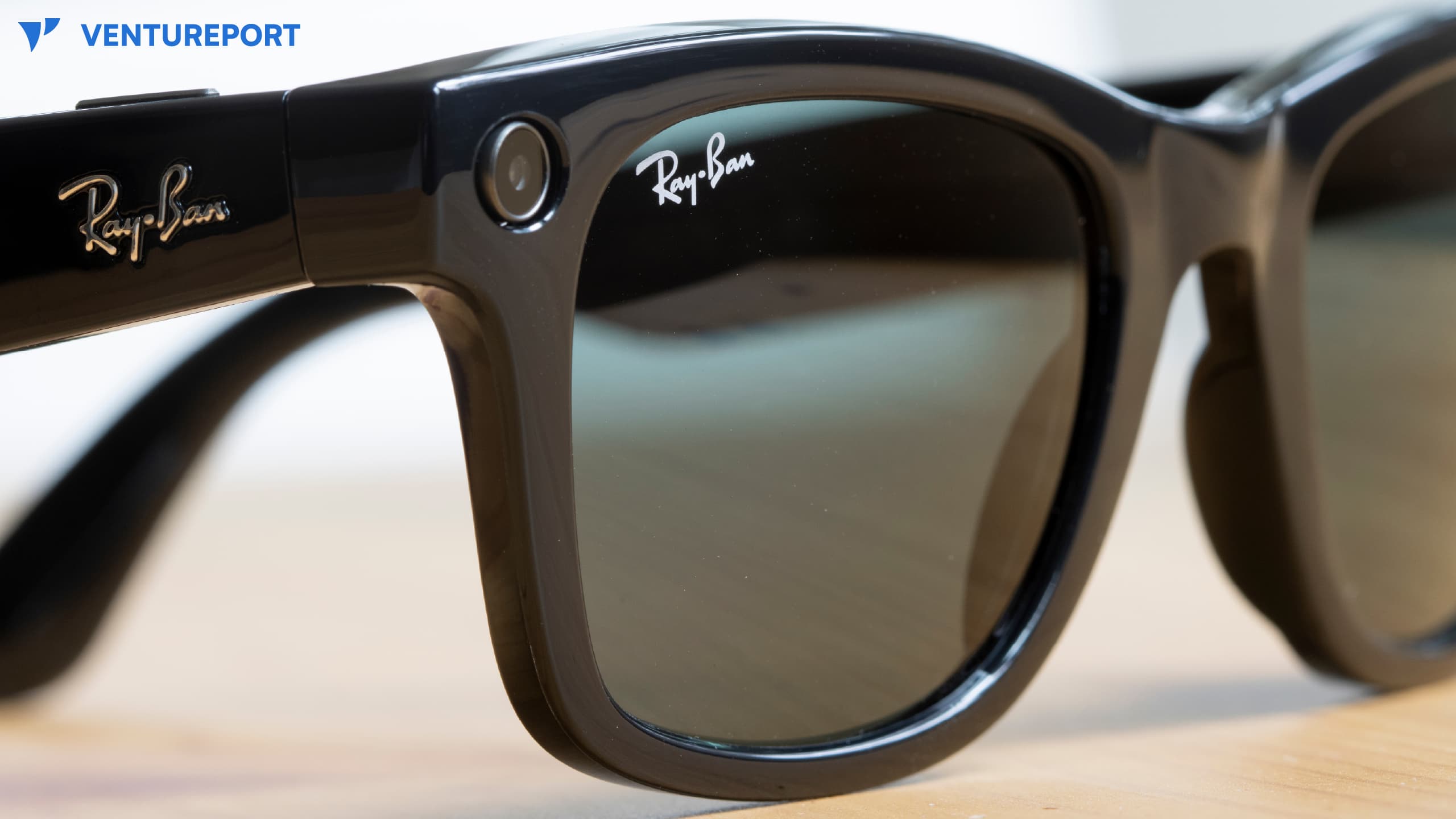
Closeup of the Ray-Ban logo and the built-in ultra-wide 12 MP camera on a pair of new Ray-Ban Meta Wayfarer smart glasses. PHOTO: ADOBE STOCK
Meta is preparing to launch its next big wearable: the Hypernova smart glasses. Unlike earlier experiments like the Ray-Ban Stories, these new glasses promise more advanced features at a price point under US$1,000. With a launch set for September 17 at Meta’s annual Connect conference, the Hypernova is already drawing attention for blending design, technology and accessibility.
In this article, let’s take a closer look at Hypernova’s design, features, pricing and the challenges Meta faces as it tries to bring smart glasses into everyday life.
Meta’s earlier Ray-Ban glasses offered cameras and audio but no display. Hypernova changes that: The glasses will ship with a built-in micro-display, giving wearers quick access to maps, messages, notifications and even Meta’s AI assistant. It’s a step toward everyday AR that feels useful and natural, not experimental.
Perhaps most importantly, the price makes them attainable. While early estimates placed the cost above US$1,000, Meta has committed to a launch price of around US$800. That’s still premium, but it moves AR smart glasses into reach for more consumers.
Hypernova weighs about 70 grams, roughly 20 grams heavier than the Ray-Ban Meta models. The added weight likely comes from added components like the new display and extra sensors.
To keep the glasses stylish, Meta continues its partnership with EssilorLuxottica, the company behind Ray-Ban and Prada eyewear. Thicker frames—especially Prada’s designs—help hide the hardware like chips, microphones and batteries without making the glasses look oversized.
The glasses stick close to the classic Ray-Ban silhouette but feature slightly bulkier arms. On the left side, a touch-sensitive bar lets users control functions with taps and swipes. For example, a two-finger tap can trigger a photo or start video recording.
Hypernova introduces something the earlier Ray-Ban glasses never had: a display built right into the lens. In the bottom-right corner of the right lens, a small micro-screen uses waveguide optics to project a digital overlay with about a 20° field of view. This means you can glance at turn-by-turn directions, check a notification or quickly consult Meta’s AI assistant without pulling out your phone. It’s discreet, practical and a major step up from the older models, which were limited to capturing photos and videos, handling calls and playing music via speakers.
Alongside the glasses comes the Ceres wristband, a companion device powered by electromyography (EMG). The band picks up the tiny electrical signals in your wrist and fingers, translating them into commands. A pinch might let you select something, a wrist flick could scroll a page, and a swipe could move between screens. The idea is to avoid clunky buttons or having to talk to your glasses in public. Meta has also been experimenting with handwriting recognition through the band, though it’s not clear if that feature will be ready in time for launch.
Meta doesn’t just want Hypernova to be useful—it wants it to be fun. Code found in leaked firmware revealed a small game called Hypertrail. It looks to borrow ideas from the 1981 arcade shooter Galaga, letting wearers play a simple, retro-inspired game right through their glasses. It’s not the main attraction, but it shows Meta is trying to make Hypernova feel more like a playful everyday gadget rather than just a piece of serious tech.
Hypernova runs on a customized version of Android and pairs with smartphones through the Meta View app. Out of the box, it should support the basics: calls, music and message notifications. Leaks suggest several apps will come preinstalled, including Camera, Gallery, Maps, WhatsApp, Messenger and Meta AI. A Qualcomm processor powers the whole setup, helping it run smoothly while keeping energy demands reasonable.
Meta is also trying to bring in outside developers. In August 2025, CNBC reported that the company invited third-party developers—especially in generative AI—to build experimental apps for Hypernova and the Ceres wristband. The Meta Connect 2025 agenda even highlights sessions on a new smart glasses SDK and toolkit. The push shows Meta’s interest in making Hypernova more than just a device; it wants a broader platform with apps that go beyond its own first-party software.
During development, Hypernova was rumored to cost as much as US$1,400. By pricing it around US$800, Meta signals that it wants adoption more than profit. The company is keeping production limited (around 150,000 units), showing it sees this as a market test rather than a mass rollout. Still, the sub-US$1,000 price tag makes advanced AR far more accessible than before.
Despite its promise, Hypernova may still face hurdles. The Ceres wristband can struggle if worn loosely, and some testers have reported issues based on which arm it’s worn on or even when wearing long sleeves. In short, getting EMG input right for everyone will be critical.
Privacy is another major concern. In past experiments, researchers hacked Ray-Ban Meta glasses to run facial recognition, instantly identifying strangers and pulling personal info. Meta has added guidelines, like a recording indicator light, but critics argue these measures are too easy to ignore. Moreover, data captured by smart glasses can feed into AI training, raising questions about consent and surveillance.
The Meta Hypernova smart glasses mark a turning point in wearable tech. They’re lighter and more stylish than bulky AR headsets, while offering real-world features like navigation, messaging and hands-free control. At under US$1,000, they aim to make AR glasses more than a luxury gadget—they’re a step toward everyday use.
Whether Hypernova succeeds will depend on how well it balances style, usability and privacy. But one thing is clear: Meta is betting that always-on, glanceable AR can move from science fiction to daily life.